
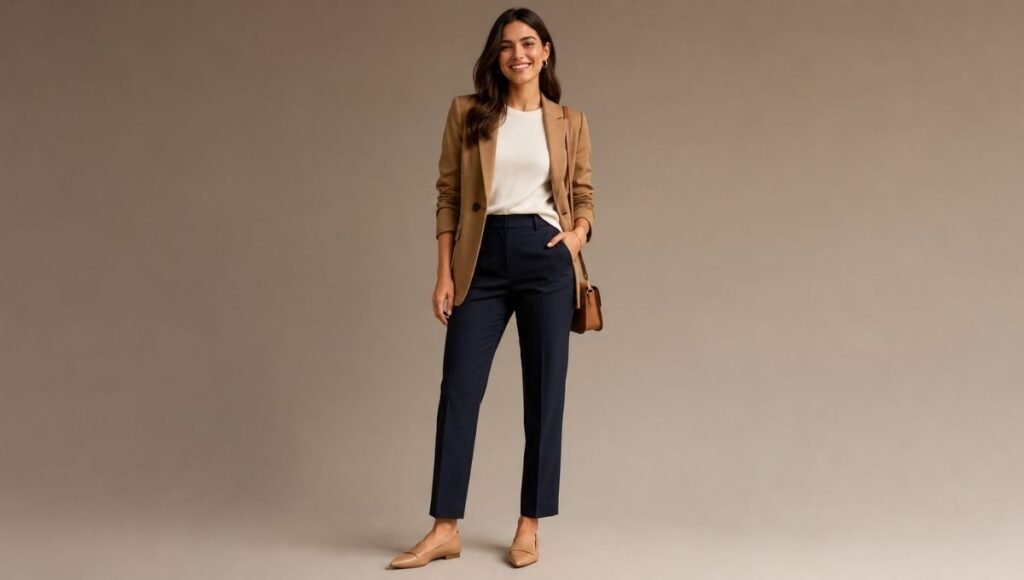
Here’s something that happens to almost every woman at some point: you get dressed, you’re wearing perfectly fine clothes — clean, appropriate, not obviously wrong — and you look in the mirror and feel completely underwhelmed. Nothing is technically wrong with the outfit. But nothing is quite right either. It just looks like you got dressed, not like you put together an outfit.
This feeling has a name, and it’s not a lack of style. It’s a lack of a system. The women who consistently dress better — who always seem to look intentional and polished without appearing to try very hard — aren’t doing something fundamentally different from you. They’ve just internalized a few principles that most people never make explicit. And once you know what those principles are, getting dressed becomes a completely different experience.
This guide covers how to dress better starting today — with changes you can make immediately without buying anything — and then extends to the longer-term decisions (wardrobe building, fit, investment pieces) that create a consistently stylish result over time. The goal isn’t a personality change or a new aesthetic. It’s a clearer system for the clothes you already have, and a smarter approach to the ones you’ll buy next.
Key Takeaways
- The reason some women always look stylish isn’t talent or budget — it’s the Third Piece Rule: every outfit needs a third element beyond the obvious two pieces (a top and a bottom or a dress and shoes). The third piece is what makes an outfit look assembled rather than just worn
- According to research published in the Journal of Experimental Social Psychology (2012), clothing affects not just how others perceive us but how we perceive ourselves — women who dressed intentionally reported higher confidence and cognitive performance than those who dressed passively
- The single highest-impact change most women can make immediately: get clothes tailored. A $15 hem or a $20 waist take-in on a dress you already own creates more visible improvement than any new purchase
- Fit is more important than price. A well-fitting $40 dress looks more polished than an ill-fitting $200 one. The first question to ask about any piece is whether it fits — not whether it’s a good brand or a good deal
- The three categories of fashion tips work at different time scales: immediate (today, no shopping required), short-term (next few purchases), and long-term (wardrobe rebuilding). Most guides only cover long-term, which is why the advice feels abstract
Why Some Women Always Look Stylish (The Actual Reason)
Before the tips, the diagnosis. Most people attribute consistent stylishness to taste, or money, or time. The reality is simpler and more replicable.
Women who consistently look put-together are doing one thing that most people aren’t: they’re treating every outfit as a composition rather than a collection of clothes. They’re not just putting on a top and a bottom — they’re building a visual relationship between the pieces, making sure one element creates contrast with another, ensuring the outfit has a focal point and a finish.
This sounds abstract until you understand the Third Piece Rule.
The Third Piece Rule: The Most Important Fashion Tip Nobody Talks About
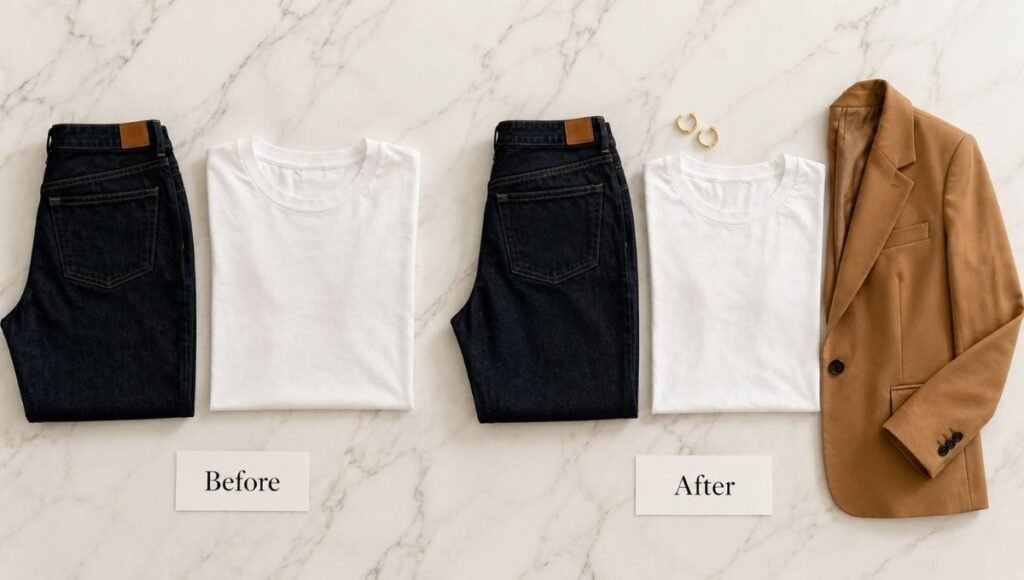
The Third Piece Rule, popularized by stylist and editor Sarah Stiefvater, is the observation that the most consistently stylish women add a third element to every outfit beyond the obvious two. A top and jeans is two pieces. Add a blazer, a scarf, an interesting shoe, or a structured bag — that’s the third piece. It’s the element that makes the outfit look like it was assembled rather than grabbed.
Why it works: Two pieces create an outfit. Three pieces create intention. The third piece adds a visual layer that tells the eye “this was deliberate.” It doesn’t need to be complicated — a simple addition of a crossbody bag over a sundress, a blazer over a tee-and-trouser combination, or a pair of statement earrings with an otherwise basic look does exactly this.
The three categories of third pieces:
- A layer (blazer, cardigan, denim jacket, trench coat, structured vest)
- An accessory with visual weight (statement earrings, a distinctive bag, a scarf)
- An intentional shoe (not just a functional shoe — one that visually finishes the outfit)
Start applying this tomorrow. Before leaving the house, ask: what’s the third piece in this outfit? If you can’t identify one, add one.
How to Dress Better Starting Today (No Shopping Required)
These are the changes that create immediate visible improvement without spending a dollar.
The Tuck
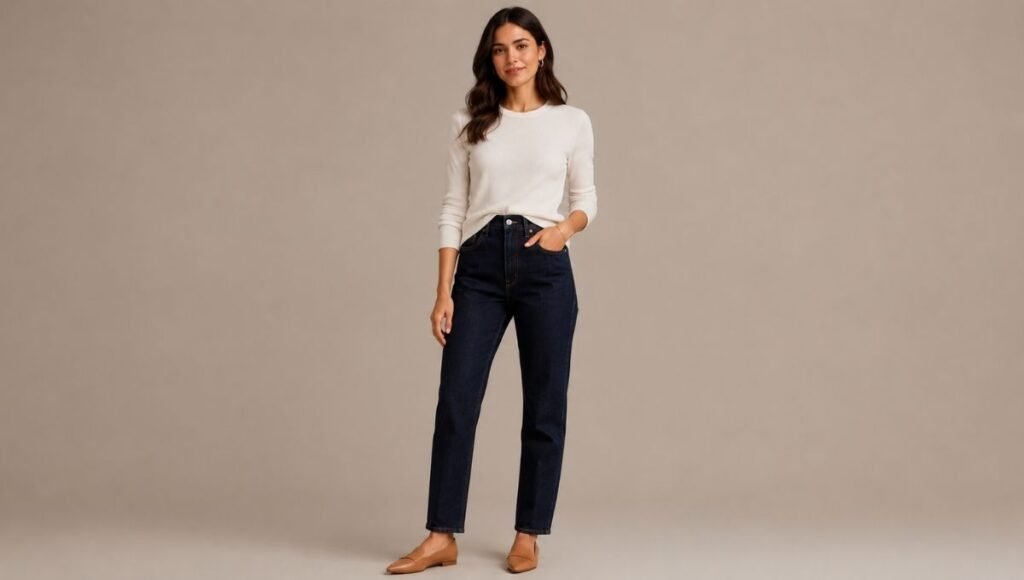
Tucking the front of your top into your bottom — a full tuck or a French tuck (just the front, leaving the back out) — creates a visible waistline and signals that the outfit was assembled deliberately. An untucked top that grazes the hip eliminates waist definition and makes even great clothes look slightly sloppy.
The rule: When wearing a top with a high-waist bottom, always tuck at least the front. This applies to everything from a casual tee with jeans to a blouse with trousers. The tuck is the single highest-ratio-of-effort-to-impact styling move available.
The Shoe Upgrade
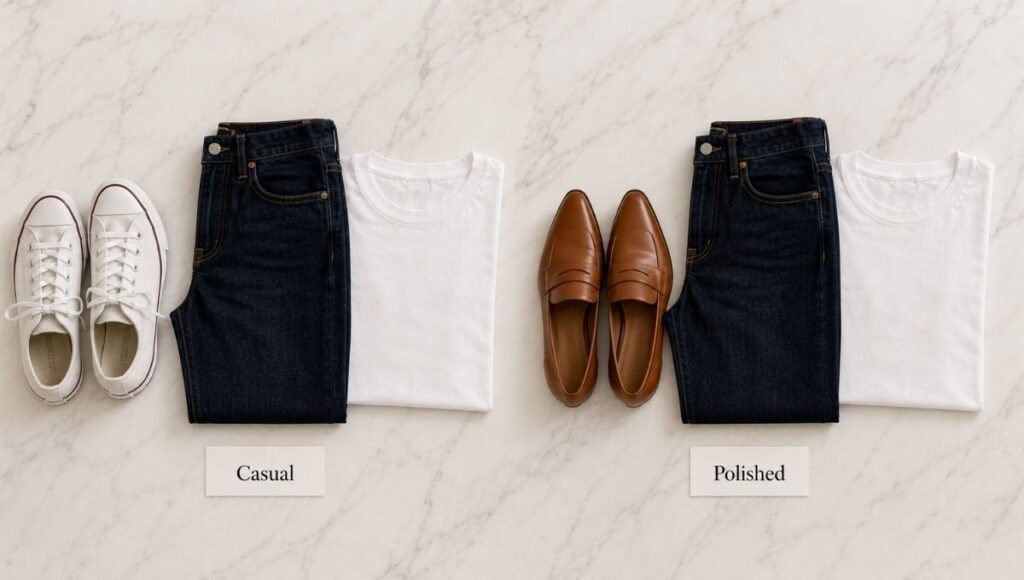
Swap whatever casual shoe you’d default to for a more intentional option. This doesn’t mean heels — it means a shoe with clear intention. A pointed-toe flat instead of a round-toe sneaker. A leather loafer instead of a canvas slip-on. An ankle boot instead of a worn-out trainer.
The shoe is the last thing the eye reaches in any outfit, and it determines whether the visual line of the outfit feels finished or abandoned. A great outfit with a thoughtless shoe looks incomplete. A simple outfit with an intentional shoe looks polished.
The One-Statement Rule
Before leaving the house, identify what the one interesting element in your outfit is. The printed top. The distinctive earrings. The unexpected shoe. If there are two or three competing statement elements, remove one. If there are none, add one.
Visual interest works because of contrast — one interesting element next to simpler elements creates the contrast that reads as stylish. Two or three interesting elements compete with each other and create visual noise. The edit is as important as the addition.
The Monochromatic Hack
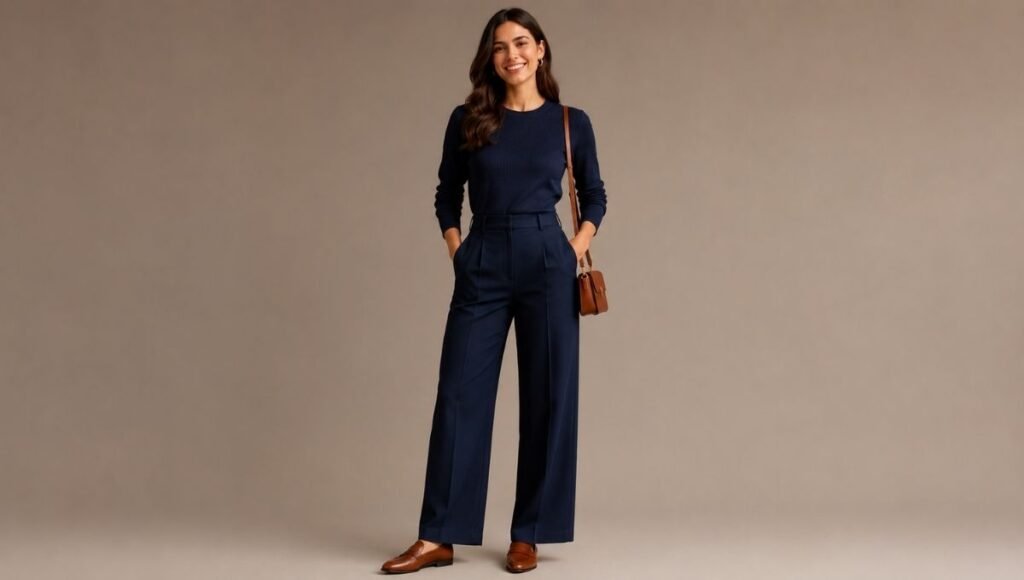
Wearing pieces in the same color family — navy top with navy wide-leg trousers, camel blazer with camel trousers — creates instant visual coherence that reads as intentional. The outfit looks like it was planned because the eye registers a deliberate color relationship. Add one contrasting element (a different-colored shoe, a print accessory) and the contrast pops against the tonal base.
This works on days when you have nothing to wear: go tonal, add one contrasting element, done.
The Fit Principle: Why This Matters More Than Anything Else
Fashion editors, stylists, and genuinely well-dressed women agree on one thing above everything else: fit is the foundation. A well-fitting piece in a moderate fabric looks better than an ill-fitting piece in a luxury fabric. Every time.
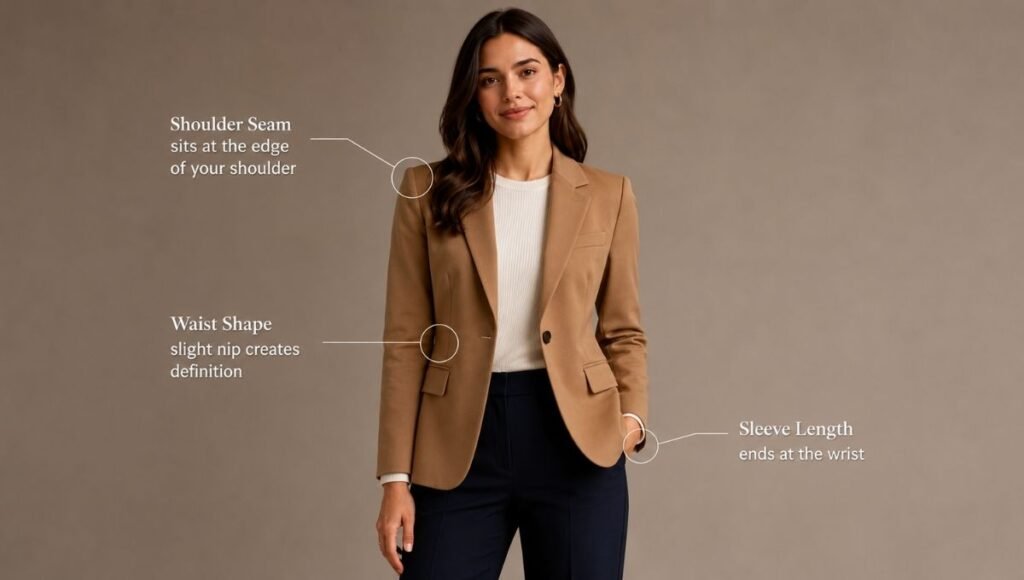
What “Good Fit” Actually Means
Shoulders: The seam of a top or jacket should sit exactly at the edge of your shoulder — not hanging over your arm, not pulling toward your neck. Shoulder fit is the hardest to alter; if a jacket shoulder doesn’t fit, it probably won’t after alterations either. Everything else can be adjusted.
Waist: There should be a visible narrowing at the waist in any fitted piece. A dress or top that creates a straight line from shoulder to hip adds visual volume and eliminates body definition regardless of your actual shape.
Length: Hemlines matter. A trouser that drags looks sloppy; a trouser hemmed to the correct break looks tailored. A dress that hits at the widest point of the calf (mid-calf) on most women creates an unflattering visual cut; an inch up or down usually reads better.
The investment case for tailoring: A tailor can hem trousers ($15-20), take in a waist ($20-30), shorten a dress ($25-35), or take in the side seams of a blouse ($30-40). These alterations turn good pieces into great ones. The cost of tailoring one piece you already own is almost always less than buying a new piece.
The Fit Red Flags
These fit problems undermine otherwise good outfits:
- Pulling across the bust or hips in a fitted garment (the fabric stretches into an X shape)
- Gaping at the collar or front of a button-down shirt
- Trouser crotch that drops lower than your actual crotch
- Jacket sleeves that extend past the wrist
- Any piece that you have to adjust while wearing it — pulling down, tugging up, or repositioning throughout the day
If a piece requires constant management, it doesn’t fit correctly regardless of what the size label says.
Fashion Tips for Women: The Longer-Term Decisions
These are the changes that require time or investment but create a compounding improvement in how you dress overall.
Build Around Neutrals, Accent With Color
The most reliable wardrobe structure: a neutral base with one or two accent colors. Your neutrals (navy, white, cream, grey, camel, black) are the foundation — they go with everything, require no coordination thought, and photograph well in any combination. Your accent colors (burgundy, emerald, warm rust, soft blush) appear in one or two pieces per season and add visual interest without creating a coordination problem.
When every piece you buy works with your existing neutrals, every new addition creates new outfit combinations rather than a new outfit island.
The Cost-Per-Wear Principle
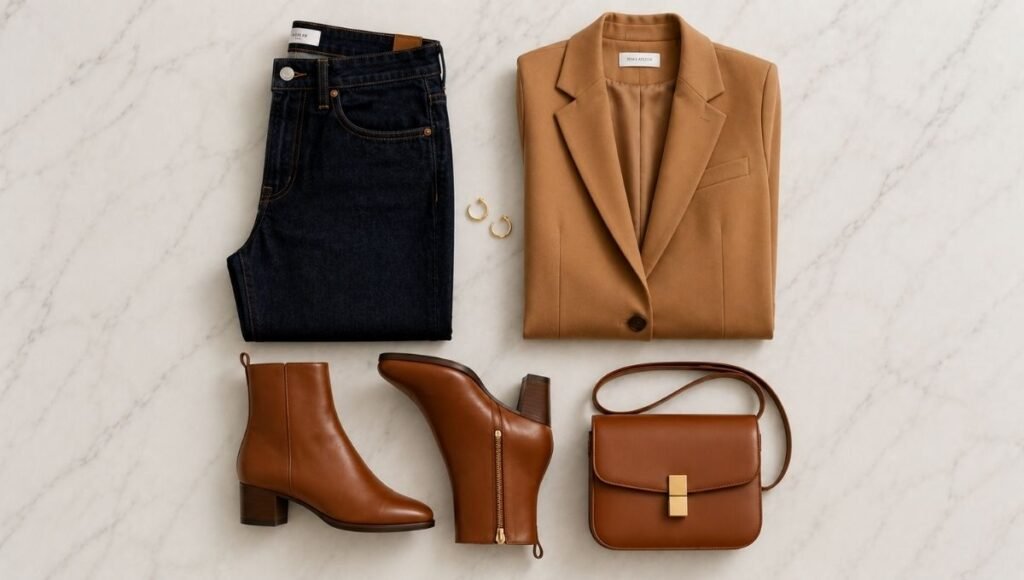
Instead of evaluating purchases by price, evaluate by cost per wear: purchase price ÷ expected number of wears. A $150 pair of jeans you wear 150 times costs $1 per wear. A $40 dress you wear four times costs $10 per wear.
This reframes where quality investment makes sense. The jeans you wear three times a week, the ankle boots you wear daily from September to March, the blazer that goes over everything — these are worth buying at a higher price point because the per-wear cost drops rapidly. The one-occasion dress, the trend piece you’ll wear a season, the third pair of similar tops — these don’t benefit from the same investment because the wear frequency is too low.
The Wardrobe Audit
Once a year, pull everything out. Ask three questions about each piece:
- Does it fit correctly right now, on my actual body?
- Have I worn it in the last six months?
- Do I reach for it when I want to feel put-together?
Anything that fails all three questions leaves. Anything that fails one or two questions gets examined: if it doesn’t fit but you love it, get it tailored. If you haven’t worn it but theoretically would, identify what’s missing (what would this work with?). If you have the answer, keep it and buy the missing piece. If you don’t, it’s not serving you.
How to Look More Put Together: The Body Type Layer
Dressing better isn’t just about general styling principles — it’s about styling principles that work for your specific proportions. The same techniques don’t produce the same results on every body.
For Petite Women
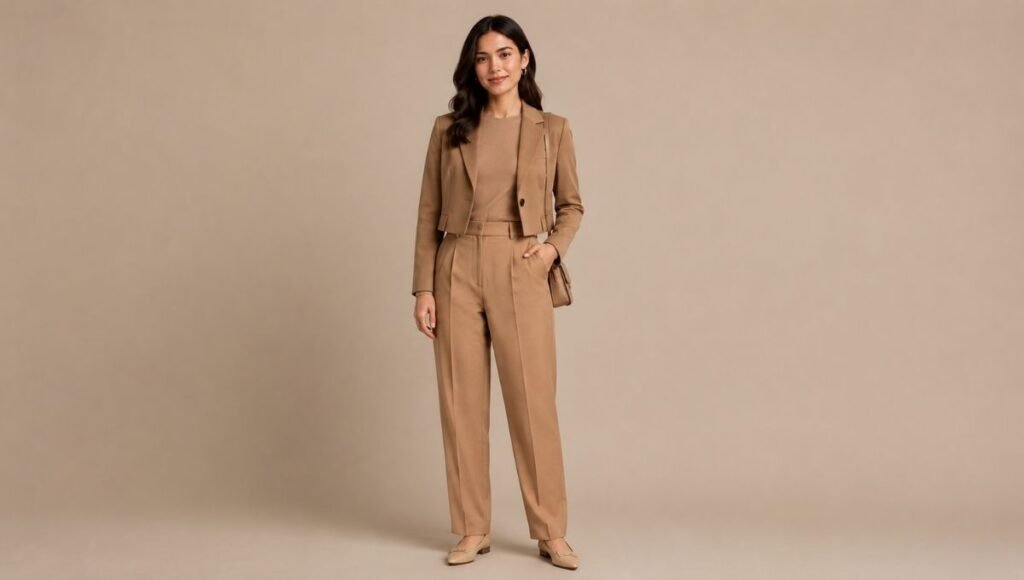
The put-together principle for petite women: maintain visual leg length through every outfit decision. High-rise bottoms always (the waistband creates visual height above the hip). Pointed-toe shoes always (they extend the visual leg line beyond the toe). Cropped outer layers rather than hip-length ones (a cropped blazer maintains leg proportion; a hip-length blazer cuts it).
The monochromatic tip works particularly well for petite women — wearing one color from top to shoe creates an unbroken vertical line that reads as height.
For Curvy Women
The put-together principle for curvy women: waist definition above everything. High-waist bottoms with a tucked top. Wrap silhouettes that define the waist through construction. Belted waists for any outer layer. The third piece rule works especially well — a structured blazer or a belted coat over any outfit creates instant waist definition and polish.
Fabric choice matters more for curvy bodies: flowing fabrics that drape (jersey, rayon, chiffon) create more elegant silhouettes than rigid fabrics that create pressure points.
For Rectangle Body Types
The put-together principle for rectangle bodies: create the visual impression of waist definition. A belt at the natural waist, a wrap silhouette, or a fit-and-flare dress all accomplish this. The third piece rule often involves a belt — worn over a blazer, a dress, or tucked-in blouse, a belt immediately creates the waist contrast that the natural silhouette doesn’t provide.
Style Tips for Women: The Quick-Reference List
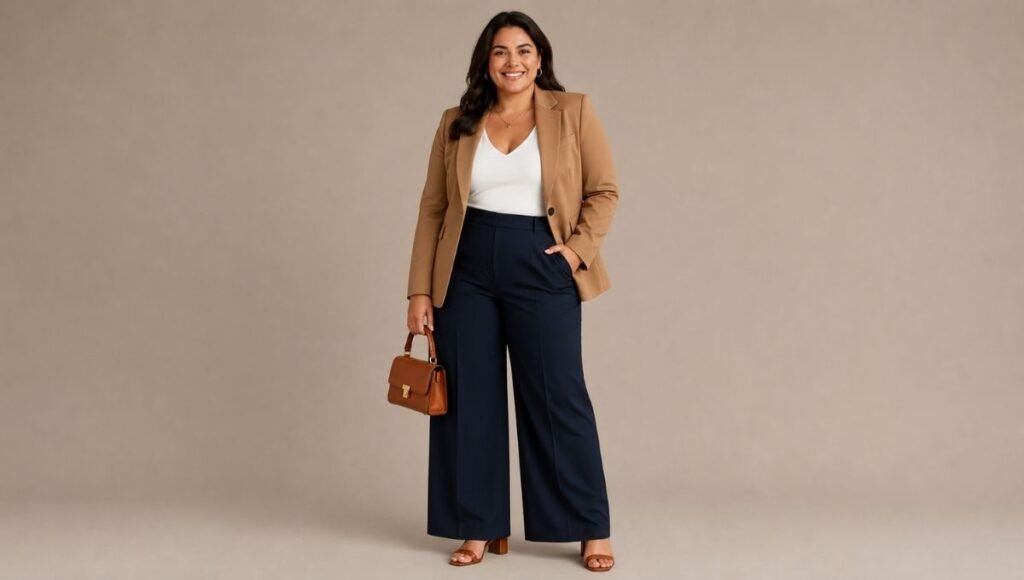
The principles that matter most, in order of impact:
Immediate impact (do today):
- Add a third piece to every outfit
- Tuck the front of your top into your bottom
- Swap your default shoe for a more intentional one
- Apply the one-statement rule: one interesting element, everything else simpler
Short-term impact (next few purchases):
- Prioritize fit above brand, price, and trend
- Get one piece tailored — your most-worn item first
- Build your next purchase around your existing neutrals
Long-term impact (wardrobe building):
- Do an annual wardrobe audit using the three-question framework
- Apply cost-per-wear to every significant purchase
- Build around a neutral base with one or two accent colors
The 10-Minute Better-Dressed Formula
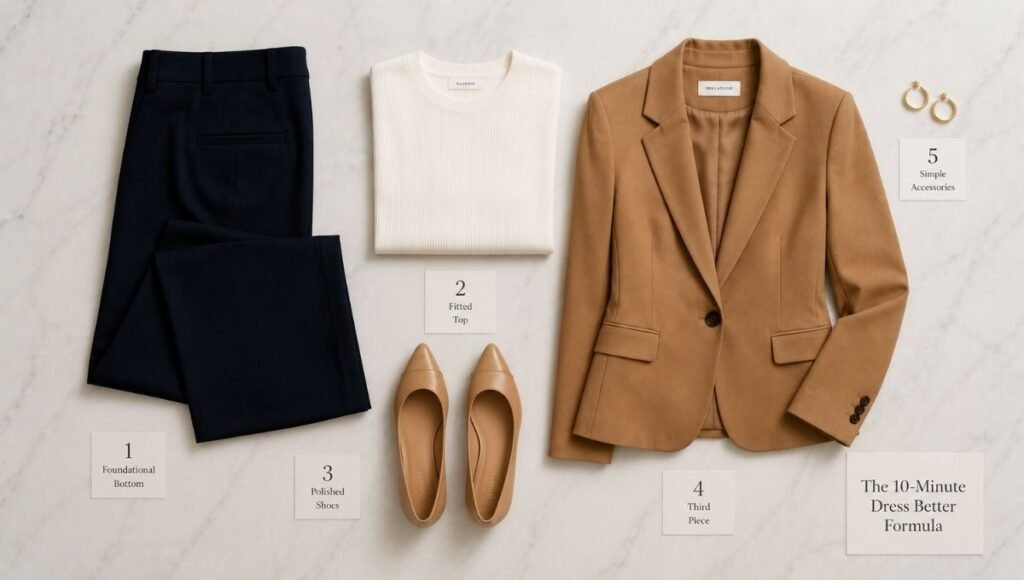
You have ten minutes, you’re running late, you want to look intentional:
Step 1: Put on a high-rise bottom and a fitted top. Step 2: Tuck the front of the top. Step 3: Choose one intentional shoe. Step 4: Add the third piece — grab a blazer, a structured bag, or a pair of statement earrings. Step 5: Apply the one-statement rule — if you have more than one interesting element, remove one.
Done. The outfit looks assembled because it is assembled — each step added a deliberate element rather than just adding more clothes.
FAQ: How to Dress Better
How do I dress better without buying new clothes? Apply the Third Piece Rule to every outfit — add a layer, a distinctive accessory, or an intentional shoe as the third element. Tuck the front of your top into your bottom to create waist definition. Swap your default casual shoe for a more intentional option. These three changes create visible improvement without spending anything.
What is the fastest way to look more put together? The shoe swap and the tuck are the two highest-impact immediate changes. Swapping a worn or casual shoe for a loafer, a pointed-toe flat, or an ankle boot elevates the visual finish of any outfit. Tucking the front of your top creates a waistline and signals intention. Together, these two moves take under 60 seconds.
What are the most important fashion tips for women? Fit first — a well-fitting piece always looks better than an ill-fitting one regardless of price. The Third Piece Rule — every outfit needs a third element beyond the obvious two pieces. One statement per outfit — the contrast between one interesting element and simpler elements creates the visual effect that reads as stylish. And the tuck — visible waist definition makes clothes look better on almost every body type.
How do I dress better on a budget? Prioritize fit and tailoring over buying new pieces. A $20 hem or waist take-in on a piece you already own creates more visible improvement than a new $40 purchase. Apply cost-per-wear to evaluate what’s worth spending more on: high-frequency pieces (jeans, everyday shoes, a work blazer) justify more investment because the per-wear cost drops quickly. Trend pieces and low-frequency items don’t.
Why do some women always look stylish? They’ve internalized a few specific principles: they apply the Third Piece Rule consistently, they understand fit and get things tailored, they build around a neutral palette so everything works with everything else, and they apply the one-statement rule so their outfits have visual clarity rather than visual noise. None of these are innate talents — they’re learnable habits.
What to Read Next
- How to Find Your Personal Style: Old Money, French Girl & Classic — once you understand the mechanics of dressing better, this guide helps you apply them to a specific aesthetic direction
- How to Dress for Your Body Type: The Complete Style Guide — the body type principles that determine which specific fits and silhouettes work best for your proportions
- Capsule Wardrobe for Women: Build One From What You Already Own — the longer-term wardrobe structure that makes dressing better a system rather than a daily decision
- How to Look More Feminine: The Style Guide Without the Frills — applying the dressing-better principles to a specifically feminine aesthetic
Sophie Hartwell covers practical style advice for women who want their clothes to actually work at TopChicWear.
References:
- Adam, H., & Galinsky, A. D. (2012). Enclothed cognition. Journal of Experimental Social Psychology, 48(4), 918–925.
- Peluchette, J., & Karl, K. (2007). The impact of workplace attire on employee self-perceptions. Human Resource Development Quarterly, 18(3), 345–360.
- Slepian, M. L., Ferber, S. N., Gold, J. M., & Rutchick, A. M. (2015). The cognitive consequences of formal clothing. Social Psychological and Personality Science, 6(6), 661–668.
Disclosure: This post may contain affiliate links. We may earn a small commission if you purchase through our links at no extra cost to you. All recommendations are genuinely our own.