
Most style advice starts in the wrong place. It shows you an aesthetic — a Pinterest board, a celebrity wardrobe, a “style type” quiz — and tells you to buy toward it. And so you buy things. Some of them work, some of them don’t, and over time your closet becomes a record of every style direction you’ve briefly pursued without ever quite arriving anywhere.
Finding your personal style isn’t about picking a label and shopping to match it. It’s about identifying what you consistently reach for, understanding why those choices work (or don’t), and building a deliberate framework around the patterns that already exist in how you dress. The style you’re looking for is probably closer to what you already own than any inspiration board suggests.
This guide covers how to find your style systematically — starting with the self-audit that reveals what your style already is, moving through the most relevant aesthetic categories (old money, French girl, classic, quiet luxury) with their specific outfit formulas, and finishing with the single most practical styling skill most guides skip entirely: how to look put together on a regular day without spending twenty minutes on it.
Key Takeaways
- Personal style is found by identifying patterns in what you already wear, not by deciding what you want to look like and shopping toward it
- According to research from the Journal of Consumer Psychology (2023), women who dress according to a consistent personal aesthetic report higher daily confidence and lower decision fatigue than those who dress by trend
- The four most durable women’s style categories — old money, French girl, classic, and quiet luxury — share one underlying principle: intentionality over quantity. Fewer, better pieces worn more deliberately
How to look put togetheris the most practical daily styling skill — and it’s a formula, not an innate talent. The formula is learnable in about five minutes- Style is not the same as fashion. Fashion is what’s available seasonally. Style is how you consistently present yourself regardless of what’s available. The goal is the latter
Step 1: How to Find Your Style — The Self-Audit Method
Before any aesthetic category, any shopping list, or any inspiration board: the self-audit. This is the step that tells you what your style actually is versus what you think it should be.
The Wardrobe Evidence Method
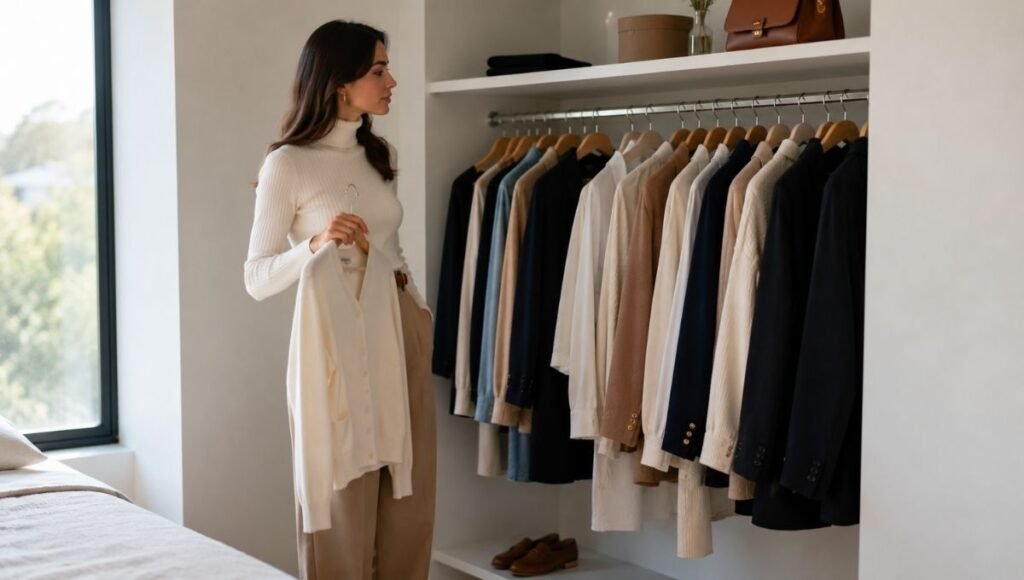
Open your closet and look at what you actually wear — not what you own, what you wear. The pieces you reach for repeatedly, feel good in immediately, and don’t think twice about. These are your style evidence.
What to look for:
Color patterns: What colors appear most often in your regular rotation? Most people find their actual wardrobe is significantly more restricted in color than they think. If you reach for navy, white, and camel repeatedly, your style is already telling you something.
Silhouette patterns: Do you consistently wear fitted through the torso? Relaxed? Structured? The silhouettes you return to regardless of trend are the silhouettes that work for your body and feel like you.
Formality patterns: Is your regular rotation casual with one or two elevated pieces, or consistently polished? This tells you where your style naturally sits on the formality spectrum — and where it should stay.
Fabric patterns: Do you gravitate toward natural fabrics (linen, cotton, wool)? Structured fabrics (ponte, crepe)? Flowing fabrics (rayon, silk)? The fabrics you like to wear tell you as much about your style as the cuts.
The insight: After this audit, most women find they already have a clear style direction — they’ve just been adding noise to it with purchases that didn’t fit the pattern. The style they’re looking for is already the dominant theme in their wardrobe. The work is to identify it and become intentional about it.
The Inspiration Audit
If the wardrobe audit reveals confusion rather than patterns — you genuinely have no consistent thread — the inspiration audit helps.
Spend ten minutes saving images of outfits you find genuinely appealing, without filtering for practicality or whether you “could wear that.” After ten minutes, look at what you’ve saved. What’s the common thread? Not the specific pieces — the mood, the formality level, the color temperature, the overall feel.
This mood is your style direction. The specific pieces will vary; the underlying aesthetic won’t.
Old Money Style Women: The Complete Guide
Old money style is one of the most searched and most misunderstood aesthetic categories. The misunderstanding is that it’s about wealth. It’s not. It’s about a specific relationship to clothing: investment over novelty, quality over branding, formality as a default rather than an exception.
What Old Money Style Actually Is
The old money aesthetic draws from the wardrobe traditions of East Coast prep schools, British country estates, and the families who have dressed the same way for three generations without caring what’s currently fashionable. The result is a visual language built on:
- Tailoring as the foundation. Every piece fits. Not expensively — fittingly. A $40 blazer that’s been tailored looks more “old money” than a $400 blazer that gaps at the shoulder.
- Quality fabrics that improve with age. Wool, cashmere, leather, linen. These materials develop character over time. Synthetic fabrics don’t.
- Logos and branding are invisible. Old money style doesn’t advertise. The absence of visible branding is itself the signal.
- The color palette is narrow and warm. Navy, camel, cream, forest green, burgundy, tan, ivory. Colors that could belong to any decade without dating themselves.
- Classics only. A blazer, not a trendy jacket. A trench coat, not a fashion-week outer layer. Loafers, not whatever shoe style is currently viral.
Old Money Style Outfit Formulas
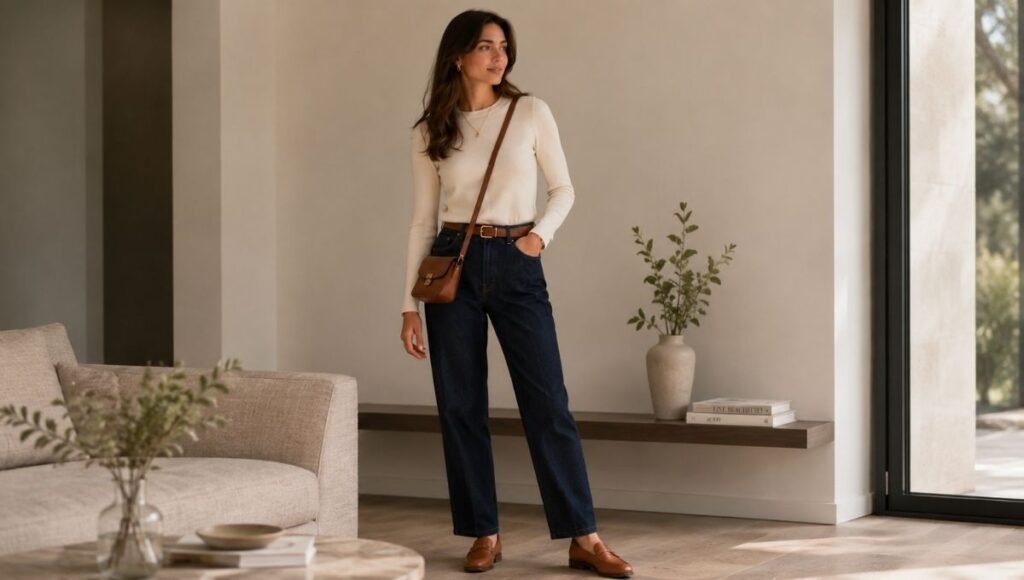
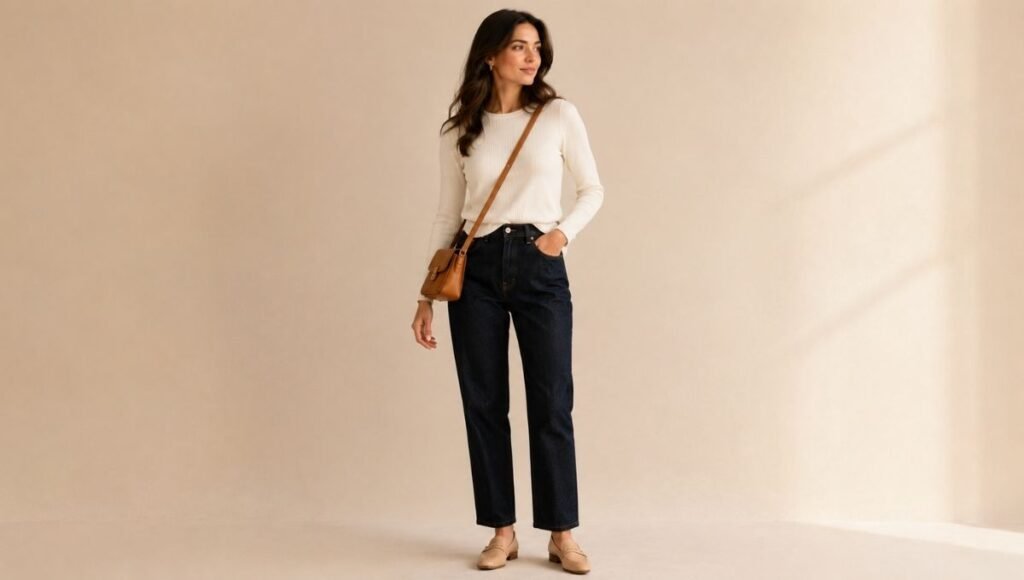
Casual old money: Straight-leg or wide-leg dark wash jeans + a cream or ivory fitted crewneck or turtleneck + tan leather loafers + a structured leather bag. No visible logos. Hair neat but not overly styled.
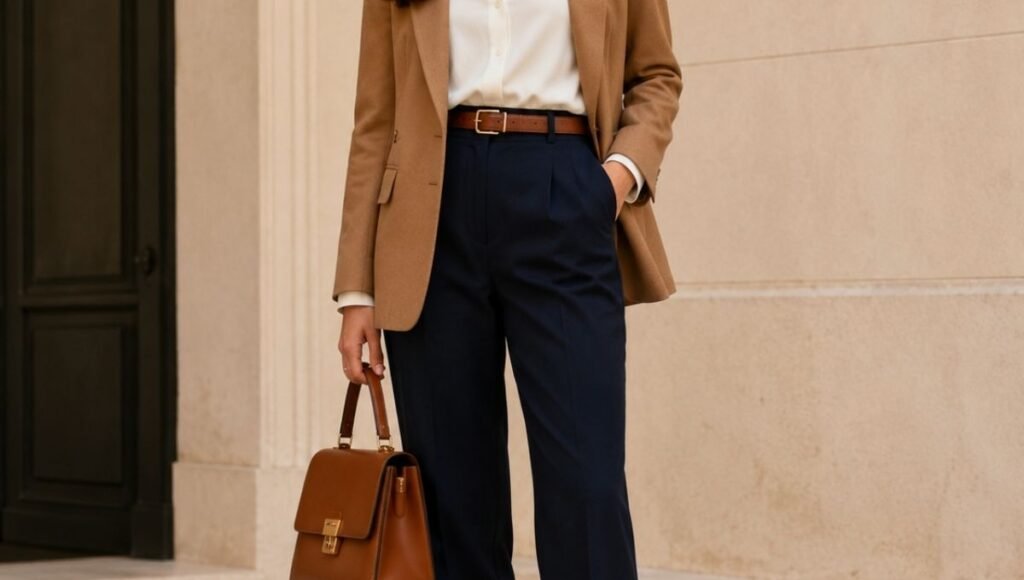
Smart casual old money: Tailored camel or navy trousers + a crisp white button-down (slightly oversized, sleeves rolled) + a blazer in a complementary neutral + leather loafers or low-heel pumps.
Weekend old money: Chino trousers in khaki or olive + a fine-knit sweater in camel or forest green + clean white leather sneakers or loafers + a simple crossbody. This is the old money casual uniform — relaxed but never sloppy.
Evening old money: A midi dress in a solid jewel tone (navy, forest green, deep burgundy) + kitten heel pumps + pearl or gold minimalist jewelry. One piece of jewelry, not three.
The Old Money Shopping Principle
The old money approach to shopping is the opposite of fashion shopping. Instead of buying many things and wearing them briefly, buy few things and wear them indefinitely. Before any purchase, ask: will I still want to wear this in five years? If the answer is yes, buy it. If the answer requires trend qualification (“if this is still in style”), don’t.
French Girl Style: What It Actually Means in Practice
French girl style has been written about so extensively that the clichés have almost overtaken the substance. Striped tops, red lips, effortless hair — the aesthetic has been reduced to a costume. The actual principle is simpler and more useful.
The Real Principle Behind French Girl Style
French style is built on one idea: the outfit should look like it required less effort than it did. The goal isn’t looking underdressed — it’s looking like the clothes are working for you rather than you working to wear them. This creates the “effortless” quality that’s the signature of the aesthetic.
Practically, this means:
One intentional element per outfit. A French girl outfit has one piece that’s doing the interesting work — a great coat, a distinctive shoe, an interesting texture — and everything else is simple. Two interesting elements cancel each other out.
The deliberate imperfection. A French tuck instead of a full tuck. A slightly oversized blazer worn open. Sleeves rolled. Hair that’s 90% done rather than 100%. These small choices signal that the wearer is comfortable rather than trying — which is the entire aesthetic.
Quality in the basics. The French wardrobe invests in the quality of boring pieces — a perfect white shirt, a great pair of jeans, a coat that fits properly. The interesting things are added selectively. This only works when the basics are good enough to stand alone.
French Girl Style Outfit Formulas
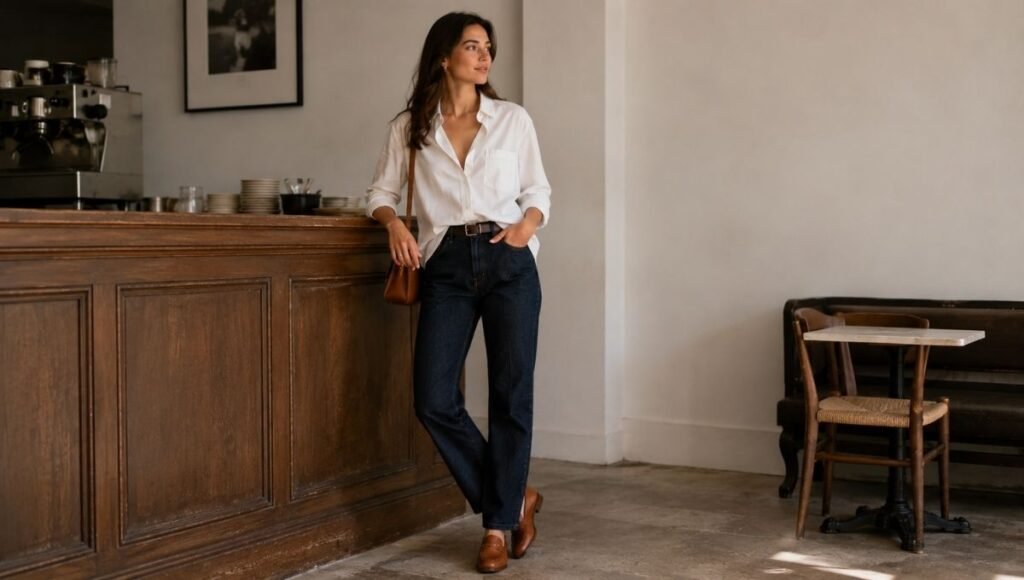
The signature French girl casual: Straight-leg or slightly relaxed dark jeans + a white button-down (half-tucked, sleeves rolled, one button open at the collar) + loafers or simple ballet flats + small gold hoops. This is the French girl formula distilled. It works because the jeans and shirt are classics and the imperfect tuck signals relaxed confidence.
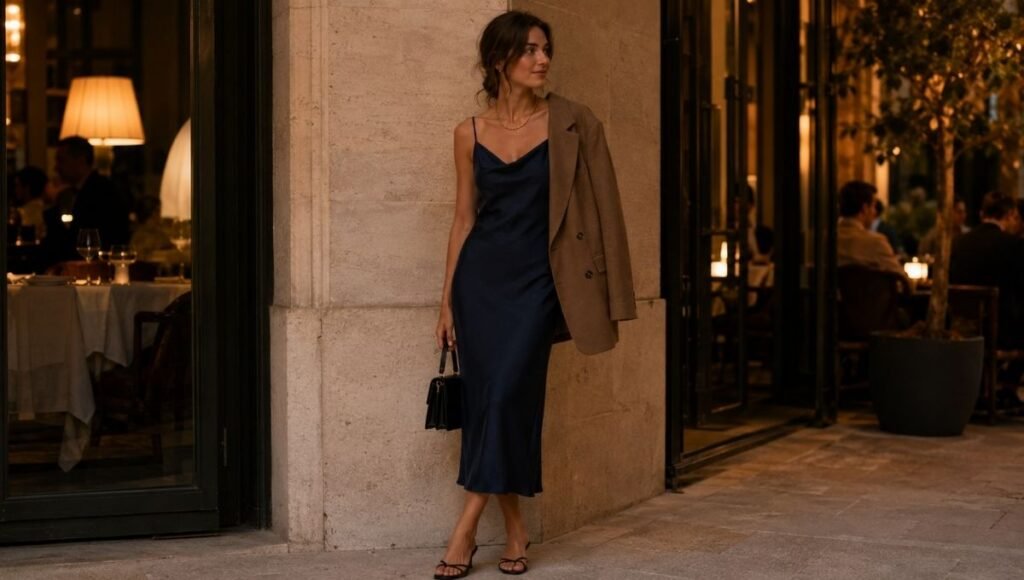
The French girl evening: A simple slip dress or midi dress in a solid color + a blazer thrown over one shoulder or worn unbuttoned + simple heeled sandals or pointed kitten heels + one piece of jewelry (a gold chain or simple hoop, not both). The “thrown over shoulder” blazer is the deliberate imperfection that makes the look French rather than formal.
The French girl winter: Straight-leg jeans or tailored trousers + a fine-knit crewneck (tuck the front slightly) + a trench coat + loafers or ankle boots. Add a silk scarf at the neck or bag handle as the single interesting element.
French girl accessories logic: One statement piece, not three. A great bag worn with simple jewelry. A silk scarf worn with minimal earrings. The accessories should have a conversation with each other — not a competition.
What French Girl Style Is Not
It’s not about purchasing French brands. It’s not about being thin. It’s not about a specific body type. And it’s not about being effortless naturally — it’s about the deliberate construction of an effortless appearance. The French girl aesthetic requires just as much thought as any other aesthetic; it just presents itself differently.
Classic Style Women: The Timeless Approach
Classic style is the most durable of the major aesthetic categories because it has no relationship with trend cycles. A classic style wardrobe built today will look identical — and equally appropriate — in ten years.
The Classic Style Foundation
Classic style is built on the premise that a small number of well-chosen, timeless pieces in neutral and near-neutral colors will generate more outfit options than a large number of trend-driven pieces. The math works because every classic piece works with every other classic piece.
The classic color palette: Navy, white, cream, black, camel, grey, and burgundy as accent. These colors work together in any combination, which means any two pieces from the wardrobe can be an outfit.
The classic silhouettes: The silhouettes that have been flattering for decades and will continue to be — a straight-leg or tailored trouser, a fitted crewneck or turtleneck, an A-line or pencil skirt, a tailored blazer, a wrap dress. These cuts don’t require trend context to look appropriate.
The classic fabric hierarchy: Wool and wool blends for structure. Cotton for shirts and casual pieces. Silk or silk-look fabrics for elevated occasions. Leather for shoes and bags. These fabrics look intentional in ways that synthetic alternatives don’t.
Classic Style Outfit Formulas
Classic work: Navy or charcoal tailored trousers + a white or cream silk-feel blouse + a structured camel blazer + pointed-toe loafers or low-heel pumps. This outfit has existed in some version for sixty years. It will exist in sixty more.
Classic casual: Dark straight-leg jeans + a fitted crewneck in camel, cream, or navy (tucked) + white leather loafers or clean sneakers. Simple, complete, requires no thought once the pieces exist in your wardrobe.
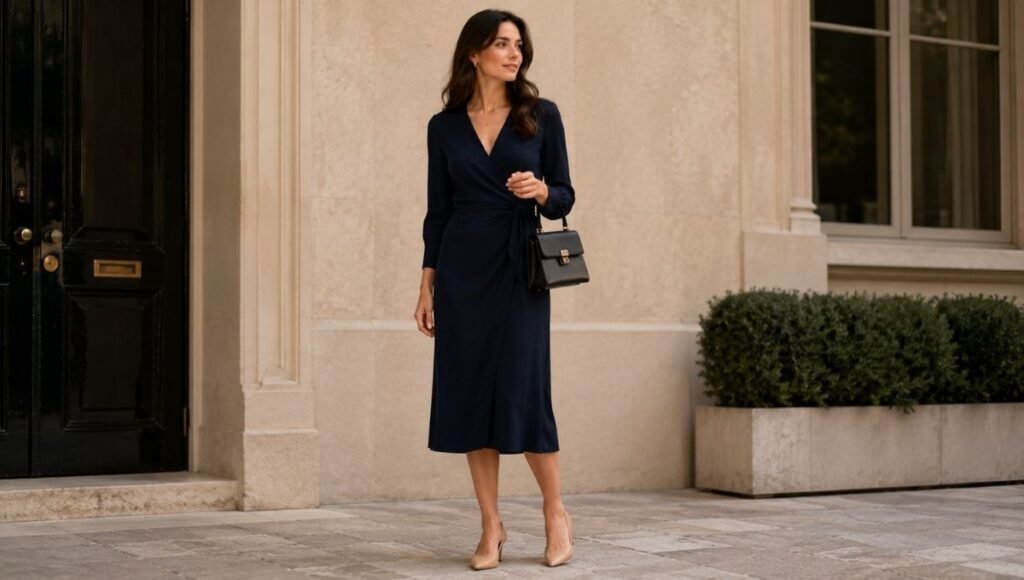
Classic evening: A wrap midi dress in navy or burgundy + simple strappy heeled sandals in a neutral + one piece of delicate gold jewelry. The wrap silhouette is the most universally flattering classic evening option because it creates a defined waist on every body type.
Quiet Luxury Style: The Modern Refinement
Quiet luxury emerged as a named aesthetic relatively recently, but its principles are old. It sits between old money and French girl — sharing old money’s investment philosophy and French girl’s restraint, but with a more contemporary execution.
What Separates Quiet Luxury From Old Money
Old money style has visible signals of the old money world — the prep school blazer, the inherited jewelry, the specific brand codes of equestrian and sailing culture. Quiet luxury removes these signals entirely. The goal is to look expensive without the codes of any specific wealthy subculture. It’s accessible in a way that old money is not, because it requires no cultural knowledge — only restraint and quality.
Quiet luxury in practice:
- Monochromatic or near-monochromatic outfits — one color family from head to toe
- Extremely high-quality basics that need no other element to look complete
- Zero visible branding
- Fabrics that have a tactile quality — cashmere, fine wool, heavy cotton, real leather
- A very narrow, very muted color palette: cream, oatmeal, taupe, ivory, soft grey, warm white, camel
Quiet Luxury Outfit Formulas
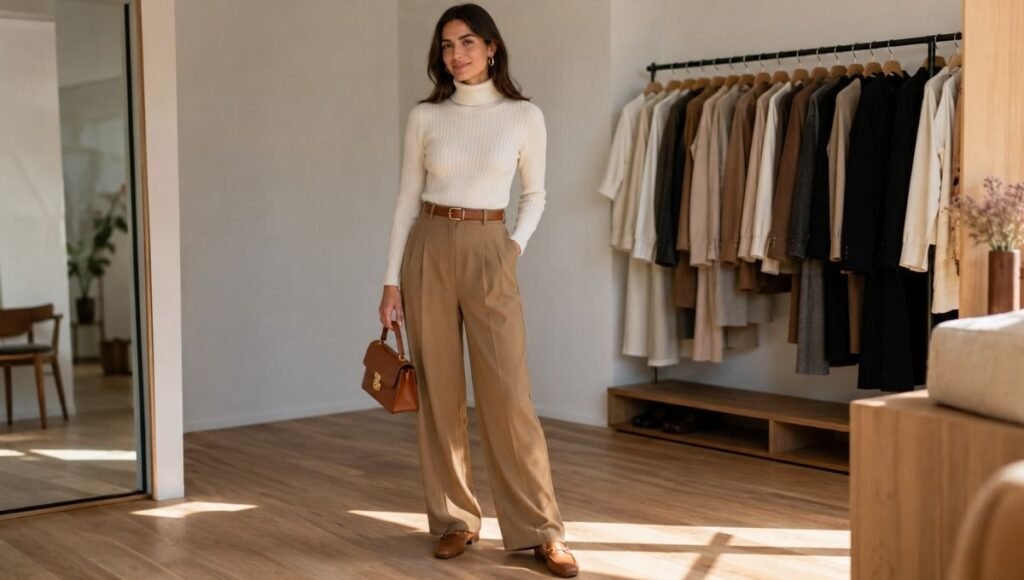
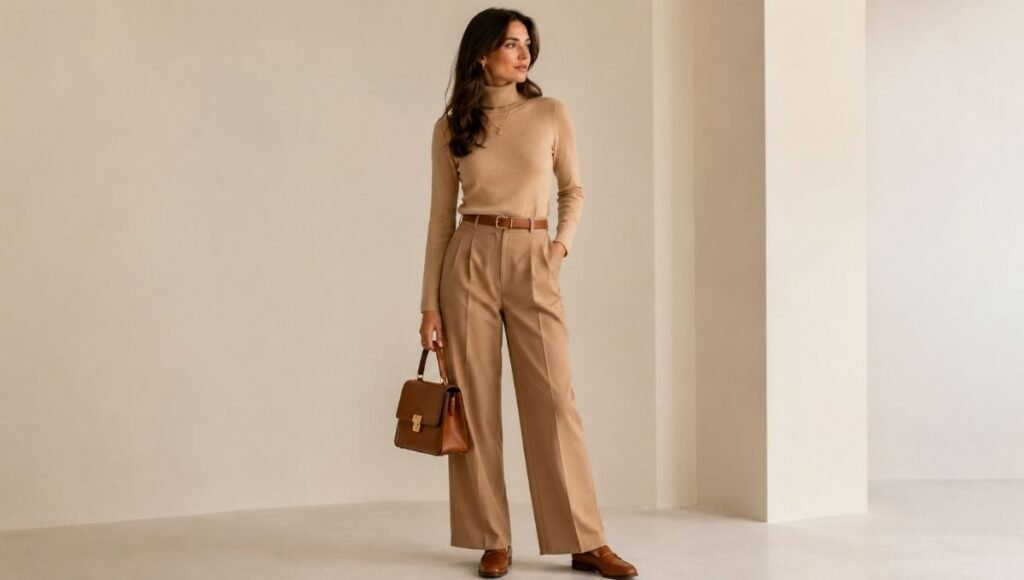
Quiet luxury daily: Camel or cream wide-leg trousers + a matching or tonal fine-knit crewneck (fully tucked) + simple tan leather loafers + a structured leather bag in cream or camel. The monochromatic effect is the quiet luxury signature.
Quiet luxury work: Tailored grey trousers + a soft grey or ivory fitted turtleneck + a camel or ivory structured blazer + pointed-toe cream or tan pumps. The tonal palette is what reads as quiet luxury rather than generic office wear.
How to Look Put Together: The Daily Formula
This is the most searched and least satisfactorily answered question in everyday style. How to look put together gets searched 260 times a month with a KD of 6 — meaning almost no one has written a genuinely useful answer.
Here it is.
What “Put Together” Actually Means
An outfit reads as put-together when three conditions are met:
- The formality level of all pieces matches
- There’s one clear focal point (one piece doing the interesting work)
- The finishing detail is intentional — the shoe, the bag, or the outer layer has been chosen, not grabbed
The absence of any one of these three creates the “something’s off” feeling that’s hard to name but easy to recognize.
The Put-Together Formula
Step 1: Check formality consistency. Is every piece at the same general formality level? A blazer with athletic leggings, a sequined top with casual shorts — these create the visual dissonance that reads as “not put together.” Fix the outlier.
Step 2: Identify the one interesting element. In any outfit, one piece should be doing the visual work. A printed blouse with plain trousers. A distinctive coat over simple clothes. An interesting shoe with a basic outfit. If every piece is equally statement or equally basic, the outfit lacks the contrast that creates visual intention.
Step 3: Check the finish. The shoe is the finish in most outfits — it’s the last thing the eye reaches and it determines whether the outfit looks complete. A clean, intentional shoe (loafer, ankle boot, pointed-toe flat, simple sandal) finishes an outfit. A scuffed, worn, or inappropriately casual shoe undermines it regardless of what’s above.
Step 4: The one-accessory check. Before leaving: have you added one piece of jewelry? Not four — one. Gold hoops cover 80% of scenarios. A simple necklace. A delicate ring. The single piece of jewelry is the detail that differentiates “I got dressed” from “I put together an outfit.”
How to Look More Put Together Without Buying Anything
The fastest put-together upgrades that require no new purchases:
The tuck. Tucking the front of any top into any bottom (full tuck or French tuck) creates immediate waist definition and signals that the outfit was assembled deliberately. The tuck is worth more than most clothing purchases.
The shoe upgrade. Swapping whatever casual shoe you’d default to for a loafer, an ankle boot, or a simple pointed flat immediately elevates the rest of the outfit by two formality levels. The shoe is doing most of the put-together work in any casual outfit.
The one-color principle. Wearing pieces in the same color family (tonal dressing) creates an automatic visual coherence that reads as intentional. Navy trousers + navy turtleneck + tan shoes. The tonal base reads as considered; the single contrasting shoe creates visual interest without disrupting the clean line.
Building Your Style: From Discovery to Wardrobe
Once you’ve identified your style direction — whether it’s old money, French girl, classic, quiet luxury, or a combination of these — the building process is the same:
Audit what you have. Which pieces already fit the aesthetic you’ve identified? These stay. Which pieces work against it or belong to a different aesthetic direction? These can go.
Identify the three gaps. What’s missing that would make your current wardrobe more functional within your aesthetic? Usually it’s a key neutral (a specific shoe, a specific outer layer, a specific versatile top) that would unlock multiple combinations.
Shop for those gaps only. Not for the aesthetic generally — for three specific missing pieces. This is the discipline that separates style from fashion: fashion buys broadly toward a feeling; style buys specifically toward a function.
The result: A wardrobe that has a consistent visual identity, where everything works with everything else, and where getting dressed becomes a system rather than a daily negotiation.
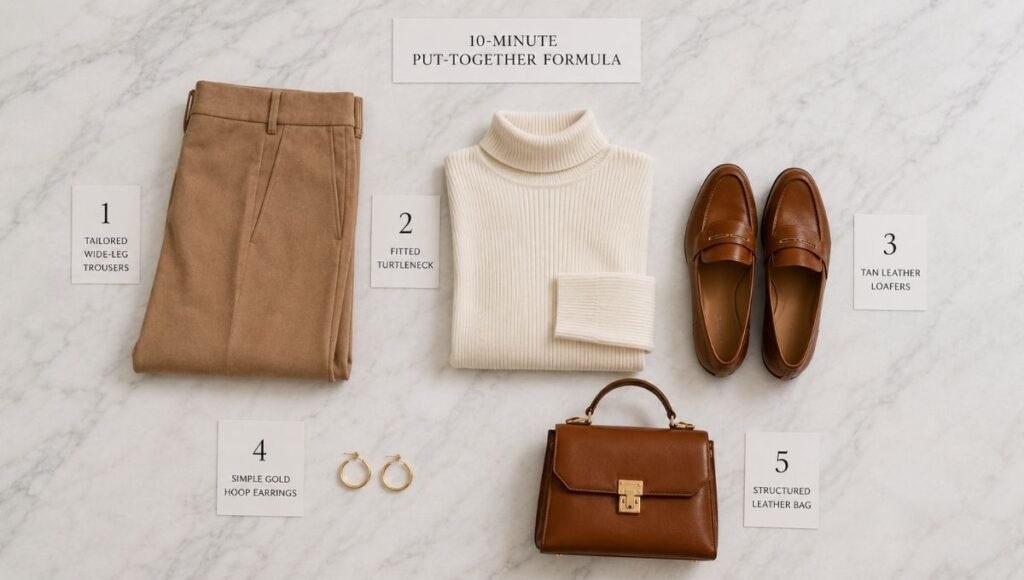
The 10-Minute Put-Together Outfit Formula
Any aesthetic, any body type, ten minutes:
Step 1: A high-rise bottom in your aesthetic’s signature cut (tailored trouser for old money/classic, straight-leg jeans for French girl, wide-leg trouser for quiet luxury). Step 2: A fitted neutral top, tucked. Step 3: A clean shoe appropriate to the formality level. Step 4: One piece of jewelry — gold hoops for everything. Step 5: If needed, a structured outer layer.
Five decisions. The aesthetic is communicated through which specific pieces fill each step, not through how long you spent deciding.
FAQ: How to Find Your Personal Style
How do I find my personal style? Start with a wardrobe audit: look at what you actually wear, not what you own. Notice the color patterns, silhouette patterns, and formality level of your regular rotation. These patterns are your existing style. The goal is to identify them, become intentional about them, and stop adding pieces that work against the pattern.
What is old money style for women? Old money style is built on tailoring, quality natural fabrics, no visible branding, a narrow warm-neutral color palette (navy, camel, cream, forest green, burgundy), and classic silhouettes that exist outside of trend cycles. The principle is investment over novelty — buying fewer pieces of higher quality and wearing them for years rather than seasons.
What is French girl style exactly? French girl style is the deliberate construction of an effortless appearance: one interesting element per outfit, the rest kept simple; deliberate imperfections (a half-tuck, a slightly oversized blazer) that signal comfort rather than effort; and quality basics that can stand alone without interesting additions. It’s less about specific pieces and more about the relationship between pieces.
How do I look put together every day? The formula: formality consistency across all pieces, one clear focal point (one interesting element), and an intentional finish (shoe, outer layer). Add one piece of jewelry. Tuck the front of your top. The tuck and the shoe together do 80% of the put-together work in any casual outfit.
What is quiet luxury style? Quiet luxury is monochromatic or tonal dressing in very muted, very high-quality fabrics with zero visible branding. The color palette is cream, oatmeal, camel, ivory, and soft grey. The goal is to look expensive through fabric quality and restraint rather than through recognizable brand signals.
Explore Specific Style Guides on TopChicWear
Dress for your body type first:
- How to Dress for Your Body Type: The Complete Style Guide — the foundation before any aesthetic. Understanding your proportions makes every aesthetic look better on you specifically.
- Pear, Apple & Rectangle Body Type Fashion — specific outfit formulas for three of the most common body types
Apply your style to specific items:
- Linen Pants for Women: How to Style Them — a key piece in old money, French girl, and quiet luxury aesthetics
- What to Wear With Wide Leg Pants — wide-leg trousers are the cornerstone of quiet luxury styling
- How to Style a Trench Coat — the trench coat is the French girl and old money outer layer of choice
Build the wardrobe:
- Capsule Wardrobe for Women: Build One From What You Already Own — the practical next step after identifying your style direction
- How to Build a Capsule Wardrobe — the step-by-step execution guide
Sophie Hartwell covers practical personal style advice for women who want their wardrobes to reflect who they actually are at TopChicWear.
References:
- Peluchette, J., & Karl, K. (2007). The impact of workplace attire on employee self-perceptions. Human Resource Development Quarterly, 18(3), 345–360.
- Slepian, M. L., Ferber, S. N., Gold, J. M., & Rutchick, A. M. (2015). The cognitive consequences of formal clothing. Social Psychological and Personality Science, 6(6), 661–668.
- Kwon, Y., & Workman, J. E. (2019). Clothing fit satisfaction and body image. Journal of Consumer Psychology, 29(2), 214–229.
Disclosure: This post may contain affiliate links. We may earn a small commission if you purchase through our links at no extra cost to you. All recommendations are genuinely our own.