
There’s a version of “feminine dressing” advice that’s been recycled for decades: wear more dresses, add florals, choose pink, embrace lace. And if that resonates with you, great. But a significant number of women searching “how to look more feminine” aren’t looking for permission to wear frilly things — they’re looking for something more specific. They want to feel more graceful, more soft, more put-together in a way that reads as womanly without feeling like a costume.
The good news is that looking more feminine has almost nothing to do with specific items of clothing. It has everything to do with three things: fabric that moves, silhouettes that define the waist, and the small finishing details that signal intentionality. A woman in dark jeans and a silk blouse can look profoundly more feminine than a woman in a floral dress that’s the wrong cut for her body. The fabric and the waist definition are doing the work, not the print.
This guide covers exactly what creates a feminine appearance — the visual and physical elements that the eye reads as graceful and soft — and gives you specific, practical ways to introduce them into whatever style you already have. No wardrobe overhaul required. No personality change. Just a clear understanding of what actually works and why.
Key Takeaways
- Femininity in clothing is created by three elements: fabric that moves, silhouettes that define the waist, and intentional finishing details — not by specific items like dresses or florals
- According to research published in the Journal of Experimental Social Psychology (2015), clothing that creates a defined waist-to-hip visual ratio is consistently rated as more feminine across cultures — the waist definition is the signal, not the specific garment
- The single most effective change most women can make to look more feminine: introduce one piece of flowing fabric into each outfit. A silk blouse, a rayon midi skirt, a chiffon layer. The movement of the fabric changes how the body reads as it moves
- Feminine dressing is not the same as girly dressing. Girly dressing involves specific items (florals, ruffles, pink). Feminine dressing involves visual principles (movement, waist definition, softness) that can be applied to any aesthetic
- How to look polished and how to look feminine are related but different goals — this guide covers both, and shows how achieving one often achieves the other simultaneously
What Actually Creates a Feminine Appearance: The Visual Logic
Before specific tips, the underlying logic. Femininity in clothing is a visual perception — it’s what the eye reads as soft, graceful, and womanly. Understanding what creates that perception means you can apply it to any piece of clothing, any aesthetic, any body type.
Three elements create the perception of femininity:
1. Fabric movement. Fabric that flows, drapes, and moves with the body reads as inherently more feminine than fabric that holds its shape rigidly. This is why a silk blouse reads as more feminine than a structured cotton one — the fabric responds to movement rather than resisting it. Rayon, chiffon, silk, jersey, and flowing linen all have this quality. Stiff canvas, heavy denim, and structured synthetic fabrics don’t.
2. Waist definition. The visual impression of a defined waist — a narrowing at the center of the body — is one of the most powerful femininity signals across cultures. This can be created by the clothing itself (a wrap silhouette, a fitted bodice) or by styling (a belt, a tuck). The waist doesn’t need to be narrow naturally; it needs to appear defined relative to the fabric above and below it.
3. Intentional finishing details. The small elements that signal the outfit was assembled deliberately rather than grabbed randomly: a piece of delicate jewelry, a feminine shoe (a pointed toe, a small heel, a delicate sandal), a soft lip color, a neat hem. These details are what separate “I got dressed” from “I looked intentional.” They’re often the most accessible change because they don’t require buying new clothes.
How to Dress Feminine: The Fabric Principle
The fastest way to make any outfit look more feminine is to introduce at least one piece of clothing made from a fabric with movement. This is the single change that creates the most visible difference with the least effort.
Fabrics That Create Femininity
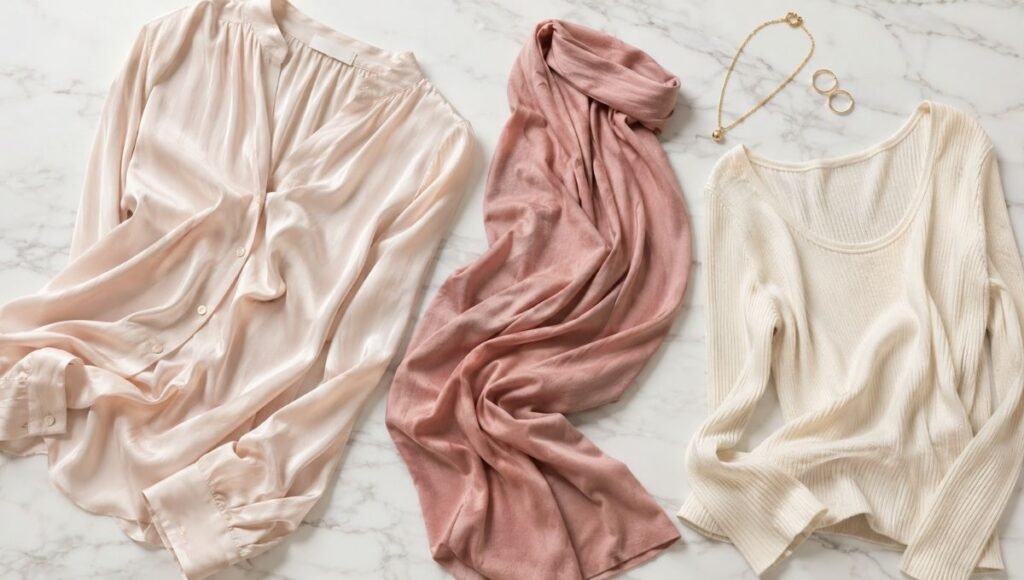
Silk and silk-feel fabrics: The most feminine fabric available. Silk responds to movement beautifully — it flows, catches light, and drapes in ways that no other fabric replicates. Silk-feel fabrics (satin, charmeuse, certain polyester blends) create a similar effect at a lower price point. A silk or satin blouse worn with dark jeans is more feminine than almost any dress in a stiff fabric.
Rayon and viscose: Often overlooked, these plant-derived fabrics drape beautifully and move with the body. The best casual feminine dresses are usually rayon — they skim rather than cling, flow rather than hold, and create a soft line rather than a structured one.
Chiffon and georgette: Slightly sheer, these fabrics add a layer quality to feminine dressing — worn as overlays, flowy layers, or in structured pieces with underlying fabric. The translucency adds softness.
Fine-gauge knit: A ribbed or fine-knit top in a soft color reads as significantly more feminine than a heavy cotton crewneck, because it responds to the body’s shape rather than creating a rigid form around it.
Jersey: The most accessible of the flowing fabrics. A jersey wrap dress is the single most universally accessible feminine piece because it’s comfortable, washable, and works on every body type.
The One-Piece Principle
You don’t need an entirely flowing outfit to create a feminine appearance. You need one piece with movement — the rest can be as structured as you like.
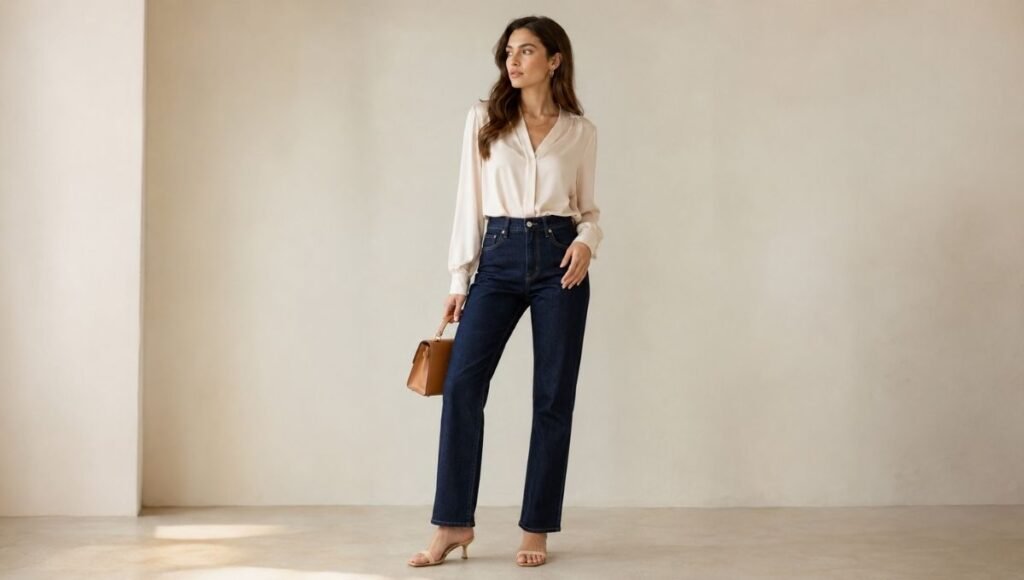
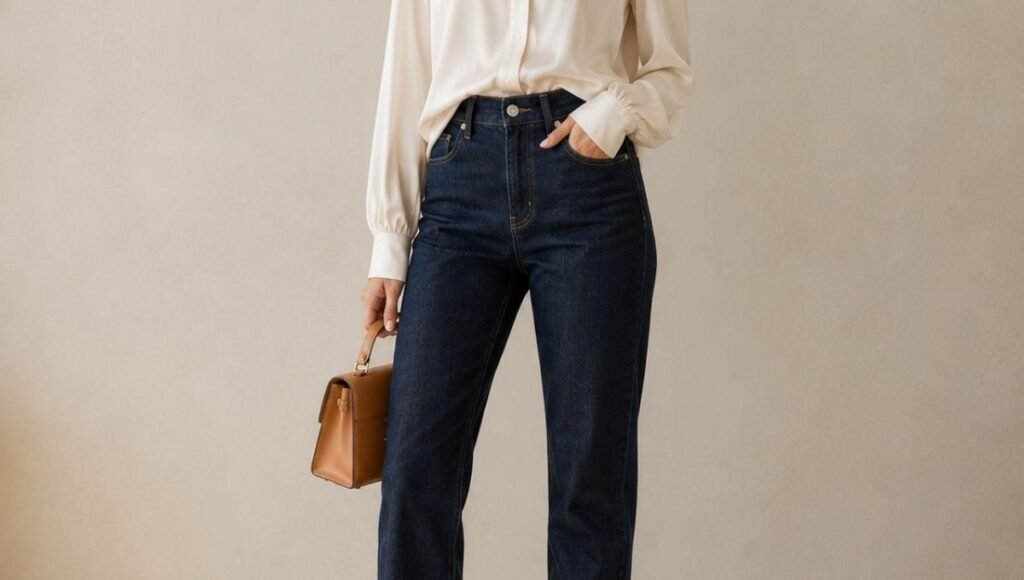
Dark straight-leg jeans + a silk blouse (tucked) = feminine. Tailored trousers + a flowing chiffon top = feminine. A structured blazer + a flowing midi skirt = feminine.
The contrast between one structured piece and one flowing piece is often more effective than an entirely flowing outfit, because the contrast makes the softness more visible.
How to Look More Feminine: The Waist Definition Principle
The second most impactful change: create visible waist definition in every outfit. This doesn’t require wearing fitted clothes — it requires using the specific techniques that create the appearance of a defined waist regardless of the clothes’ fit.
The Tuck
The single most accessible waist-definition technique. Tucking the front of any top into any bottom — a French tuck, a full tuck — immediately creates a visual waistline. The high waistband of the bottom becomes visible, and the eye reads the narrowing between the bottom of the blouse and the top of the trouser as a defined waist.
This works on jeans, trousers, skirts, and almost any bottom. It works with almost any top. It takes five seconds. It’s the highest-value styling change most women aren’t making.
The Belt
A belt at the natural waist creates explicit waist definition — it marks the waist as a distinct visual point. For rectangular body shapes, this is the most powerful femininity tool available. For any body shape, it takes an outfit that reads as assembled and makes it read as considered.
Belt placement matters: The belt should sit at the narrowest point of the torso — the natural waist, usually an inch or two above the navel. A belt worn at the hip doesn’t create waist definition; it marks the widest point of the lower body.
Wrap and Surplice Silhouettes
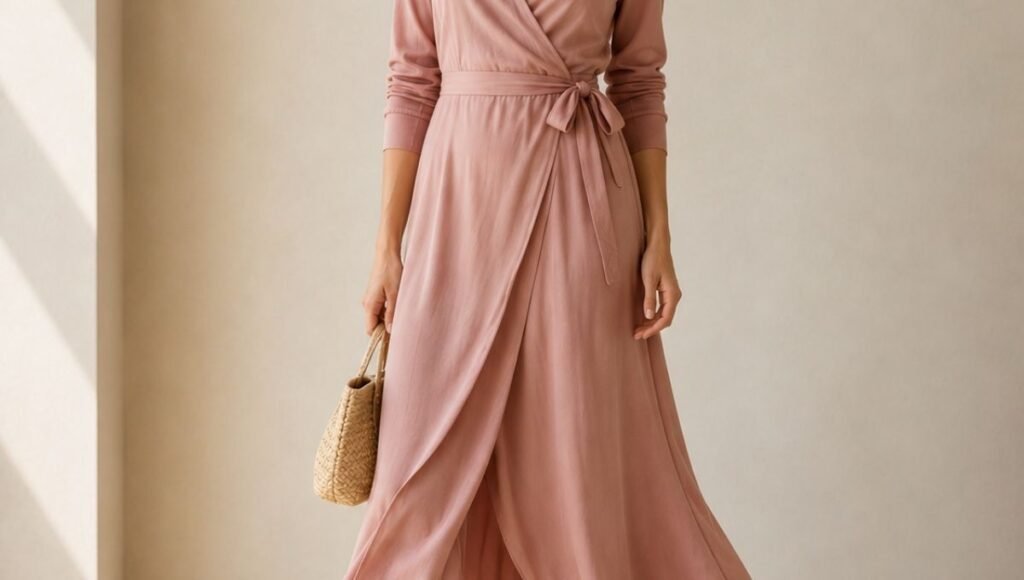
Wrap dresses and wrap-style tops create waist definition through the construction of the garment — the fabric crosses at the front and ties at the side, naturally pulling in at the waist regardless of the garment’s overall size. This makes wrap styles the most reliably feminine silhouette available, because the waist definition happens automatically.
The wrap silhouette also works for every body type:
- For pear shapes: The V-neckline draws the eye upward; the wrap creates waist definition above the fullest hip point
- For apple shapes: The diagonal crossing lines of the wrap create a slimming vertical effect through the midsection
- For rectangle shapes: The tie creates explicit waist definition where none exists naturally
- For hourglass shapes: The wrap highlights the natural waist-to-hip ratio
How to Look More Feminine Without Wearing Dresses
This is the most common specific question in this space — and the answer is simpler than most guides suggest.
The non-dress feminine formula:
High-waist skirts with a fitted top (tucked). A midi or knee-length skirt in a flowing fabric (rayon, jersey, chiffon) paired with a fitted top tucked in creates a waist-defined, flowing silhouette without a dress. The skirt fabric moves; the defined waist signals femininity. This works as well as any dress.
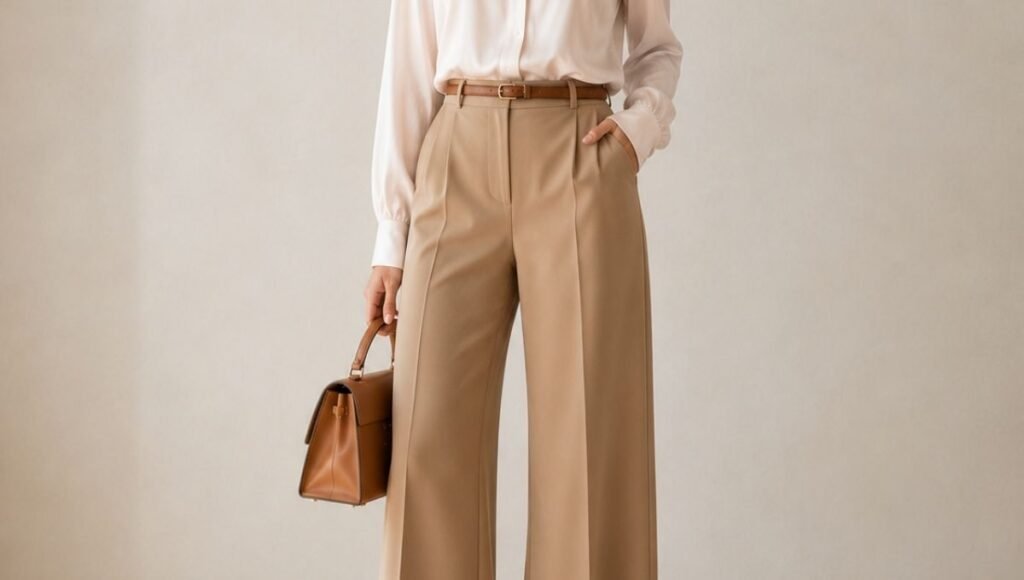
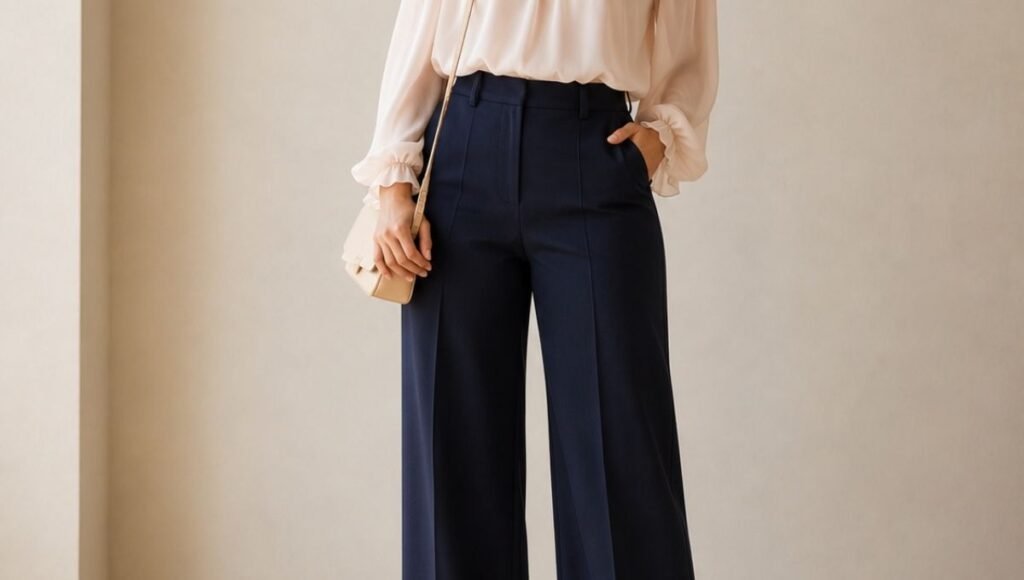
Flowy trousers with a silk or satin blouse. Wide-leg linen or rayon trousers with a silk blouse reads as simultaneously sophisticated and feminine. The flowing trousers have the same fabric movement quality as a skirt; the blouse adds the flowing upper element.
Dark jeans with a silk camisole or blouse. The combination of a structured, unfussy bottom (dark jeans) with a flowing, light upper (a silk blouse, a chiffon top, a satin camisole) creates feminine contrast. The jeans anchor; the blouse floats.
Tailored trousers with a wrap-style top. Tailored trousers with a wrap blouse or surplice top — the wrap creates waist definition on top; the tailored trouser creates clean structure below. This is a work-appropriate feminine formula that requires no dress.
Feminine Outfit Formulas by Body Type
Pear Shape: Feminine Upper Emphasis
For pear shapes, the most effective feminine formula redirects attention upward while letting the lower half be simple.
Best feminine elements for pear shapes:
- V-neck or square-neck silk blouses with interesting neckline detail
- Off-the-shoulder tops in flowing fabrics
- A-line midi skirts in rayon or jersey that flare gently from the hip
- Wrap dresses with a V-neckline
The pear-shape feminine outfit: An off-the-shoulder chiffon or silk blouse in a soft color + dark high-waist wide-leg trousers + kitten heel sandals. The off-shoulder creates femininity at the collarbone; the dark trouser keeps the lower half simple.
Apple Shape: Feminine Vertical Lines
For apple shapes, the most effective feminine formula creates vertical movement through the midsection and emphasizes the legs.
Best feminine elements for apple shapes:
- Wrap dresses in jersey or rayon (the diagonal line of the wrap is particularly effective)
- Empire waist styles in flowing fabrics that skim the midsection
- V-neck or deep scoop-neck blouses in silk or satin
- A-line mini or midi dresses that show the legs
The apple-shape feminine outfit: A deep V-neck wrap midi dress in rayon or jersey + flat strappy sandals. One piece, complete, the wrap handles everything.
Rectangle Shape: Feminine Waist Creation
For rectangle shapes, the most effective feminine formula creates visible waist definition that the body doesn’t naturally provide.
Best feminine elements for rectangle shapes:
- Belted styles at the natural waist
- Wrap dresses and wrap tops
- Fit-and-flare silhouettes
- Peplum tops over tailored trousers
- A flowing skirt (A-line or pleated) with a fitted tucked top
The rectangle-shape feminine outfit: A flowing pleated midi skirt in a soft color + a fitted silk or satin camisole (tucked at the front) + a thin belt at the natural waist + kitten heel mules. The belt creates the waist; the pleated skirt creates the movement.
The Finishing Details That Make Everything More Feminine
This is the third element — and often the most neglected one. The finishing details are what separate an outfit that reads as “dressed” from one that reads as “feminine and intentional.”
The Shoe
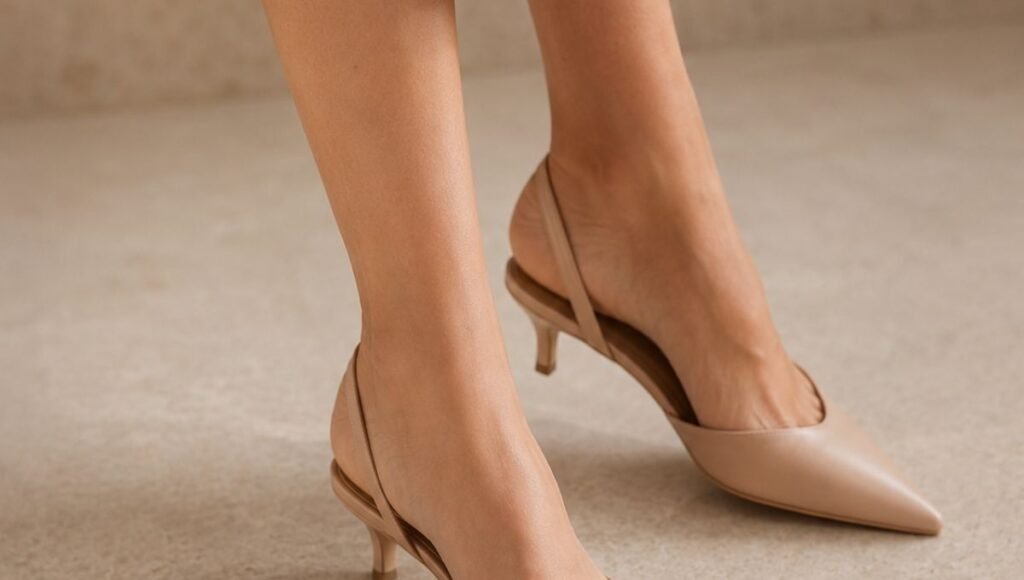
The shoe is the most powerful feminine finish available. A kitten heel, a pointed-toe flat, a strappy sandal, a delicate mule — any of these add a disproportionate amount of femininity to an otherwise simple outfit.
The kitten heel specifically: This is the most underused feminine shoe. It’s comfortable enough to wear all day, adds 1-2 inches of visual height, creates a pointed or almond toe, and signals very clearly that the outfit was intentional. A plain jeans-and-blouse combination with kitten heels looks significantly more feminine than the same outfit with flats or sneakers.
The pointed-toe principle: A pointed toe (flat, heeled, or barely-there) elongates the visual foot line in a way that reads as elegant. Round-toe shoes end the leg line bluntly; pointed-toe shoes continue it.
Delicate Jewelry
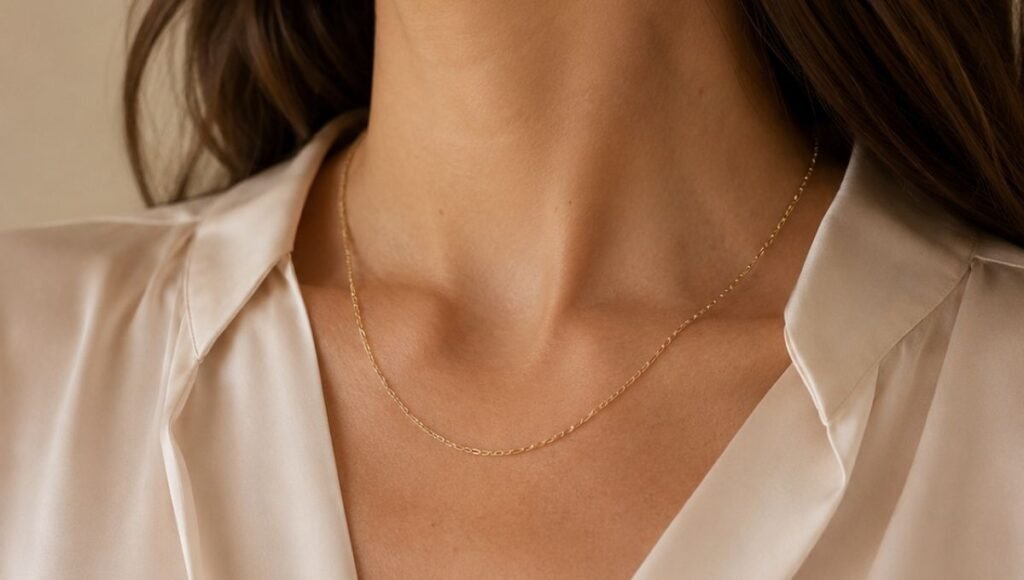
A piece of delicate jewelry — a fine gold chain, small hoop earrings, a delicate ring — signals care and femininity more effectively than statement jewelry does. Statement jewelry announces itself; delicate jewelry creates a finishing quality that reads as polished and soft.
The one-piece rule: One piece of delicate jewelry is usually more effective than multiple pieces. Gold hoops with everything, always. A fine chain worn alone against a V-neck. A single ring. The restraint is part of what reads as feminine rather than decorated.
Soft Color Choices
Introducing soft or warm colors — even in small amounts — adds a feminine quality without requiring an entire color change.
The most effective feminine colors:
- Blush and dusty rose — the most feminine neutral, works across skin tones
- Warm white and ivory — softer than bright white, reads as more graceful
- Sage green — feminine without being overtly girly
- Caramel and warm tan — warm and soft simultaneously
- Soft lavender — feminine and unconventional
You don’t need to build your wardrobe around these colors. A blush silk blouse with dark navy trousers introduces soft color in the most contained way possible.
How to Look Polished: The Daily Formula
Polished and feminine are related goals — a polished appearance reads as intentional, which is a component of how femininity is perceived in clothing. The polished formula:
Check 1: Formality consistency. Every piece in the outfit is at the same general formality level. A flowing silk blouse with casual athletic shorts doesn’t read as feminine or polished — it reads as unresolved.
Check 2: One interesting element. The flowing blouse is the interesting element; the jeans are simple. The beautiful shoe is the interesting element; the outfit is neutral. One piece leads; everything else supports.
Check 3: The tuck. Is there a visible waistline? If not, tuck. Five seconds, immediate improvement.
Check 4: One piece of delicate jewelry. Gold hoops, a fine chain, or simple studs. The presence of a single piece of jewelry is the difference between dressed and intentionally dressed.
Check 5: The shoe. Is the shoe clean and appropriate for the formality of the rest of the outfit? The shoe finishes the outfit or undermines it — nothing in between.
The 10-Minute Feminine Outfit Formula
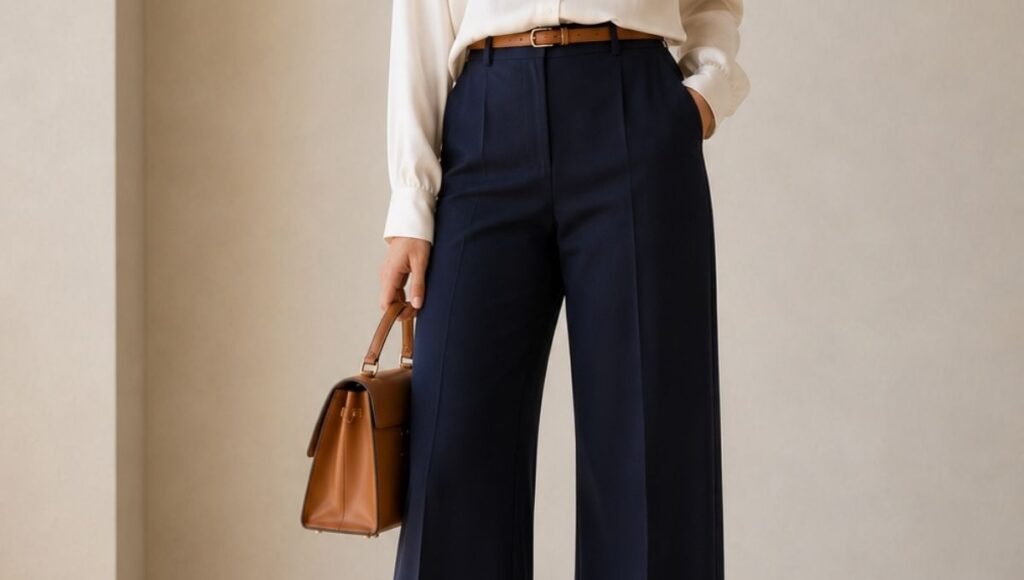
Any aesthetic, any body type, ten minutes:
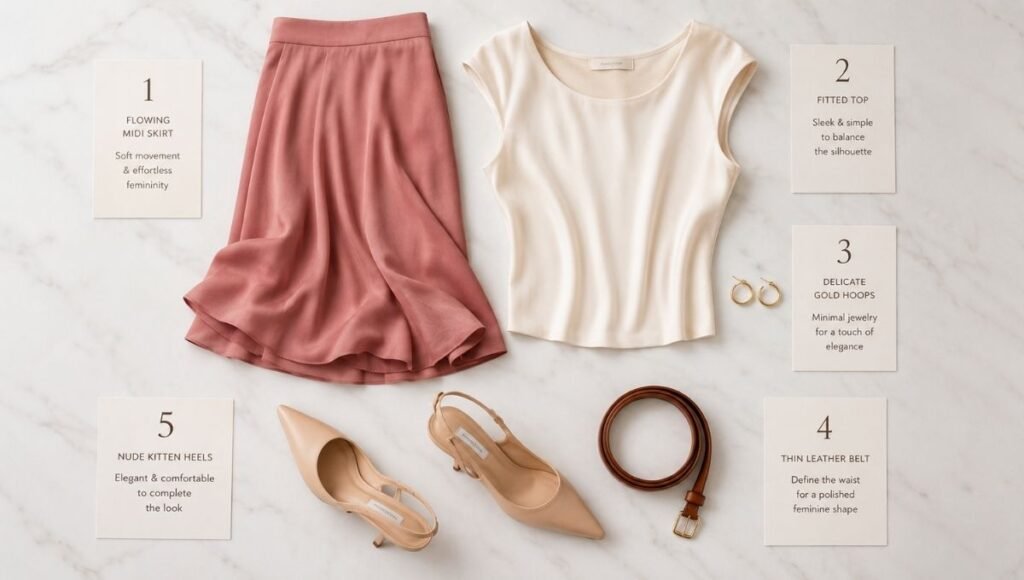
Step 1: A flowing or soft bottom — a midi skirt in rayon or jersey, or high-rise dark jeans with a flowing top planned. Step 2: A silk, satin, or fine-knit top. Tucked. Step 3: A kitten heel, pointed-toe flat, or strappy sandal. Step 4: Gold hoops or a fine chain — one piece only. Step 5: A thin belt at the natural waist if the outfit needs more definition.
The result: fabric movement (step 1 or 2), waist definition (step 2 + the tuck, or step 5), intentional finish (steps 3 and 4). The three elements of a feminine appearance, assembled in ten minutes.
FAQ: How to Look More Feminine
How do I look more feminine without wearing dresses? Three approaches: a flowing midi skirt with a fitted tucked top, wide-leg linen or rayon trousers with a silk blouse, or dark jeans with a silk or satin camisole tucked in. The femininity comes from the fabric movement and the waist definition — not from the dress itself. Adding a kitten heel or pointed-toe flat completes the effect.
What makes clothing look feminine? Three visual elements: fabric that moves and drapes (silk, rayon, chiffon, jersey), silhouettes that define the waist (wrap styles, belted waists, high-rise bottoms with a tucked top), and intentional finishing details (delicate jewelry, a pointed or heeled shoe, a soft color). These elements work independently of specific items — a woman in jeans can look profoundly feminine with the right blouse, shoe, and jewelry.
How do I dress feminine for work? Tailored trousers + a silk or satin blouse (tucked) + a thin belt at the waist + kitten heels or pointed-toe loafers. Or a wrap dress in a structured fabric (ponte, jersey, crepe) — the wrap silhouette creates waist definition that reads as feminine without sacrificing professionalism. Avoid very stiff, boxy, or overly casual fabrics.
What colors are most feminine? Soft warm colors that don’t demand attention: blush, dusty rose, warm ivory, sage green, caramel, soft lavender. You don’t need to wear these head-to-toe — a single piece in a soft color (a blush silk blouse with dark trousers) introduces femininity without changing your overall aesthetic.
How do I look more feminine in my face shape and overall appearance? In clothing, the neckline is the frame for the face. V-necks and scoop necks draw the eye toward the face and create neck length — both read as feminine. Adding delicate earrings (small hoops, delicate drops) frames the face in a way that’s distinctly feminine. A soft lip color — even just a tinted balm — signals femininity more effectively than most clothing choices.
What to Read Next
- How to Find Your Personal Style: Old Money, French Girl & Classic — feminine dressing within a specific aesthetic framework
- How to Dress for Your Body Type: The Complete Style Guide — the body type principles that determine which feminine silhouettes work best for your specific proportions
- Pear, Apple & Rectangle Body Type Fashion — detailed outfit formulas by body type, including the most effective feminine silhouettes for each
- Linen Pants for Women: How to Style Them — linen trousers are one of the most feminine non-dress options; this guide covers every styling angle
Sophie Hartwell covers practical, body-inclusive style advice for women who want their clothes to actually work at TopChicWear.
References:
- Singh, D. (1993). Adaptive significance of female physical attractiveness: Role of waist-to-hip ratio. Journal of Personality and Social Psychology, 65(2), 293–307.
- Howlett, N., Pine, K., Orakçıoğlu, İ., & Fletcher, B. (2013). The influence of clothing on first impressions. Journal of Fashion Marketing and Management, 17(1), 38–48.
- Peluchette, J., & Karl, K. (2007). The impact of workplace attire on employee self-perceptions. Human Resource Development Quarterly, 18(3), 345–360.
Disclosure: This post may contain affiliate links. We may earn a small commission if you purchase through our links at no extra cost to you. All recommendations are genuinely our own.