
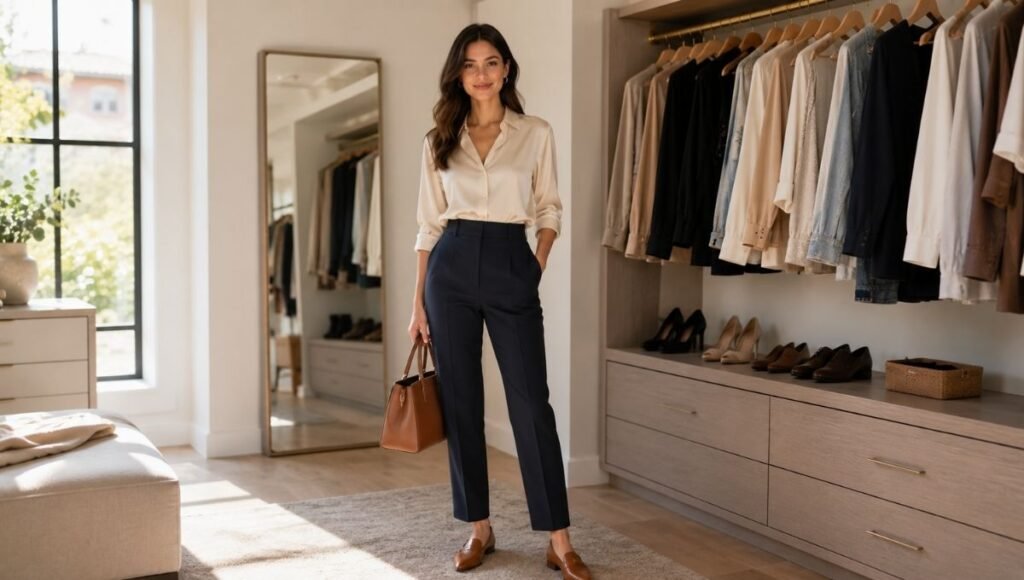
According to a 2024 study cited by the Fashion Psychology Institute, the average woman spends 17 minutes every morning choosing an outfit — and still feels uncertain about the result nearly half the time. That’s almost 104 hours a year standing in front of a closet that’s probably full, feeling like there’s nothing to wear.
The problem is almost never a lack of clothes. ThredUp’s 2025 Resale Report found that most women regularly wear only about 20% of what they own. The real issue is a lack of systems — a clear way to translate individual pieces into complete, occasion-appropriate outfit ideas that actually work in real life.
This guide is that system. We’re covering the underlying logic of how to put together an outfit (the part most style guides skip), then applying that logic to every major occasion a real woman actually faces: work, casual days, date nights, brunch, vacation, weddings, and job interviews. Every section links to a dedicated in-depth guide for that scenario. Think of this as the index — the place that tells you where to go and what to expect when you get there.
Key Takeaways
- The average woman wears only 20% of her wardrobe regularly — outfit systems solve this more reliably than buying more clothes
- Every outfit formula follows the same three-part structure: a base piece + a complementary piece + one intentional finish (shoe, layer, or accessory that completes the look)
- According to research from the Journal of Consumer Psychology (2023), a single intentional accessory increases how “put-together” an outfit is perceived — more than any other single styling decision
- The most important outfit variable isn’t what you wear — it’s whether the formality level matches the occasion. An outfit that’s appropriate is always more effective than an outfit that’s beautiful but wrong for the context
- Body type affects which specific silhouettes work, but the three-part outfit formula applies equally to hourglass, pear, apple, rectangle, petite, curvy, and tall bodies — the formula stays the same, the specific cuts change
How to Put Together an Outfit: The Formula Behind Every Look
Before the occasion-specific advice, the underlying logic. Once you understand this, you can evaluate any combination of clothes — not just the ones in this guide.
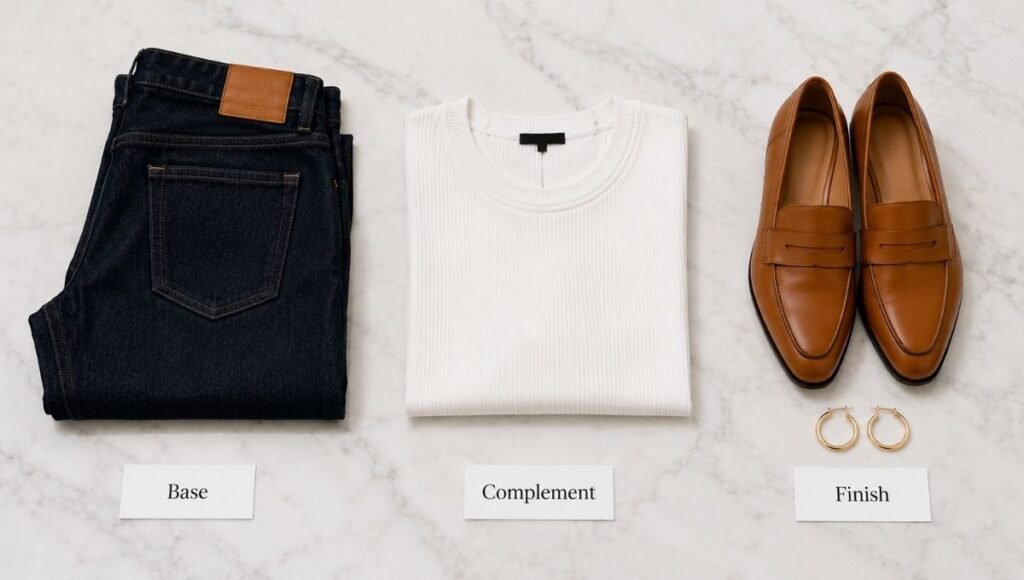
The Three-Part Outfit Formula
Every consistently well-dressed woman, whether she knows it explicitly or not, is operating on a version of this:
Part 1 — The Base: The piece you’re building around. Usually the most significant item in the outfit — a dress, a trouser, a statement top. This piece sets the formality level and the overall silhouette direction.
Part 2 — The Complement: The piece that works with the base without competing with it. If the base is a printed statement dress, the complement is simple shoes. If the base is a plain dark trouser, the complement can be a more interesting top. One piece leads; the other follows.
Part 3 — The Finish: The single intentional detail that makes the outfit look complete rather than assembled. This is usually a shoe (the most powerful finish), a layer (a blazer, a coat), or an accessory (the right earring, the right bag). The finish is what separates “I got dressed” from “I put together an outfit.”
The proportion rule that holds across all three parts: One statement element per outfit. If the top is bold, the bottom is simple. If the shoes are distinctive, the clothing is neutral. If the bag is the point, everything else recedes. Two statement elements compete for attention and create visual noise; one statement element with two supporting elements creates the contrast that reads as intentional.
How to Style an Outfit When Nothing Works
If you’re standing in front of your closet and nothing looks right, the problem is almost always one of three things:
Problem 1: The formality levels don’t match. A blazer with shorts, heels with athletic wear, a cocktail dress with sneakers (unless intentionally deconstructed) — when the pieces signal different dress codes, the outfit reads as unresolved.
Problem 2: There’s no anchor. Every piece is similar in visual weight, color, and significance. Nothing leads; everything competes. The fix: pick one piece as the base and make everything else serve it.
Problem 3: The proportions are off. Two loose, voluminous pieces together. Two very fitted pieces together. The visual tension that makes an outfit interesting requires contrast — one loose, one fitted; one wide, one narrow; one textured, one simple.
Casual Outfits for Women: The Everyday Formula
Casual dressing is where most women spend most of their time — and where the most outfit fatigue happens. The same rotation of jeans and a top, every day, until everything feels boring.
The casual outfit formula isn’t about wearing something more exciting. It’s about making a simple base (jeans and a top) look intentional by getting Part 3 (the finish) right.
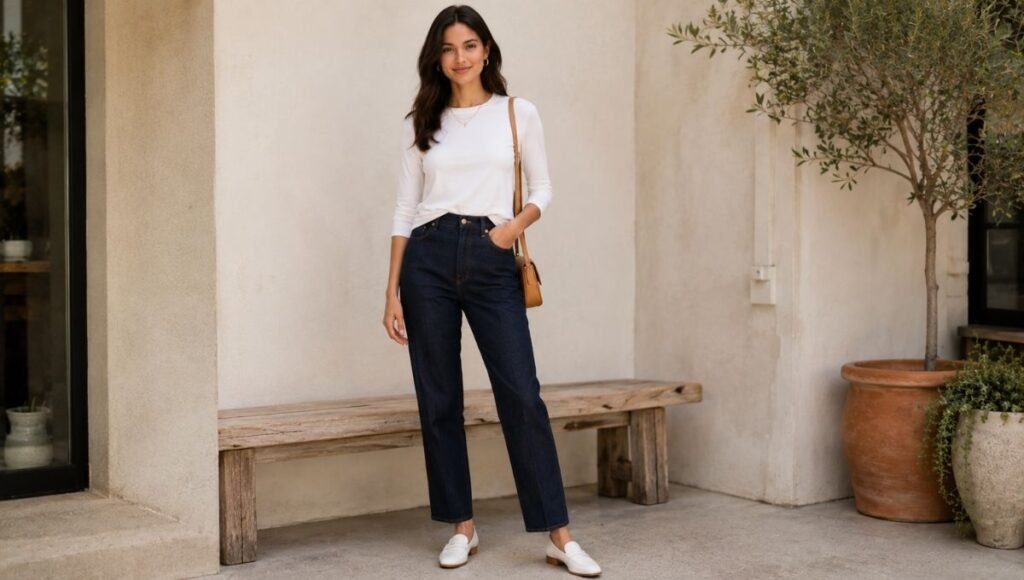
The casual formula: Dark jeans or casual trousers + a fitted top (tucked or French-tucked) + one intentional finish.
What changes the outfit is the finish:
- Dark jeans + white fitted tee + white leather loafers = casual chic
- Same jeans + same tee + a structured blazer = smart casual
- Same jeans + same tee + a long cardigan and ankle boots = fall casual
- Same jeans + same tee + a denim jacket and clean sneakers = weekend
The jeans and top are the base. The finish is the outfit. This is why getting dressed doesn’t have to mean rethinking everything every morning — you’re just rotating the finish.
Casual outfits for petite women: The same formula applies, but the finish needs to be proportional. A full-length cardigan on a petite frame can overwhelm the silhouette; a cropped version maintains the leg proportion. High-rise jeans + fitted top is non-negotiable — the high waist creates the leg length that casual dressing otherwise obscures.
Casual outfits for curvy women: Wide-leg jeans or A-line midi skirts work particularly well as the casual base because they don’t cling. The finish for curvy casual can lean into the silhouette — a structured blazer creates beautiful proportion over wide-leg trousers; a simple trench coat over any casual base adds immediate intention.
Work Outfits for Women: The Office Formula
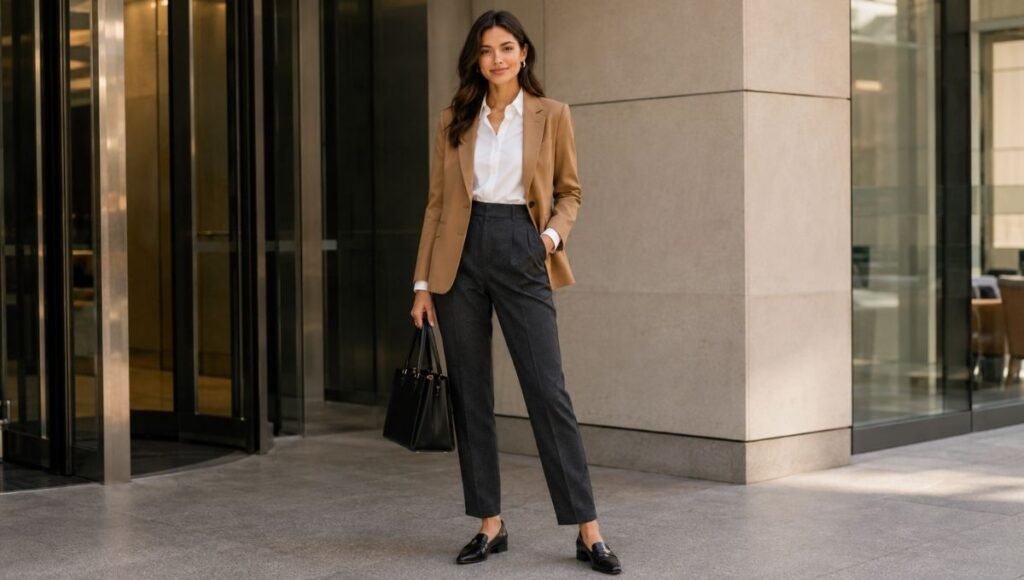
Work dressing has become more complicated since the shift to hybrid and flexible dress codes. “Business casual” means something completely different at a law firm versus a creative agency versus a tech startup. The formula adapts — the underlying logic doesn’t.
The work outfit formula: A polished base + a layer that handles formality transitions + a shoe that works for both commute and desk.
The specific base changes by industry:
- Corporate/Finance: Tailored trousers or a sheath dress in a solid neutral, a structured blazer
- Business casual office: A midi dress in a solid color, or tailored trousers with a fitted blouse
- Creative/Tech: Dark jeans or chinos, an interesting top that reads as intentional, clean footwear
The layer is what makes the formula versatile. A fitted blazer or structured cardigan in the bag handles the temperature differential between the outside and an air-conditioned office, manages the formality shift between commute and meeting, and makes a complete outfit look more complete than it already did.
The work outfit truth most guides don’t say: Fit matters more than formality. A well-fitting midi dress in a moderate fabric will look more professional than an ill-fitting suit in an expensive one. The first investment in a work wardrobe should always be tailoring the pieces you already own, not buying new ones.
→ The full work outfit guide, by industry and body type: Work Outfits for Women: What Is Business Casual and How to Dress
Date Night Outfits: The Evening Formula
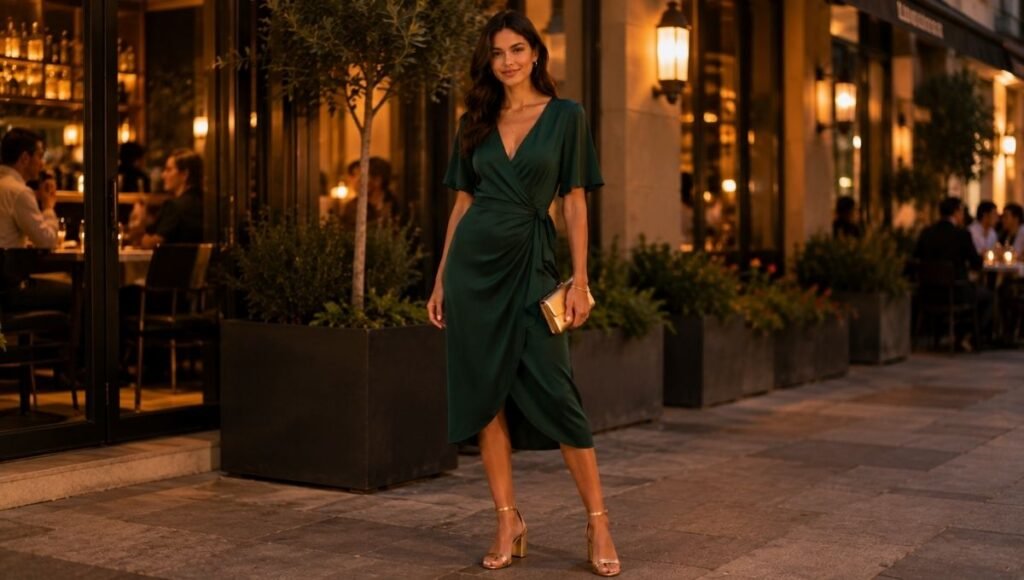
Date night outfit anxiety is real — it’s the intersection of wanting to look your best, wanting to seem like you didn’t try too hard, and not knowing exactly what the occasion calls for.
The date night formula: One elevated piece (a dress or a polished top that reads as “I made an effort”) + one grounding element (a shoe that’s comfortable enough to actually wear all evening) + minimal accessories (the occasion should do the work, not your jewelry).
The elevated piece doesn’t need to be a dress. A silk or satin blouse with dark jeans and heeled boots reads as date night. A wrap dress does. A tailored jumpsuit in a rich color does. The signal is fabric quality and intentionality — not necessarily formality.
The date night mistake most women make: Wearing something uncomfortable in the name of looking better. A dress that requires constant adjustment, shoes that hurt after twenty minutes, a top that needs to be tucked repeatedly — discomfort shows. An outfit you’re not thinking about is more attractive than an outfit you’re managing.
Date night for different scenarios:
- Casual first date (coffee, drinks): Dark jeans + a silk-feel blouse + ankle boots. Elevated but not overdressed.
- Restaurant dinner: A midi dress or tailored trousers + satin camisole + heeled sandals. Occasion-appropriate.
- Activities date (bowling, gallery, show): Something that moves — wide-leg trousers, a comfortable dress, clean sneakers or loafers.
→ The full date night guide by scenario and body type: Date Night Outfits: What to Wear for Every Scenario
Brunch Outfits: The Weekend Morning Formula
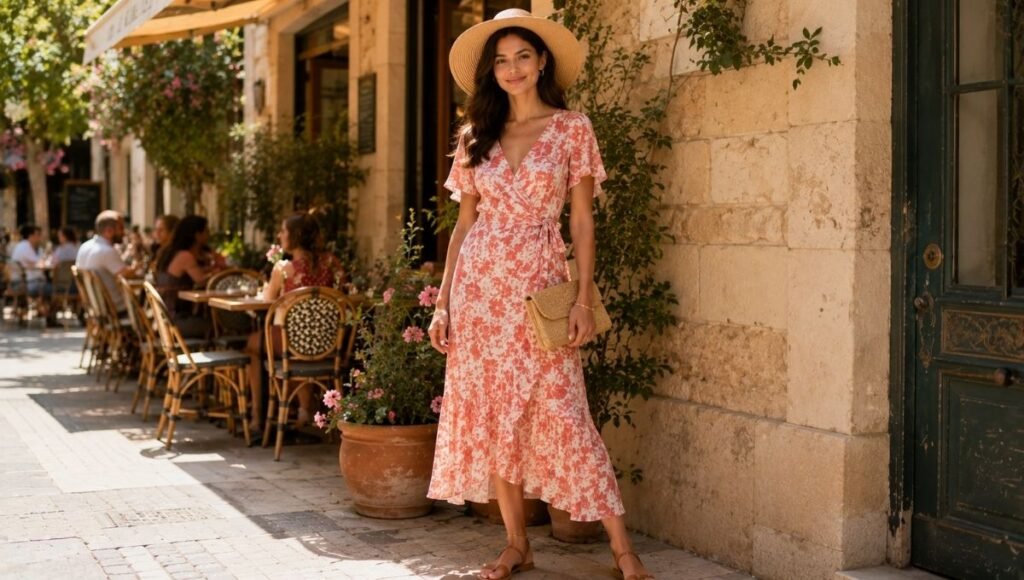
Brunch exists in a specific social register — more intentional than running errands, less formal than dinner. The outfit needs to read as “I got dressed on purpose” without looking like you’re trying too hard on a Sunday morning.
The brunch formula: Something that photographs well in daylight + comfortable enough for a two-hour seated meal + one seasonal accessory.
The best brunch pieces are the ones that do the work without requiring a lot of additional thought: a floral midi wrap dress, a linen co-ord set, a simple sundress with a denim jacket. These read as intentional instantly — you’re not assembling an outfit, you’re putting on a piece that’s already a complete look.
The seasonal brunch adjustment:
- Spring/Summer brunch: A floral or pastel wrap dress + flat sandals + a straw bag. Effortless, seasonal, photographs beautifully in natural light.
- Fall/Winter brunch: Dark jeans + a chunky knit + ankle boots + a structured coat for arrival. Cozy but intentional.
→ The full brunch outfit guide by setting and body type: Brunch Outfits: Cute Ideas for Every Scenario and Body Type
Vacation Outfits: The Travel Formula
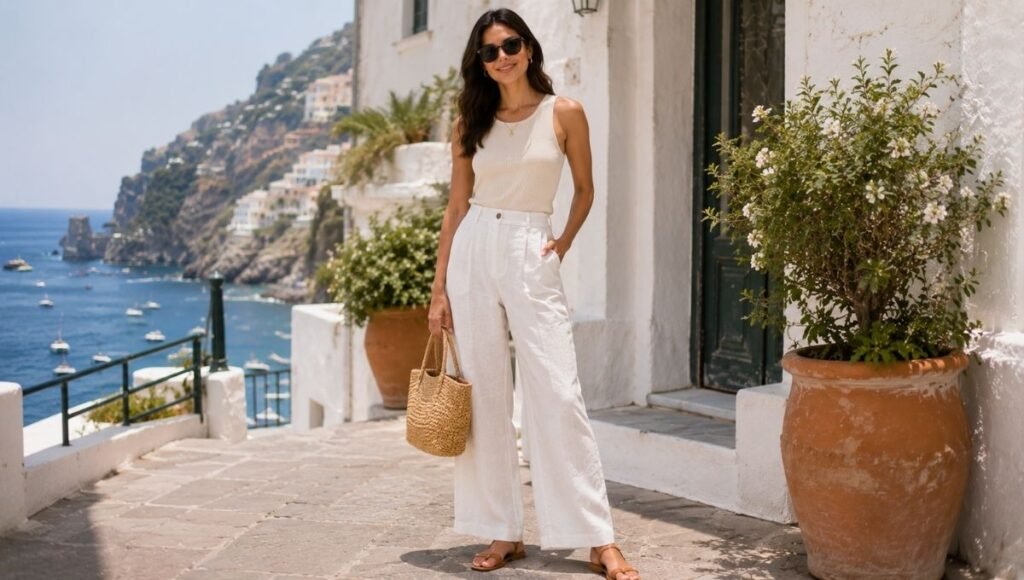
Vacation dressing has a specific constraint that everyday dressing doesn’t: everything you bring needs to work together, because you can’t go back to the closet.
The vacation outfit formula: A color palette of three colors max + pieces that each work with at least three other pieces + one statement item that elevates everything.
The three-color vacation palette is the key. If every piece you pack is in your neutral base (white, black, navy, camel) plus one accent color (terracotta, cobalt, sage), everything works with everything. The statement item — a distinctive bag, a resort dress in a bold print — becomes the piece every photo is built around.
Vacation dressing by destination:
- Beach/resort: Linen and cotton pieces that breathe. Wide-leg linen trousers, simple swimsuit cover-ups, flat sandals, one resort dress.
- City break: Comfortable walking shoes are non-negotiable. Dark jeans, a versatile jacket, one dressier option for dinner.
- Mixed itinerary: Build around one shoe that works for walking and for evenings (a low-block heel sandal, a leather loafer) and let everything else serve that choice.
→ The full vacation outfit guide by destination and packing formula: Vacation Outfits: What to Pack and Wear
Wedding Guest Outfits: The Occasion Formula
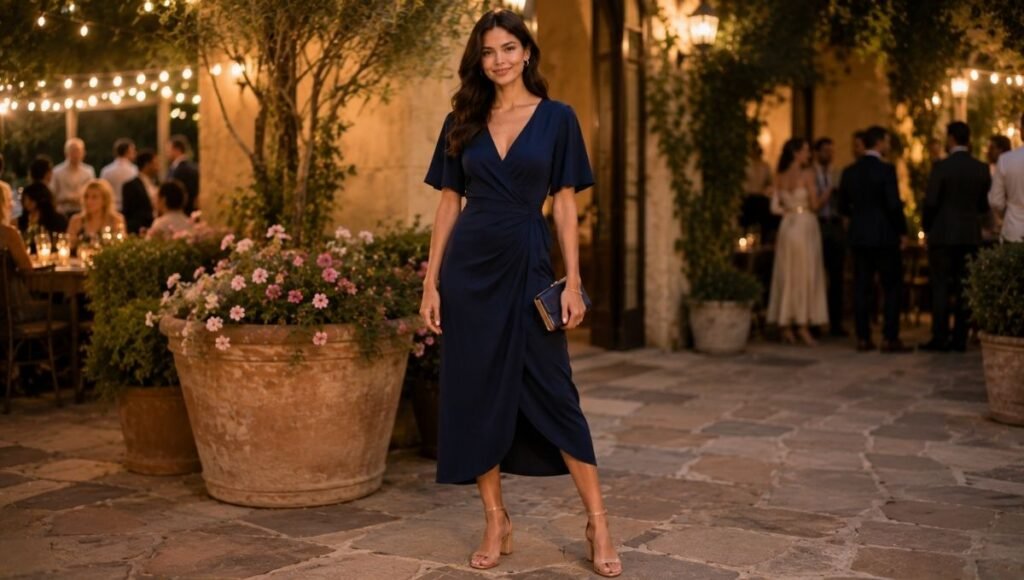
Wedding guest dressing has one rule that overrides everything else: don’t wear white. Beyond that, the formula is about reading the specific signals of the invitation and dressing one level more formal than you think you need to.
The wedding guest formula: Determine the dress code from the invitation signals → choose a silhouette appropriate for that level → choose a color that isn’t white, ivory, or anything that could be mistaken for bridal → finish with occasion-appropriate shoes and a small bag.
Reading the invitation:
- “Black tie” or “formal”: Floor-length gown or a formal cocktail dress. This is as dressed up as most women will get outside of their own wedding.
- “Cocktail attire” or “semi-formal”: A midi or knee-length dress, or dressy separates. The standard wedding guest setting.
- “Garden party” or “casual”: A floral midi dress, a linen dress, or elevated casual separates. More relaxed but still intentional.
- No dress code specified: Default to cocktail attire. It’s better to be slightly overdressed at a wedding than underdressed.
The color question: Navy, emerald, burgundy, dusty rose, cobalt — all excellent wedding guest colors. Avoid white, ivory, cream, and anything with a white base pattern. Some families have strong feelings about red; when in doubt, go navy.
→ The full wedding guest guide including venue-specific formulas: Wedding Guest Outfits: What to Wear
Interview Outfits for Women: The First Impression Formula

The interview outfit has one job: to ensure that nothing about your appearance becomes a distraction from your qualifications. The goal is appropriate, polished, and forgettable — in the best possible way.
The interview outfit formula: Research the company culture → dress one level more formal than their day-to-day dress code → choose fit over formality → remove one accessory.
Industry-specific interview dressing:
- Corporate/Finance/Law: Business professional. Tailored trousers or a sheath dress + a structured blazer. Navy, charcoal, or black. Closed-toe shoes.
- Business casual office: A polished midi dress in a solid color, or tailored trousers with a fitted blouse. One level above their day-to-day.
- Creative industries: Smart casual with personality. Dark jeans + an interesting but not distracting top + a distinctive blazer or outer layer.
- Tech: Smart casual. Dark jeans or tailored chinos + a fitted blouse or simple structured top + clean footwear.
The interview outfit principle no one says directly: The outfit you feel most confident and comfortable in — within the appropriate formality range — will always outperform the “correct” outfit you spend the whole interview adjusting and second-guessing.
→ The full interview outfit guide by industry and body type: Interview Outfits for Women: What to Wear to a Job Interview
Outfit Ideas by Season: A Quick Reference
Fall Outfit Ideas
Fall dressing is layering dressing — the challenge is managing temperature differential across the day rather than finding one outfit that works from morning to evening.
Fall outfit formula: A medium-weight base (a fitted knit, a long-sleeve tee, a blouse) + one layer that adds warmth (a structured blazer, a cardigan, a denim jacket) + ankle boots or loafers that handle both cool mornings and warm afternoons.
→ The full fall outfit guide with seasonal color formulas: Fall Outfits for Women: The Complete Style Guide
Summer Outfit Ideas
Summer dressing is fabric dressing — the right material in the right silhouette solves most warm-weather outfit problems.
Summer outfit formula: Natural fabric (linen, cotton, rayon) in a flowing or relaxed silhouette + flat sandals or clean sneakers + one accessory that reads as summer (a straw bag, a simple gold necklace, a pair of white sneakers).
→ The full summer outfit guide with occasion and body type formulas: Summer Outfits for Women: What to Wear When It’s Hot
Winter Outfit Ideas
Winter dressing is proportion dressing — the challenge is maintaining a visible silhouette through multiple warming layers.
Winter outfit formula: A thin base (thermal, fitted turtleneck) + a mid-weight piece (fine-knit sweater, structured blazer) + a structured outer coat that creates the overall silhouette + boots.
→ The full winter outfit guide with bulk management strategies: Winter Outfits for Women: Stay Warm Without Looking Bulky
Outfit Ideas by Body Type: The Quick Reference
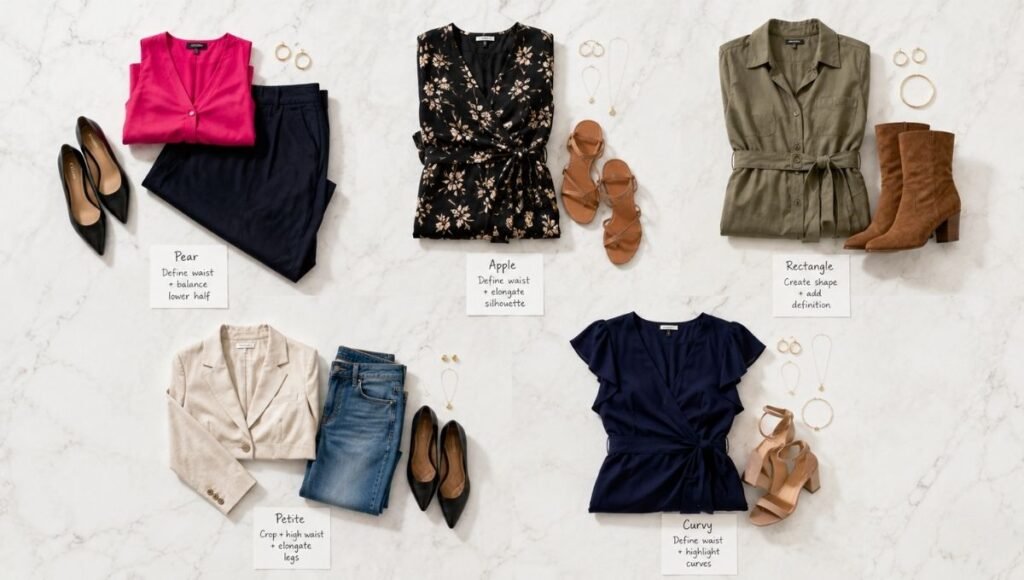
Every occasion guide above applies to every body type — but these are the body-type-specific principles that make the most difference:
For pear shapes: Upper body emphasis always. Bright or structural tops + dark bottoms. The finish (shoe or accessory) should draw the eye upward or downward, not across the widest point.
For apple shapes: V-necklines, empire waists, wrap silhouettes. Flowing fabrics that drape rather than cling. A shorter hemline redirects attention to the legs. The finish should create a focal point at the neckline or feet.
For rectangle shapes: Waist definition is the priority. Belts, high-rise bottoms, wrap styles, and fit-and-flare silhouettes all create the visual curves that the natural silhouette doesn’t provide.
For petite women: High-rise always. Pointed-toe shoes always. Cropped outer layers rather than hip-length ones. Monochromatic color combinations create the unbroken vertical line that reads as height.
For curvy women: High-rise bottoms with contoured waistbands. Wrap dresses and A-line silhouettes. Structured outer layers that fit the shoulders and drape from there. Fabrics with movement rather than stretch.
For tall women: Full-length hemlines actually work for you — maxi dresses and floor-grazing trousers look architectural rather than awkward. Wide-leg and flare silhouettes have the proportional space to land correctly. Flat shoes work as well as heels because the height provides the visual length naturally.
The 10-Minute Outfit Formula (For Any Occasion)
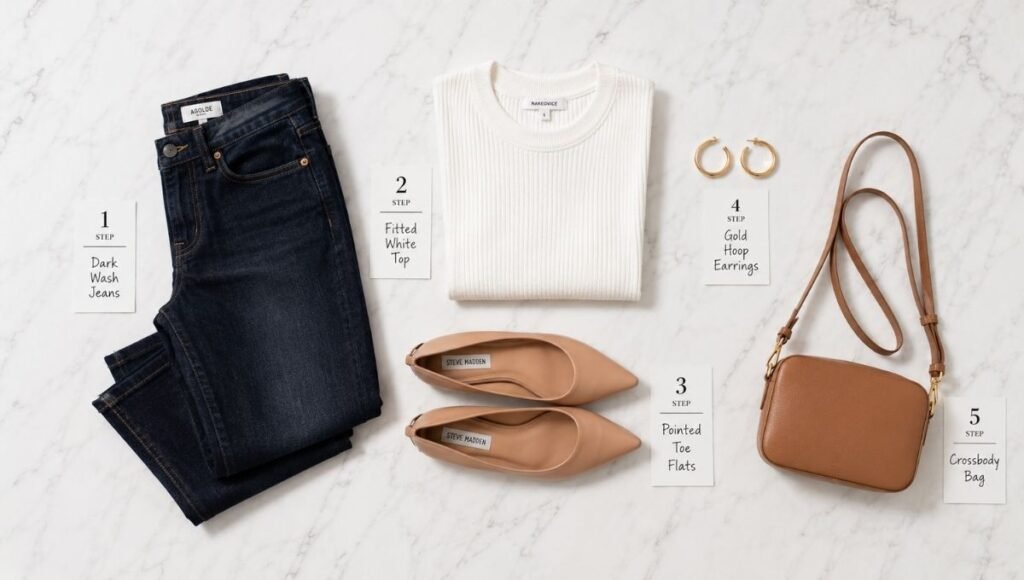
You have ten minutes and no energy to think:
Step 1: What is the occasion? Name it. (Work, casual, evening, special.) Step 2: Choose a base piece appropriate to that formality level. Step 3: Choose a complementary piece in a neutral or tonal color. Step 4: Choose a finish — one shoe or one layer. Not both. Not accessories yet. Step 5: Add one piece of jewelry. Gold hoops for almost everything.
Five decisions. Under ten minutes. The outfit works because the formula works, not because you made perfect individual choices under time pressure.
FAQ: Outfit Ideas for Women
How do I put together a good outfit? Use the three-part formula: a base piece (the item you’re building around), a complementary piece (something that supports without competing), and one finish (a shoe, a layer, or an accessory that makes it complete). One statement element per outfit — everything else serves it. The finish is usually what makes the difference between assembled and intentional.
What are easy outfit ideas for women? The easiest outfits are single-piece solutions: a wrap dress, a midi dress, a jumpsuit, or a co-ord set. These remove the coordination question entirely — you’re putting on one piece that’s already a complete outfit. Add shoes and one piece of jewelry and you’re done. For separates, the dark-jeans-and-fitted-top base with a rotating finish is the most reliable everyday formula.
What should I wear to look stylish without trying too hard? One statement element, not two. The “effortless” look comes from visual clarity — one piece or element that’s doing the interesting work, with everything else clean and simple. A distinctive shoe with a plain outfit. A printed top with simple dark jeans. A structured coat over a basic dress. The restraint is what reads as intentional rather than trying.
How do I dress for my body type? Pear shapes: upper body emphasis (bright or structural tops, dark bottoms). Apple shapes: V-necklines, empire waists, wrap silhouettes, shorter hemlines. Rectangle shapes: waist definition through belts, high-rise bottoms, wrap styles. Petite women: high-rise always, pointed-toe shoes, monochromatic combinations. Curvy women: high-rise with contoured waistbands, wrap dresses, A-line silhouettes, fabrics with movement.
What are the best outfits for women for everyday wear? The most reliable everyday formula: high-rise dark jeans + a fitted top (tucked or French-tucked) + one rotating finish. The finish is what keeps the outfit feeling fresh without rethinking the base: white sneakers one day, ankle boots the next, loafers for smart casual, a blazer when you need more intention. Same base, different finish, completely different outfit register.
Go Deeper: Every Occasion Covered
Work & Professional:
- Work Outfits for Women: What Is Business Casual — office dressing by industry, dress code, and body type
Social Occasions:
- Date Night Outfits: What to Wear for Every Scenario — first dates, restaurant dinners, activities, and more
- Brunch Outfits: Cute Ideas for Every Scenario and Body Type — weekend morning dressing for every setting
- Wedding Guest Outfits: What to Wear — dress codes, color rules, and venue-specific formulas
- Vacation Outfits: What to Pack and Wear — destination dressing and the three-color packing formula
Career:
- Interview Outfits for Women: What to Wear to a Job Interview — industry-specific formulas and what not to wear
Seasonal:
- Fall Outfits for Women: The Complete Style Guide
- Summer Outfits for Women: What to Wear When It’s Hot
- Winter Outfits for Women: Stay Warm Without Looking Bulky
Sophie Hartwell covers practical, occasion-specific style advice for women who want outfits that actually work at TopChicWear.
References:
- Fashion Psychology Institute. (2024). Morning Routine and Outfit Decision-Making: Consumer Behaviour Study. FPI Research Reports.
- ThredUp. (2025). Annual Resale Report: Wardrobe Utilization Data. ThredUp Inc.
- Peluchette, J., & Karl, K. (2007). The impact of workplace attire on employee self-perceptions. Human Resource Development Quarterly, 18(3), 345–360.
- Slepian, M. L., Ferber, S. N., Gold, J. M., & Rutchick, A. M. (2015). The cognitive consequences of formal clothing. Social Psychological and Personality Science, 6(6), 661–668.
Disclosure: This post may contain affiliate links. We may earn a small commission if you purchase through our links at no extra cost to you. All recommendations are genuinely our own.