
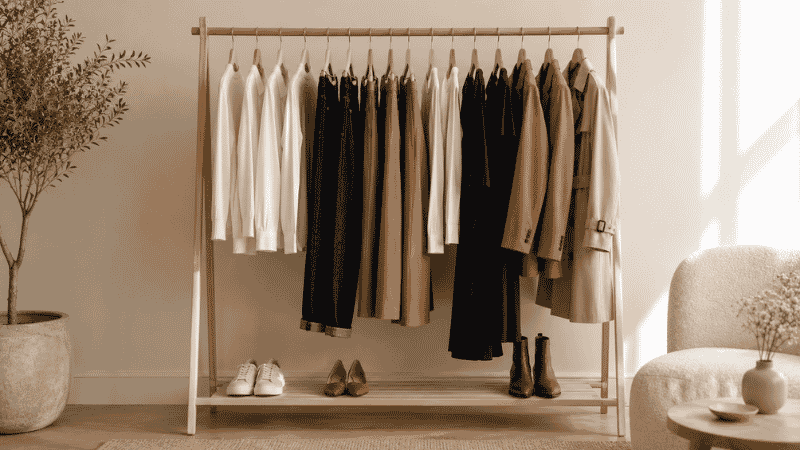
Someone in a style forum once described their capsule wardrobe attempt perfectly: “I followed every guide I could find, got rid of half my clothes, bought thirty new ‘essentials,’ and somehow still stand in front of my closet every morning feeling like I have nothing to wear.” The replies were full of women who’d had the exact same experience.
This is the capsule wardrobe paradox. The concept is genuinely useful — a small collection of pieces that all work together, eliminating decision fatigue and making getting dressed feel effortless. But most guides to how to build a capsule wardrobe skip the parts that actually determine whether it works: why the color palette is the foundation (and how to choose yours specifically), why most capsule wardrobes feel boring after two weeks and how to prevent it, and why buying new things first is usually the wrong move.
This guide is the step-by-step version — starting from the most common failure modes and working through each decision in the order that actually makes sense. By the end you’ll have a concrete plan for creating a capsule wardrobe that fits your life, your body, and your existing clothes — not a generic “30 pieces every woman needs” list that has nothing to do with who you are.
Key Takeaways
- The most common reason capsule wardrobes fail: building around a generic list instead of your actual life — the pieces you need depend entirely on where you go, what you do, and what you already own
- Color palette is the structural foundation — every other decision depends on it. A capsule wardrobe without a coherent color palette is just a smaller disorganized wardrobe
- According to a 2023 sustainability report by the Ellen MacArthur Foundation, the average garment is worn only 7-10 times before being discarded — a capsule wardrobe, where pieces are worn 30-50+ times, is one of the most effective ways to change this pattern
Capsule wardrobe color paletteis the most underexplained concept in capsule wardrobe guides — we’re dedicating an entire section to it because it’s where most people’s attempts break down- A working capsule wardrobe doesn’t feel restrictive — if yours does, it’s a sign the combination potential is too low, not that you need fewer clothes
- The right number of pieces is whatever allows you to dress completely for your real life without gaps — for most women, this is 12–20 pieces excluding shoes and accessories
Why Most Capsule Wardrobe Attempts Fail (Start Here)
Before the steps, the failure modes. Understanding why capsule wardrobes don’t work for most people is more useful than any list of essential pieces.
Failure mode 1: Starting with a shopping list instead of a lifestyle audit. Every generic capsule guide starts with what to buy. But if you don’t know how you actually spend your time — how many days you work in an office, how often you exercise in regular clothes, how many genuinely dressy occasions you have per month — any list you follow will produce a wardrobe calibrated for someone else’s life.
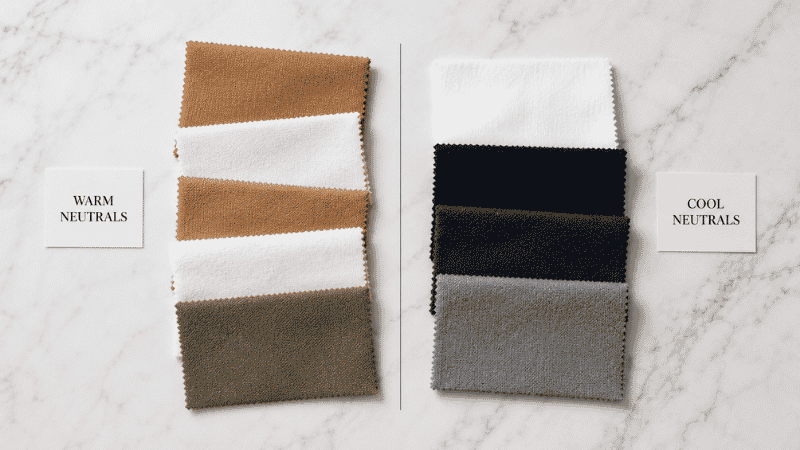
Failure mode 2: A color palette that doesn’t actually mix. The advice to “choose neutrals” is incomplete. Neutrals don’t automatically go together. Warm neutrals (camel, ivory, tan) and cool neutrals (grey, navy, crisp white) often clash subtly in ways that make outfits look slightly off without being obviously wrong. A capsule wardrobe where the neutrals aren’t internally consistent will generate far fewer workable combinations than expected.
Failure mode 3: Too many similar pieces in one category, gaps in another. Many capsule wardrobes end up with four tops that all work with the same two bottoms, and no pieces that cover two or three important scenarios. The resulting wardrobe feels both too small and strangely unusable at the same time.
Failure mode 4: Buying new things before using what you have. The impulse to start fresh is understandable, but most women already own the skeleton of a functional capsule — it’s just buried under impulse purchases and aspirational pieces they never actually wear. Shopping first means spending money on things you might already own in a different form.

Step 1: The Lifestyle Audit (Before You Touch Your Closet)
The first step in building a capsule wardrobe isn’t opening your wardrobe. It’s answering five questions honestly.
Question 1: How do you spend your weekdays? In an office five days a week? Working from home? A mix? The answer determines what percentage of your capsule needs to be work-appropriate versus genuinely casual.
Question 2: What do your weekends actually look like? Not your ideal weekends — your real ones. Errands, coffee, casual socializing, outdoor activities? Or regular dinners out, events, occasions that require something more?
Question 3: How many genuinely dressy occasions do you have per month? Weddings, formal events, nicer restaurants? If the honest answer is one or two, your capsule shouldn’t have six evening-appropriate pieces.
Question 4: What’s your climate? A capsule wardrobe in Los Angeles looks fundamentally different from one in Chicago or London. Your outer layers, fabric weights, and seasonal pieces depend entirely on this.
Question 5: What do you actually feel good in? Not what you think you should wear — what you genuinely reach for when you want to feel put-together. This tells you your real silhouette preferences, which should anchor your capsule.
Write down the answers. They’re the blueprint for everything that follows.
Step 2: The Wardrobe Audit (Find What You Already Have)
Now open the wardrobe. The goal of this step is to identify which pieces you already own that could anchor your capsule — before buying anything.
The hanger method: Turn every hanger backwards. Over the next two to four weeks, each time you wear and wash something, rehang it facing forward. After a month, the pieces still facing backwards are the ones you’re not actually reaching for. These are your Pile 2 and Pile 3 candidates.
If you don’t have a month: Do a one-hour audit instead. Pull everything out. Make three honest piles: things you wear regularly and feel good in, things you keep meaning to wear but don’t, and things you know you’ll never wear. The first pile is your starting inventory.
What to look for in your “wear regularly” pile: Notice the colors, the silhouettes, the occasions. If you keep reaching for the same dark jeans and three specific tops, you’ve already identified the core of your capsule. The goal is to formalize and complete what you’re already doing instinctively.
The common revelation: Most women discover that their actual daily rotation is already a de facto capsule — usually about 15-20 pieces that get worn repeatedly. The rest of the wardrobe exists as background noise. The capsule-building process is really about identifying this existing core, filling any gaps, and consciously releasing the rest.
Step 3: Build Your Capsule Wardrobe Color Palette (The Most Important Step)
This is where most capsule wardrobe guides lose people, and where most attempts break down. The color palette isn’t about aesthetics — it’s structural. It determines whether your pieces can actually combine with each other.

How a Capsule Wardrobe Color Palette Works
A functioning capsule color palette has three layers:
Layer 1 — Your neutral base (2-3 colors): These are the colors that appear in most of your bottoms and several of your tops. They need to work together harmoniously — meaning they need to share a temperature (all warm or all cool).
Warm neutral bases: ivory/cream, camel, tan, warm white, warm grey, olive Cool neutral bases: crisp white, navy, charcoal, true grey, black
Pick one temperature and stay within it. This is why “just choose neutrals” fails — a woman who buys a camel trouser, a cool grey blazer, and a crisp white shirt has three “neutrals” that subtly clash with each other.
Layer 2 — Your warm or cool accent (1-2 colors): A color that works with your neutral base and adds visual interest. Burgundy, forest green, and rust work with warm neutrals. Cobalt, dusty rose, and sage work with cool neutrals. This doesn’t need to appear in many pieces — even one or two tops or accessories in an accent color creates visual variety without disrupting the combination potential.
Layer 3 — Your print rule (optional): If you wear prints, they should incorporate your neutral base colors. A stripe in your two neutral tones, a floral that includes your accent color. Prints that bring in new colors outside the palette create pieces that only work with certain other pieces — which reduces your combination potential.
The combination test: After assembling your palette, ask: can every top in your capsule be worn with every bottom? If yes, your palette is working. If you have pieces that only work with two or three specific other pieces, the palette isn’t coherent enough.
The Skin Tone Factor
The specific neutrals that work best vary by skin tone — not because of any strict rule, but because contrast between clothing and skin reads differently.
For deeper skin tones: Rich warm neutrals (camel, chocolate brown, warm ivory) and rich cool neutrals (deep navy, charcoal) both tend to work well. True black can create a high-contrast look that photographs beautifully.
For medium skin tones: The widest range — most neutral palettes work. The distinction between warm and cool neutrals is still worth paying attention to, as wearing the wrong temperature can make skin look slightly sallow or washed out.
For lighter skin tones: Crisp cool whites and cool greys can wash out; warm ivory and camel tend to be more flattering. Black often creates sharp contrast that works well.
This isn’t a rigid prescription — it’s a starting point for noticing what makes you look more or less vibrant.
Step 4: Identify the Gaps (What’s Actually Missing)
With your lifestyle audit and existing wardrobe inventory in hand, you can now see specifically what’s missing — rather than shopping from a generic list.
The gap categories to check:
Occasions not covered: Is there a regular scenario in your life where you genuinely have nothing appropriate? This is an actual gap. An occasional formal event where you borrow or rent isn’t a gap.
Color palette pieces missing: After defining your palette, which pieces in that palette do you not own? A warm neutral blazer if your capsule runs warm, a fitted white top if your capsule is cool-toned?
Combination anchors: Is there a bottom that nothing works with? A top that only has one pairing? These are the pieces that are breaking the combination potential.
Quality gaps: Are there high-frequency pieces (the jeans you wear three times a week) that are worn out, ill-fitting, or not working? These are priority replacements.
Write a specific gap list — not “I need more tops” but “I need one fitted blouse in cream or white that works for both office and casual settings.” Specific gaps lead to specific purchases. Vague gaps lead to overspending on things that don’t solve the problem.
Step 5: Shop the Gaps Strategically
Now you shop — for the specific gaps on your list, not for a general wardrobe refresh.
The shopping principles for capsule pieces:
Buy for your actual palette, not for the piece in isolation. Before buying anything, hold it against the other pieces it would need to work with. Does this top work with every bottom in your capsule? Does it fit your palette? If you’re shopping online, check the actual color description against your palette — “beige” and “oat” and “bone” and “cream” are all meaningfully different.
Prioritize fit over everything else. A well-fitting piece in a moderate fabric will look better and be worn more often than an ill-fitting piece in a luxurious fabric. In a capsule wardrobe where every piece gets significantly more use than in a full wardrobe, fit is the highest-return investment.
Buy the highest-frequency pieces at the highest quality you can afford. The jeans you wear three times a week, the blazer that goes over everything, the ankle boots you wear daily — these are worth the investment. The one midi skirt you wear for evening events is not.
Budget by frequency, not by price point. A $150 pair of jeans you wear 150 times costs $1 per wear. A $40 top you wear four times costs $10 per wear. The math of a capsule wardrobe rewards spending more on what you use most.
How to Prevent Capsule Wardrobe Boredom (The Two-Week Problem)
Many women who build their first capsule wardrobe report feeling bored or restricted after a few weeks. This is solvable — and it’s almost never a sign that the capsule concept doesn’t work for you.
The boredom is usually a combination potential problem. If you have 15 pieces but they only generate 12-15 outfit combinations (because several pieces only work with specific others), the wardrobe feels repetitive quickly. A well-built 15-piece capsule where every top works with every bottom generates 30+ combinations — significantly more variety.
The restriction feeling is usually a lifestyle mismatch. If you built a work-focused capsule and you spend significant time outside of work, or vice versa, the capsule will feel like it’s missing something. Not because you need more pieces, but because the pieces you have don’t cover the full range of your actual life.
The solution: Before buying more things, diagnose whether the problem is combination potential (palette fix) or lifestyle coverage (gap fix). Adding random new pieces without diagnosing the root cause creates the original problem — a closet full of things that don’t work together.
The accent piece strategy: One or two statement accessories (a scarf, a pair of distinctive earrings, a bag in an interesting color) can visually differentiate an outfit using the same underlying pieces. This is the most efficient way to add perceived variety to a capsule without adding new clothing items.
Capsule Wardrobe for Different Body Types: The Adjustments
The capsule wardrobe structure is the same regardless of body type, but the specific cuts and brands that fill each category need to match your proportions.
For petite women: Your capsule bottoms need a petite inseam — not hemmed standard, specifically petite. Your outer layer should be cropped (ending at the natural waist) rather than hip-length to maintain leg proportion. Your dress should be a style that hits at or just below the knee rather than at mid-calf. ASOS Petite, Gap Petite, and Madewell Petite offer genuine proportional adjustments rather than just shorter hems.
For curvy women: Your capsule bottoms need to fit your largest measurement first — buy for the hip and waist, not the generic size. Every bottom should have a high rise. Your dress should be a wrap style that creates a defined waist through construction rather than requiring precise sizing. Curvy-specific fits from Abercrombie, Madewell Curvy, and Good American are worth the search.
For tall women: Your capsule needs a minimum 34″ inseam in jeans and trousers — not “regular” length. Your dress should be a midi from a brand that actually makes midi length for your height (ASOS Tall and Gap Tall both have genuine tall sizing). Your outer layer should be full-length rather than cropped to maintain proportion.
The Capsule Wardrobe Maintenance System
A capsule wardrobe isn’t built once — it’s maintained. The ongoing system is simple.
The one-in-one-out rule: Every time a new piece enters the capsule, something leaves. This prevents the gradual re-accumulation of the full wardrobe problem you started with.
The seasonal refresh: Your 12-20 piece core stays consistent, but some pieces rotate seasonally. Summer sandals swap for winter boots. A light linen top swaps for a fine-knit sweater. The underlying palette and combination logic stays the same — only the specific weather-appropriate pieces change.
The annual audit: Once a year, pull everything out again. What’s worn out? What no longer fits? What’s been hanging unworn for six months? These leave. What gaps have appeared? These get filled. The capsule stays alive and functional rather than becoming static.

FAQ: How to Build a Capsule Wardrobe
How many pieces should a capsule wardrobe have? 12–20 pieces is a practical range for most women, not counting shoes and accessories. The exact number matters less than the combination potential — if every top works with every bottom, 12 pieces generate 30+ outfit combinations. If your pieces only work in specific pairs, 30 pieces might feel limiting. Focus on combination potential, not piece count.
What’s the best color palette for a capsule wardrobe? The best palette is internally consistent — all warm neutrals (camel, ivory, tan, olive) or all cool neutrals (navy, grey, crisp white, black) as your base, plus one or two accent colors that complement that base. The most common mistake is mixing warm and cool neutrals, which creates subtle clashes that reduce how many pieces can work together.
Where do I start when building a capsule wardrobe? Start with the lifestyle audit (how you actually spend your time), then the wardrobe audit (what you already own and actually wear), then define your color palette, then identify specific gaps, then shop only for those gaps. Most guides start with shopping — this almost always leads to buying things that don’t integrate with what you already own.
Why does my capsule wardrobe feel boring after a few weeks? Almost always a combination potential problem — not enough workable outfit combinations because the color palette isn’t coherent enough, or a lifestyle coverage problem — the capsule doesn’t cover the full range of scenarios you actually encounter. Before adding more pieces, diagnose which problem you have. The solution is different for each.
How do I build a capsule wardrobe on a budget? Start by using what you already own — most people already have 60-70% of a functional capsule buried in their existing wardrobe. Then shop for specific gaps rather than a general refresh. Prioritize quality on the highest-frequency pieces (your most-worn jeans, your everyday shoes) and spend less on lower-frequency pieces (the one occasion dress, the seasonal layer). Uniqlo, Gap, and ASOS offer reliable quality at $30–$80 per piece for most categories.
What to Read Next
- Capsule Wardrobe for Women: Build One From What You Already Own — the companion guide covering the 12-piece formula and body type adjustments in more detail
- How to Dress for Your Body Type: The Complete Style Guide — understanding your body type helps you choose the specific cuts that should fill your capsule
- Linen Pants for Women: How to Style Them — linen pants are one of the highest-value capsule wardrobe pieces; this guide covers every way to wear them
- What to Wear With Wide Leg Pants — wide-leg pants work beautifully as a capsule bottom; the styling guide is here
- Work Outfits for Women: What Is Business Casual — building the work-appropriate portion of your capsule
Sophie Hartwell covers practical, body-inclusive style advice for women who want their wardrobes to actually work at TopChicWear.
References:
- Ellen MacArthur Foundation. (2023). A New Textiles Economy: Redesigning Fashion’s Future. Ellen MacArthur Foundation.
- Carver, C. (2020). Soulful Simplicity: How Living with Less Can Lead to So Much More. TarcherPerigee. Citing Project 333 capsule wardrobe research.
- Rantanen, E., & Goldsmith, R. E. (2009). Wardrobe planning and consumer satisfaction. Journal of Consumer Behaviour, 8(6), 292–307.