
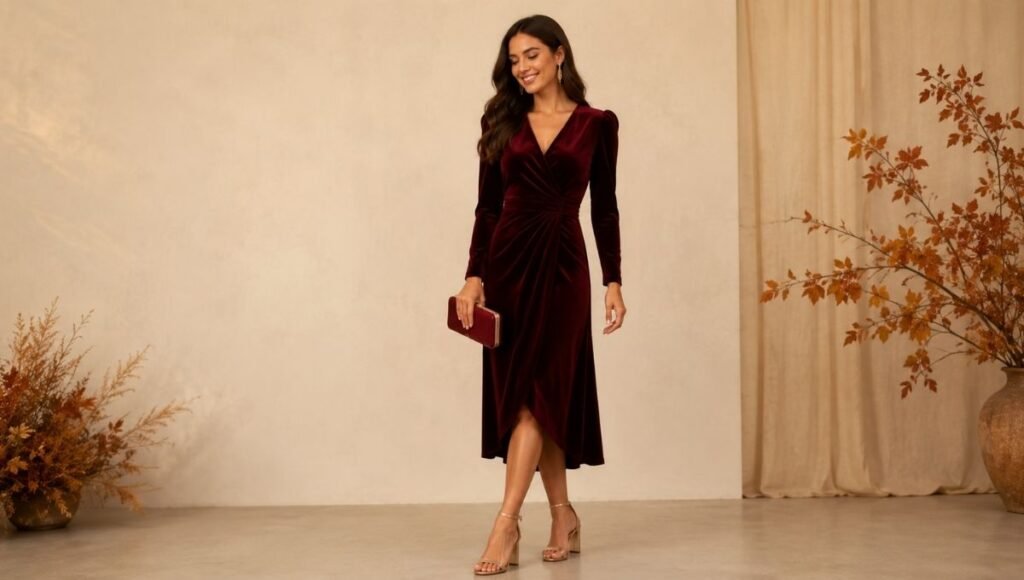
The invitation arrived three weeks ago. You RSVPed immediately, bought a gift off the registry, and now — the week of the wedding — you’re staring at your closet wondering what you actually planned to wear. You have a vague memory of thinking “I’ll figure it out later.” It is later. The wedding is Saturday.
Fall wedding guest outfits cause a specific kind of outfit anxiety that summer weddings don’t. The weather is unpredictable. The color palette feels narrow (everyone says jewel tones, but your existing wardrobe is mostly pastels). You’re not sure if your midi dress is warm enough for an outdoor ceremony but too casual for the indoor reception. And if the wedding involves both — which most do — you need something that transitions across both without requiring a complete outfit change.
This guide covers fall weddings in detail, then extends to the other wedding scenarios that come up most often: summer weddings, beach and outdoor weddings, casual dress code weddings, and formal or black-tie occasions. Every section includes specific outfit formulas, the layering logic for managing outdoor-to-indoor transitions, and body type adjustments so the formula works for your actual proportions, not a hypothetical one.
Key Takeaways
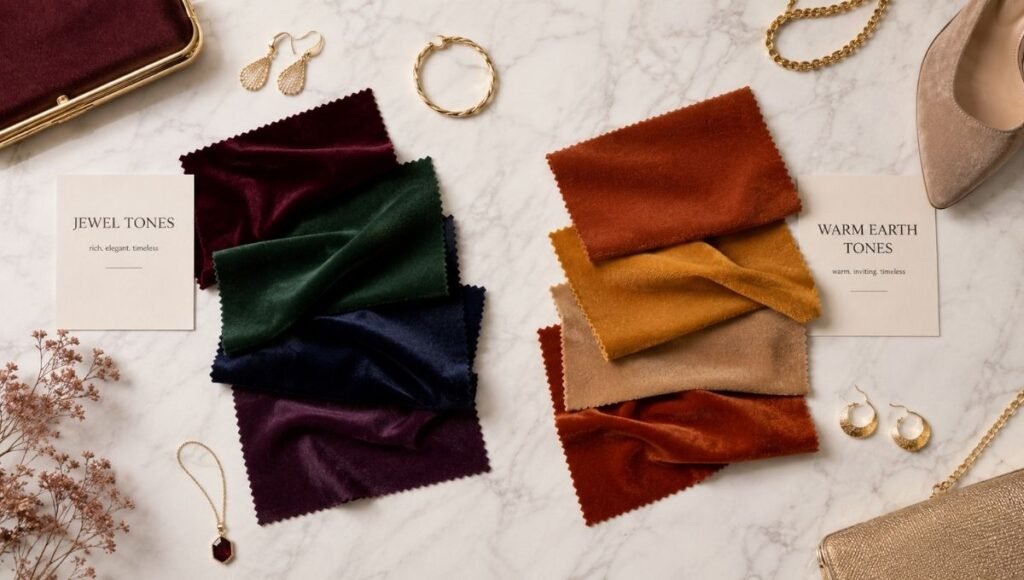
- The fall wedding color formula: Jewel tones (burgundy, emerald, navy, plum) and warm earth tones (rust, mustard, camel, burnt orange) are universally appropriate for fall weddings — and both photograph better than the pastels that work for spring and summer weddings
- According to The Knot’s 2024 Real Weddings Study, fall is the most popular wedding season in the US, with September, October, and November collectively accounting for over 35% of all weddings — meaning this is the outfit question most women face most often
- The single most practical fall wedding outfit decision: choosing a dress in a fabric that works for both outdoor ceremony temperatures (55-65°F) and indoor reception temperatures (70-72°F). Velvet and heavy brocade are often too warm inside; lightweight chiffon is often too cold outside. Crepe, ponte, or medium-weight jersey hits the middle correctly
- What “casual wedding” actually means: Smart casual, not genuinely casual. A sundress is probably too casual; dark jeans are probably too casual; a midi dress in a solid color or subtle print is almost always right
- The layering formula for outdoor fall weddings: Your dress handles the indoor half; your layer handles the outdoor half. The layer should be something you can wear gracefully during photos (a structured blazer or a wrap) — not something you’ll fold and stuff in your bag the moment you’re inside
Fall Wedding Guest Outfits: The Complete Guide
The Fall Wedding Color Palette
Fall wedding guest dressing has the most forgiving and interesting color palette of any wedding season. The colors that look seasonally appropriate are also the colors that photograph beautifully and flatter the widest range of skin tones.
The jewel tone group: Burgundy, deep emerald green, navy, plum, sapphire blue, rich teal. These are the most classic fall wedding colors — they’re dark enough to feel seasonally appropriate, rich enough to look evening-worthy, and versatile enough to work across any dress code from cocktail to formal.
The warm earth tone group: Rust, burnt orange, mustard yellow, camel, warm chocolate brown, terracotta. These are the more fashion-forward fall option — unmistakably autumnal, beautiful in natural light at outdoor venues, and currently very much in style for wedding guest dressing.
The neutral group: Champagne, gold, warm bronze, warm taupe. These work beautifully for fall weddings without being overtly seasonal — a champagne midi dress at a November wedding looks completely appropriate and reads as elevated without being too obviously “fall themed.”
What to avoid: True pastels (lavender, baby pink, powder blue) read as spring and summer and can look slightly out of place at a fall wedding, particularly for evening events. Very bright colors (hot pink, bright cobalt) can feel summery and sometimes read as competing with the festive energy of the event rather than complementing it.
Fall Wedding Guest Outfits by Dress Code
Casual fall wedding: A midi dress in a solid warm color or subtle print + block-heel ankle boots + a structured crossbody or clutch. The ankle boot is the key fall upgrade — it adds warmth, handles uneven outdoor terrain, and immediately reads as seasonal without overdressing.
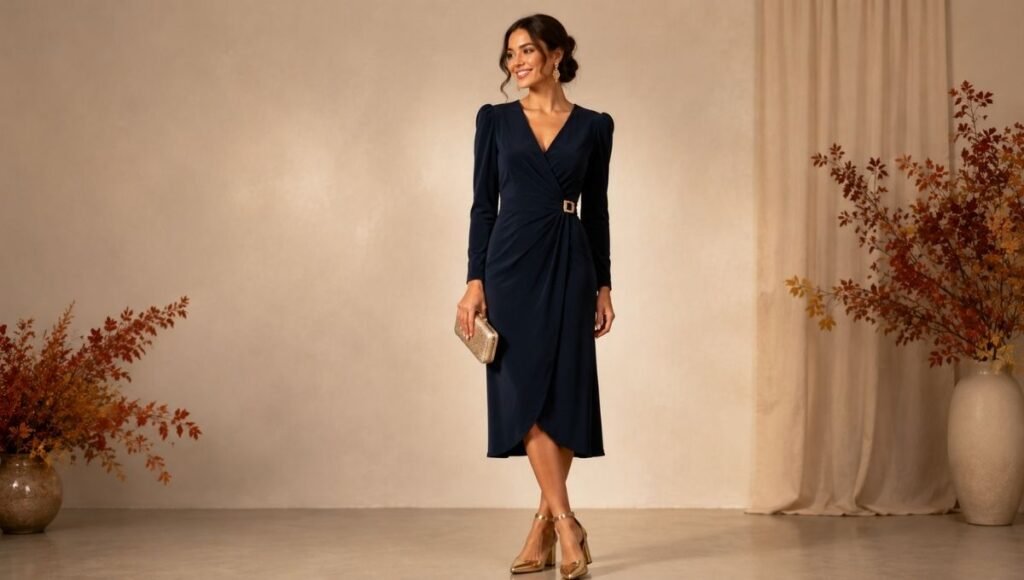
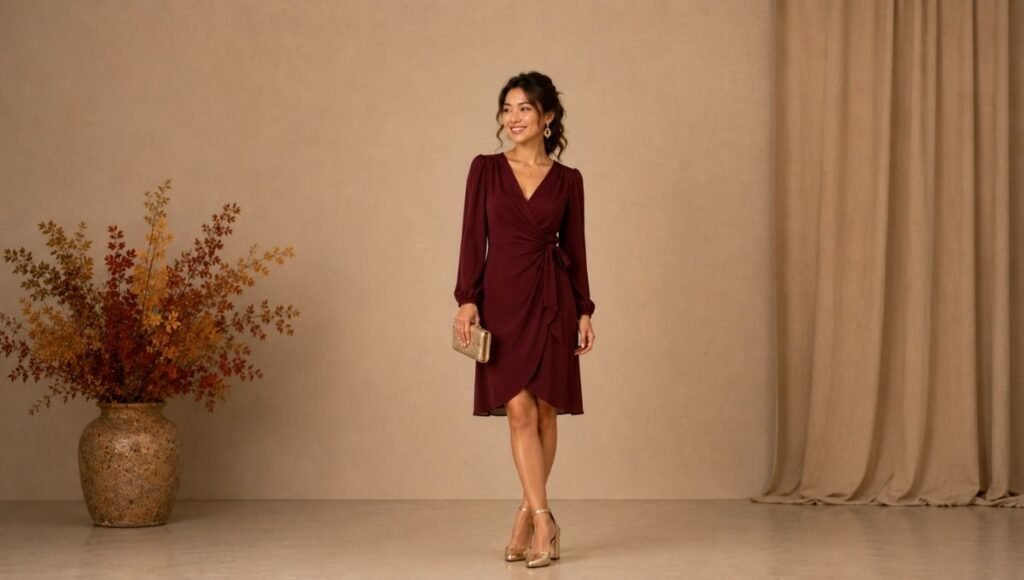
Cocktail fall wedding: A midi or knee-length dress in a jewel tone with some structure or detail (a wrap silhouette, a lace overlay, a subtle embellishment) + heeled sandals or pointed-toe heels + a small clutch. This is the most common fall wedding dress code setting, and the jewel tone midi dress in crepe or ponte is the most reliable formula.
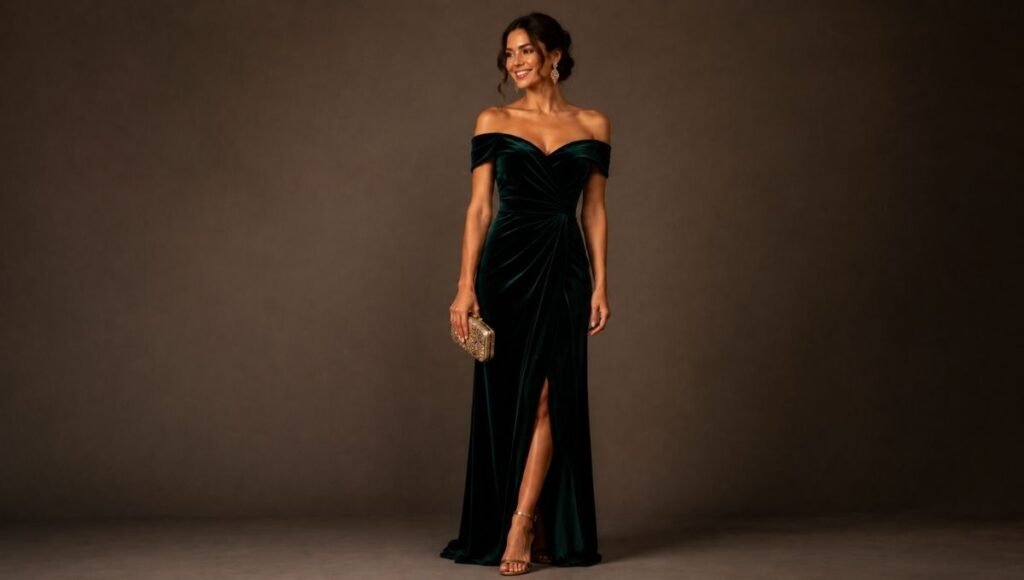
Formal or black-tie fall wedding: A floor-length gown in velvet, satin, or a rich crepe, in a deep jewel tone or warm neutral + heeled shoes + statement jewelry. Fall is the one season where velvet is genuinely appropriate — a deep burgundy or emerald velvet gown at a formal fall wedding is completely on-code and often stunning.
Rustic or barn fall wedding: A midi or maxi dress in a warm earth tone (rust, mustard, camel) or a dark floral print + ankle boots or block-heel mules. The rustic venue setting allows slightly more relaxed fabric and silhouette choices than a hotel ballroom — a midi dress in a warm floral print that you might not wear to a formal venue works beautifully here.
The Fall Wedding Layering Formula
The most practical fall wedding challenge: the outdoor ceremony is cool (often 50-65°F), the indoor reception is warm (70-72°F), and you need something that handles both without requiring you to check a coat or carry a bag that’s too large.
The three-layer system:
Layer 1 (the dress): Choose a fabric that breathes inside but isn’t too lightweight outside. Crepe, ponte, medium-weight jersey, and structured chiffon all work. Velvet and heavy brocade get genuinely uncomfortable in a warm reception room after a few hours.
Layer 2 (the ceremony layer): A structured blazer, a tailored jacket, or an elegant wrap/shawl. This goes on for the outdoor ceremony or cocktail hour and comes off inside. The blazer is the most versatile option — it stays over your arm or over the back of your chair during dinner without looking awkward.
Layer 3 (the emergency layer): A pair of opaque tights if temperatures drop further than expected. Keep them in your bag until needed.
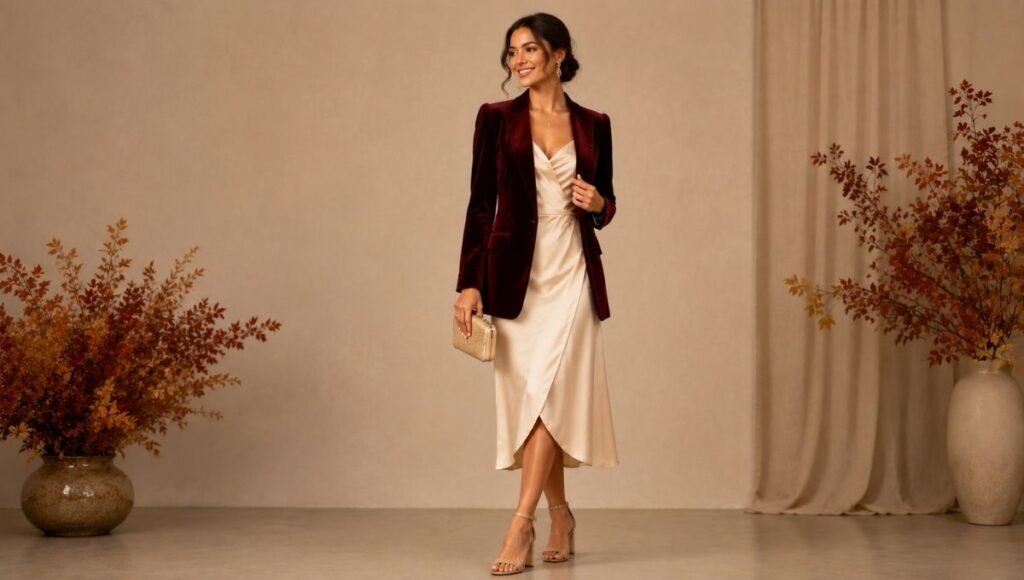
The blazer formula for fall weddings: A velvet blazer over a silk-feel midi dress is the single most elegant fall wedding guest layer combination. The blazer handles the temperature; the dress handles the formality; the velvet texture ties both pieces to the fall aesthetic. In deep burgundy, navy, or forest green, this combination works from cocktail to formal settings.
Fall Wedding Guest Outfits by Month
September fall wedding: Early fall often means summer temperatures are still lingering, particularly in afternoon outdoor settings. Lightweight fabrics (structured chiffon, light crepe) work better than velvet or heavy fabrics. Warm-toned florals in deep colors (dark burgundy florals, rust-toned abstract prints) bridge the summer-to-fall aesthetic transition beautifully.
October fall wedding: The classic fall wedding month. Full jewel tones and earth tones work perfectly; temperatures are reliably cooler so slightly heavier fabrics like ponte and structured crepe are comfortable. A velvet blazer layer is genuinely appropriate now. Suede accessories (boots, bags, belts) look seasonally perfect.
November fall wedding: Late fall leans toward winter in terms of temperature. Velvet dresses are now fully appropriate. The color palette can extend toward holiday-adjacent richness — deep ruby, forest green, midnight navy. A full-length coat over your outfit for the outdoor portion is entirely reasonable and won’t look out of place.
Summer Wedding Guest Outfits: The Warm Weather Formula
Summer wedding guest dressing is the most volume-of-questions category — more outdoor summer weddings mean more guests facing the specific challenge of looking polished in heat.
What to Wear to a Summer Wedding
The summer wedding guest formula is essentially the inverse of fall: lighter fabrics, softer colors, shorter hemlines (more acceptable in summer heat), and shoes that work on outdoor terrain without sinking.
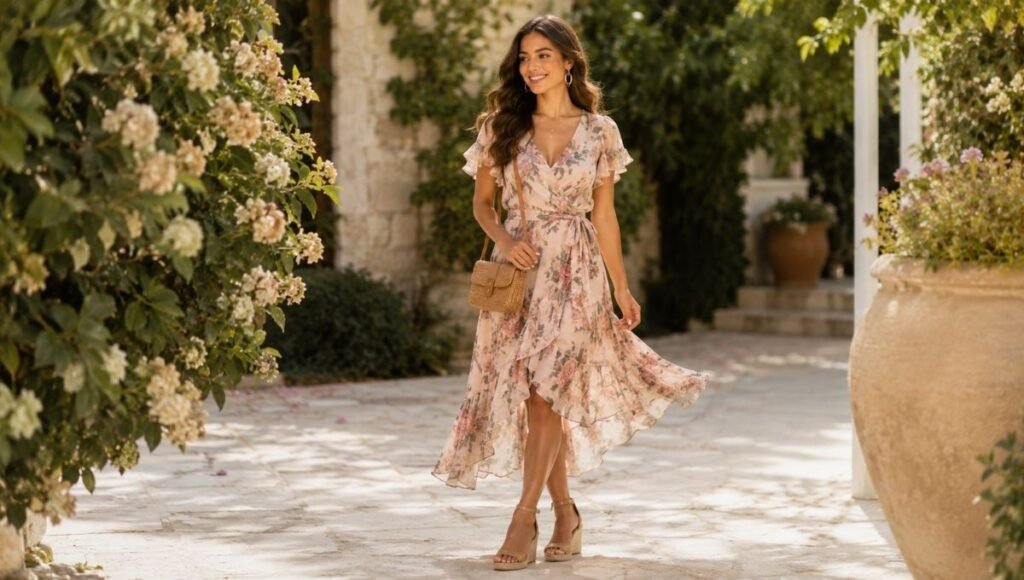
The summer formula: A floral, solid pastel, or soft print midi or knee-length dress in chiffon, rayon, linen, or cotton + block-heel sandals or wedge espadrilles (for outdoor venues) or strappy heeled sandals (for indoor venues) + a small clutch.
The heat management principle: Choose a dress with some bra-friendly construction (built-in cups, thicker straps, a structured bodice) so you don’t spend the entire event managing a strapless situation in the heat. A dress that requires constant adjustment in summer heat is significantly more uncomfortable than it looks in the fitting room.
Colors for summer weddings: Soft pastels (dusty rose, powder blue, sage green, soft lavender), bright florals in any color, warm neutrals (champagne, soft gold). Keep colors lighter and fresher than fall — this is the season for blush and lavender, not burgundy and navy.
Summer Wedding Guest Outfits for Outdoor Venues
Outdoor summer weddings have specific practical requirements:
Shoe rule: Avoid stilettos on grass. A block heel, a wedge, a platform sandal, or a flat sandal all work better than a narrow heel that sinks into the lawn during the ceremony. If the invitation says “outdoor ceremony,” plan your shoe accordingly.
Fabric rule: Natural fabrics (linen, cotton, rayon) breathe significantly better than synthetics in genuine heat. A polyester dress that looks beautiful in a cool room can feel suffocating in 90-degree outdoor sun. Check the fabric content before committing to a summer outdoor wedding outfit.
Coverage rule: Outdoor afternoon summer weddings often mean direct sun exposure for an extended period. A dress with some coverage at the shoulder (a cap sleeve, a flutter sleeve, a structured strap) protects against sunburn during a long ceremony without requiring you to carry a layer.
Beach and Outdoor Wedding Guest Outfits
Beach and outdoor weddings have a specific set of practical challenges that most wedding guest guides address superficially. Here’s the actual logic.
What to Wear to a Beach Wedding as a Guest
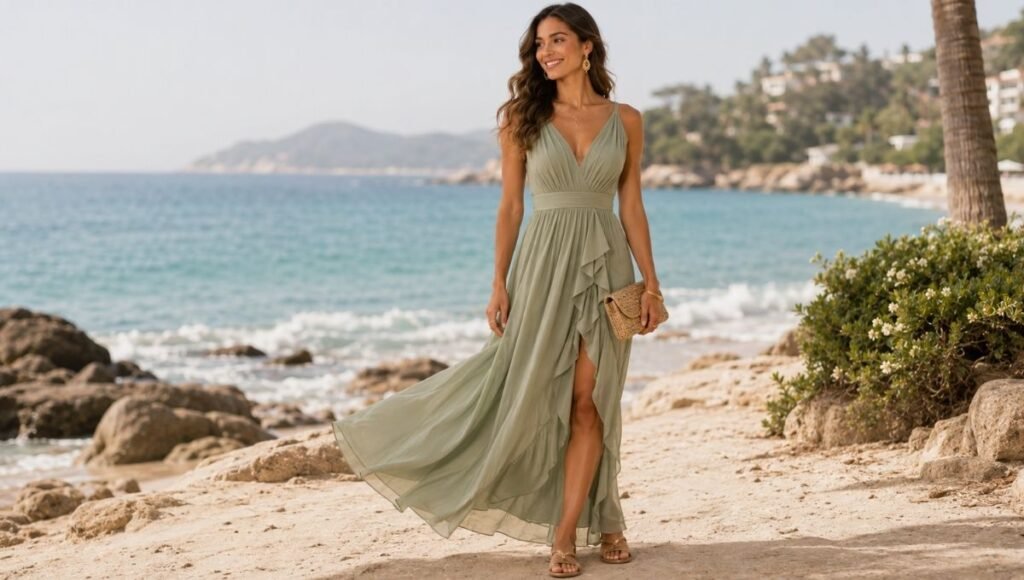
The beach wedding outfit formula: A flowy maxi or midi dress in a lightweight fabric (chiffon, rayon, linen) + flat sandals or wedge sandals (the only shoes that actually work on sand) + minimal accessories that won’t catch wind or sand.
The shoe reality: Heels do not work at beach weddings. Even a block heel creates difficulty on sand. Plan for flat or very low-heeled sandals from the start — not as a compromise, but as the correct choice. If the wedding moves from beach ceremony to indoor reception, pack a small pair of block-heel sandals in your bag for the transition.
The wind factor: Flowing fabrics photograph beautifully at beach venues but require some thought. A dress with a hem that’s loose enough to float in ocean wind can become unmanageable. A midi or below-the-knee length with some weight in the hem (a lined fabric, a heavier linen) manages wind better than a very lightweight chiffon mini.
The formal beach wedding paradox: Some beach weddings specify “beach formal” or “seaside formal” — this means the beach setting, not casual dressing. A floor-length gown in a flowing fabric (chiffon, georgette, lightweight satin) with flat dressy sandals reads as beach formal correctly. A short cocktail dress reads as underdressed for this specific dress code.
Casual Wedding Guest Outfit: What It Actually Means
“Casual” on a wedding invitation doesn’t mean jeans and a nice top. It means the wedding is on the less formal end of the spectrum, but it’s still a wedding.
The Casual Wedding Dress Code Decoded
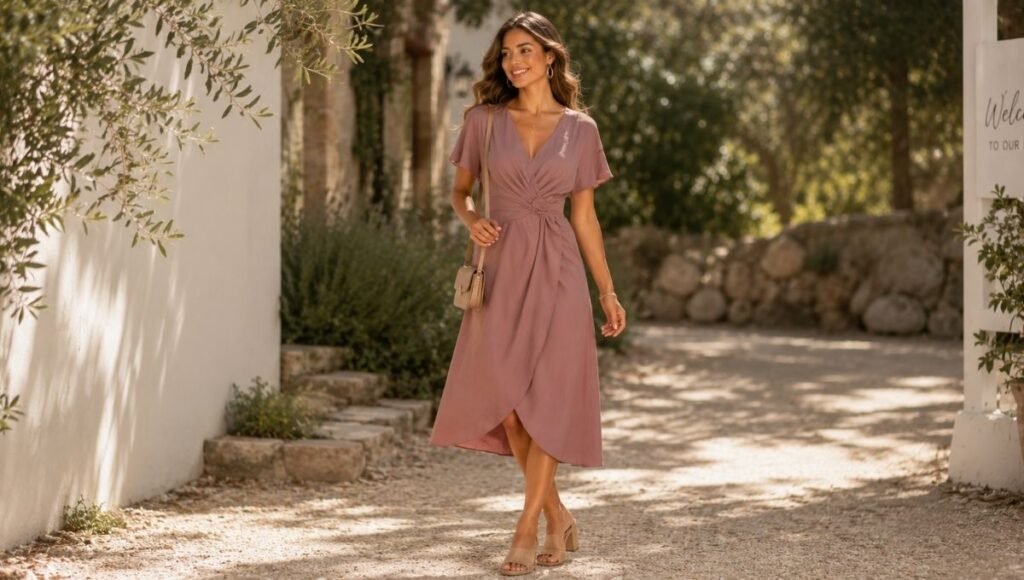
What casual wedding actually means: Smart casual to semi-formal. The couple isn’t requiring black tie, but they’re still celebrating a wedding — the context requires more than everyday casual.
Safe casual wedding guest formula: A midi dress in a solid color or subtle print + flat sandals or low-heeled mules + a small bag. Simple, unfussy, clearly occasion-appropriate without being overdressed for a relaxed setting.
Can you wear separates to a casual wedding? Yes — a flowy blouse with wide-leg trousers in a soft color, or a fitted top with a midi skirt, reads as appropriate for a casual wedding setting. The separates should look deliberately chosen rather than assembled from everyday pieces.
Can you wear jeans to a casual wedding? Generally no, even dark wash. The exception is if the invitation explicitly says “denim welcome” or the wedding is genuinely very casual (a backyard wedding where the couple specifically communicated jeans-appropriate). When in doubt, a dress is always safer.
Formal and Black-Tie Wedding Guest Outfits
Formal and black-tie weddings are the easiest dress code to under-dress for, because the gap between “dressed up” and “black-tie appropriate” is wider than most people expect.
What to Wear to a Formal Wedding as a Guest
Formal (not black-tie): A floor-length gown or a very polished cocktail-length dress in a quality fabric. This is where satin, crepe, and structured chiffon belong. Hemline can be midi to floor; the formality comes from the fabric quality and the finish of the look rather than the length specifically.
Black-tie: A floor-length gown is the expected choice. The gown should be in a quality fabric — silk, satin, velvet, chiffon — and in a color appropriate for the time of day (evening-appropriate means no light pastels; deeper tones and neutrals are safer). Statement jewelry, heels, and a small clutch complete the look.
The black-tie mistake most women make: Wearing a nice cocktail dress and assuming it’s formal enough. For a black-tie wedding, the hemline matters — a beautiful knee-length dress that’s clearly cocktail-level reads as underdressed regardless of how elegant it is.
Wedding Guest Outfit Formulas by Body Type
For Petite Wedding Guests
The key principle for petite women at weddings: maintain leg proportion by choosing hemlines and shoe combinations that create visual height.
Fall petite formula: A knee-length or just-below-knee dress (not a full midi that hits at the calf) in a jewel tone + pointed-toe heeled sandals or ankle boots with a heel. The heel creates height; the shorter hem shows the heel; the pointed toe extends the visual leg line.
The petite midi solution: If you love midi dresses, pair with a heel that’s visible below the hem and choose a dress with a defined waist (a wrap silhouette, a belted style) — the waist definition prevents the length from overwhelming a shorter frame.
What to avoid petite: A full-length gown without heels. The hem drags; the proportions are lost. If you want floor-length, choose a heel tall enough to keep the hem at the correct level, and have the dress hemmed specifically for that heel height.
For Curvy Wedding Guests
The most reliably flattering wedding guest formula for curvy bodies: a wrap dress or A-line silhouette in a rich fabric with defined waist construction.
Fall curvy formula: A wrap midi dress in a deep jewel tone (burgundy, emerald, navy) in crepe or jersey + block-heel sandals or pointed-toe heels + minimal jewelry that draws the eye upward. The wrap creates waist definition through construction; the jewel tone reads as seasonally appropriate and doesn’t add visual volume; the block heel provides stability and elevation.
The fabric principle for curvy guests: Avoid very stiff structured fabrics (heavy brocade, thick taffeta) that don’t move with the body. Fabrics with slight stretch (ponte, jersey, stretch crepe) or fabrics with beautiful drape (chiffon, satin-back crepe) both look significantly more elegant on curvy bodies than rigid structures.
The 10-Minute Wedding Guest Outfit Formula
The wedding is this weekend and you need an answer now:
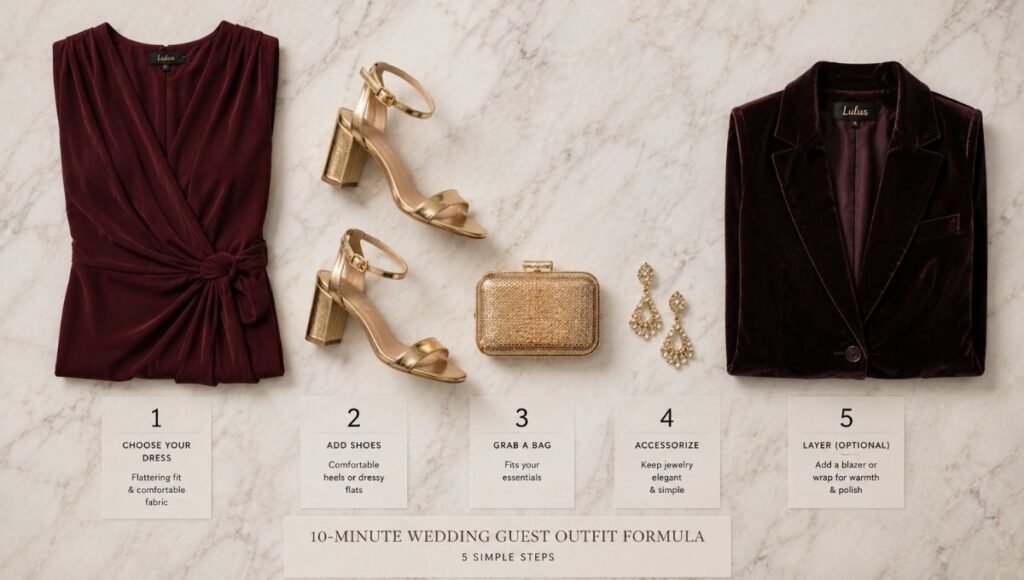
Step 1: A midi dress in a solid jewel tone or subtle dark floral. Not white, not ivory. Step 2: Block-heel sandals or ankle boots (fall) / strappy heeled sandals (summer) / flat dressy sandals (beach). Step 3: A small clutch or structured crossbody. Step 4: Gold or silver jewelry — one pair of statement earrings or a delicate necklace. Not both. Step 5 (fall only): A blazer or wrap in a complementary color for the outdoor portions.
This formula works for casual through cocktail dress codes across all seasons. The only adjustment needed for formal or black-tie: extend the hemline to floor-length and upgrade the fabric to satin or structured chiffon.
FAQ: Wedding Guest Outfits by Season
What colors are appropriate for a fall wedding guest? Jewel tones (burgundy, emerald, navy, plum) and warm earth tones (rust, mustard, camel, burnt orange) are both seasonally appropriate and flattering. Avoid very light pastels, which read as spring/summer. Warm neutrals like champagne and gold also work beautifully. The one consistent rule: avoid white, ivory, and cream in any shade that could read as bridal.
What do you wear to an outdoor fall wedding? A midi dress in a medium-weight fabric (crepe, ponte, or structured jersey) that handles both outdoor ceremony temperatures and indoor reception warmth. Add a structured blazer or elegant wrap for the outdoor portion. Choose block-heel shoes or ankle boots over stilettos for outdoor terrain.
What to wear to a summer wedding as a guest? A floral, pastel, or soft print midi or knee-length dress in a breathable fabric (chiffon, rayon, linen, or cotton). Block-heel or wedge sandals for outdoor venues; strappy heeled sandals for indoor. Choose a dress with bra-friendly construction if the ceremony is in direct summer sun.
What do you wear to a casual wedding? Smart casual to semi-formal. A midi dress in a solid color or subtle print with flat sandals or low heels is the safest formula. Tailored separates (a blouse with wide-leg trousers) also work. Avoid genuine casual pieces — jeans, athletic wear, sundresses that read as beach-casual rather than occasion-casual.
What to wear to a beach wedding as a guest? A flowy maxi or midi dress in a lightweight fabric with flat or wedge sandals — heels don’t work on sand. Minimal accessories that won’t be affected by wind or sand. If the beach wedding specifies “beach formal,” interpret that as floor-length gown in a flowing fabric (chiffon, georgette) with flat dressy sandals.
Can you wear black to a fall wedding? Yes. Black is entirely appropriate for fall weddings, particularly evening events and cocktail or formal dress codes. Style with elegant accessories (gold or silver jewelry, a small clutch) and a seasonal fabric (velvet, structured crepe) to make it feel occasion-appropriate rather than funeral-adjacent.
What to Read Next
- Wedding Guest Outfits: What to Wear — the complete wedding guest guide covering all dress codes and scenarios in one place
- Outfit Ideas for Women: What to Wear for Every Occasion — the full occasion guide beyond weddings
- How to Dress for Your Body Type: The Complete Style Guide — the body type principles that apply to every formal occasion outfit
- Bridal Shower, Bachelorette & Graduation Outfit Ideas — for the pre-wedding celebrations that often come before the main event
Sophie Hartwell covers practical occasion-specific style advice for women who want outfits that actually work at TopChicWear.
References:
- The Knot. (2024). Real Weddings Study: Wedding Season and Attendance Data. The Knot Worldwide.
- Mintel. (2023). Occasion Dressing Consumer Report: Wedding Guest Attire Expectations. Mintel Group Ltd.
- Slepian, M. L., Ferber, S. N., Gold, J. M., & Rutchick, A. M. (2015). The cognitive consequences of formal clothing. Social Psychological and Personality Science, 6(6), 661–668.
Disclosure: This post may contain affiliate links. We may earn a small commission if you purchase through our links at no extra cost to you. All recommendations are genuinely our own.