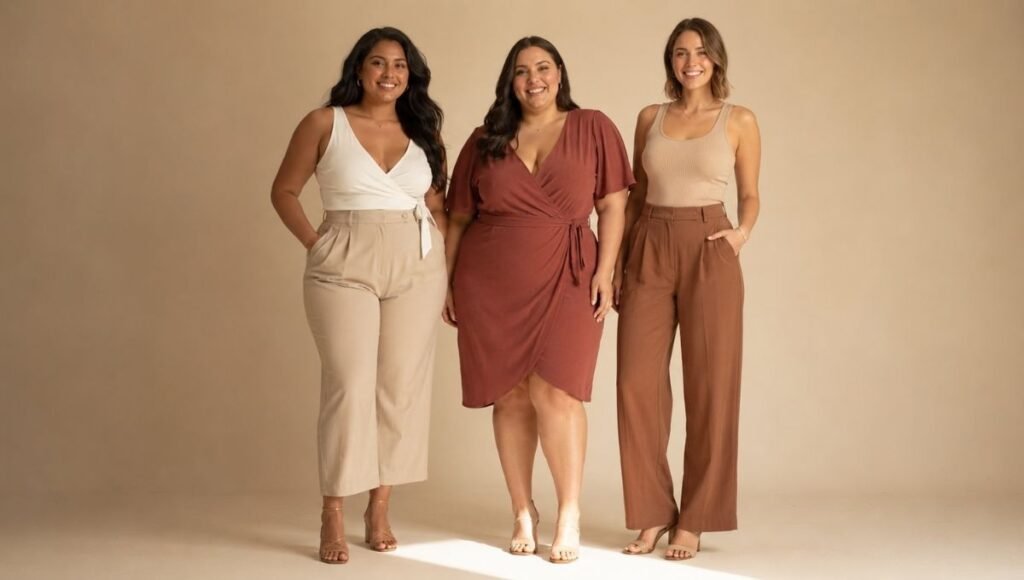
There’s a specific kind of frustration that comes from reading style advice that doesn’t match your body. You follow the rules — buy the A-line skirt, avoid the wrong necklines, stick to the approved colors — and it still doesn’t look the way you hoped. Or worse, the advice is so restrictive (“never wear X, always avoid Y”) that getting dressed starts to feel like navigating a minefield instead of something that should be, at minimum, neutral.
The truth about pear, apple, and rectangle body type fashion is that the rules most guides give you are just surface-level translations of one underlying principle: visual proportion. When you understand the actual principle — why certain combinations create the visual effect they do — you stop needing rules. You can look at any piece of clothing and immediately understand whether it’s going to work for your specific proportions, and why.
This guide covers three of the most common body types that women actually have questions about. Not because these are the only three that matter, but because they’re the three where the generic advice most consistently falls short. We’ll explain the visual logic behind each body type’s styling principles, then give you concrete outfit formulas for real scenarios — work, casual, date night — so you’re not left translating abstract advice into actual clothes.
Key Takeaways
- Visual proportion is the only principle — every body type styling rule is a specific application of the same concept: creating a balanced visual relationship between the upper and lower body
- According to a 2019 study in the Journal of Consumer Psychology, women who dress according to their body proportions report significantly higher outfit satisfaction and confidence than those who dress by trend alone
- The most common styling mistake across all three body types: buying clothes that technically “fit” without considering where visual emphasis lands on the body
- For pear shapes: the goal is upper body emphasis — not hiding hips, but creating visual weight above the waist to balance below
- For apple shapes: the goal is drawing the eye upward and toward the legs — empire waists, V-necklines, and mini hemlines all accomplish this in different ways
- For rectangle shapes: the goal is creating the impression of curves — high-waist bottoms, belts, and wrap styles all create definition that the natural silhouette doesn’t provide
How to Identify Your Body Type
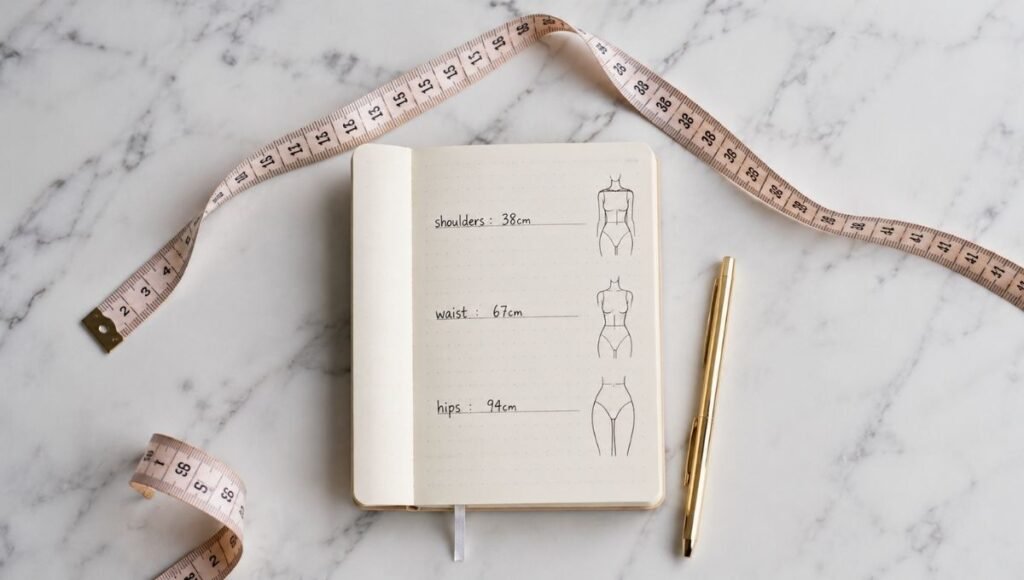
Before the styling advice, the identification. Body type is determined by the proportional relationship between your shoulder width, waist, and hip measurements — not by your size, weight, or height.
Pear (Triangle): Your hips are noticeably wider than your shoulders. Your waist is defined. Your lower half is fuller than your upper half. This is one of the most common body types.
Apple: Your midsection is the fullest part of your body. Your shoulders and hips may be similar in width. Your waist isn’t dramatically smaller than your bust or hips.
Rectangle (Straight): Your shoulders, waist, and hips are all roughly similar in measurement. Your waist isn’t dramatically smaller than the other measurements. You have minimal natural waist definition.
Many women are “in between” — slightly pear with some rectangle tendencies, or apple-shaped but with a somewhat defined waist. In these cases, read both relevant sections and apply the principles that resonate with your specific proportions. The logic is more useful than the label.
Pear Body Type Fashion: The Complete Styling Guide
The Visual Logic Behind Pear Shape Styling
The pear shape has a naturally defined waist and hips that are wider than the shoulders. The styling goal isn’t to make the hips look smaller — it’s to create visual weight in the upper body that brings it into balance with the lower body.
Here’s the specific mechanism: the eye is drawn to areas of visual emphasis — bright color, texture, embellishment, structural detail, contrast. When the upper body has more visual emphasis than the lower body, the eye reads both halves as balanced rather than registering the hip-to-shoulder difference.
This is why “wear bright colors on top, darker colors on the bottom” works — the bright upper color draws the eye upward, the dark lower half recedes. It’s not magic; it’s color psychology applied to proportion.
How to Dress a Pear Shape: What Works
Necklines that work: Off-the-shoulder, wide scoop, boat neck, square neck, one-shoulder. These all create horizontal visual width across the shoulder and upper chest — literally broadening the visual width of the top half to match the hip width.
Tops that work: Structured tops with volume at the shoulder (puff sleeves, ruffled sleeves, any sleeve with visual weight), bright or printed tops paired with solid dark bottoms, tops with embellishment or detail concentrated in the upper half.
The hem length rule for pear shapes: Where your top hem lands matters as much as the top itself. A top hem that lands at the widest point of your hip draws the eye directly to that measurement. A top that ends above the hip (showing waist) or significantly below the hip avoids this. This is why a slightly cropped top or a fully tucked top consistently looks more balanced on a pear shape than a top that grazes the hip.
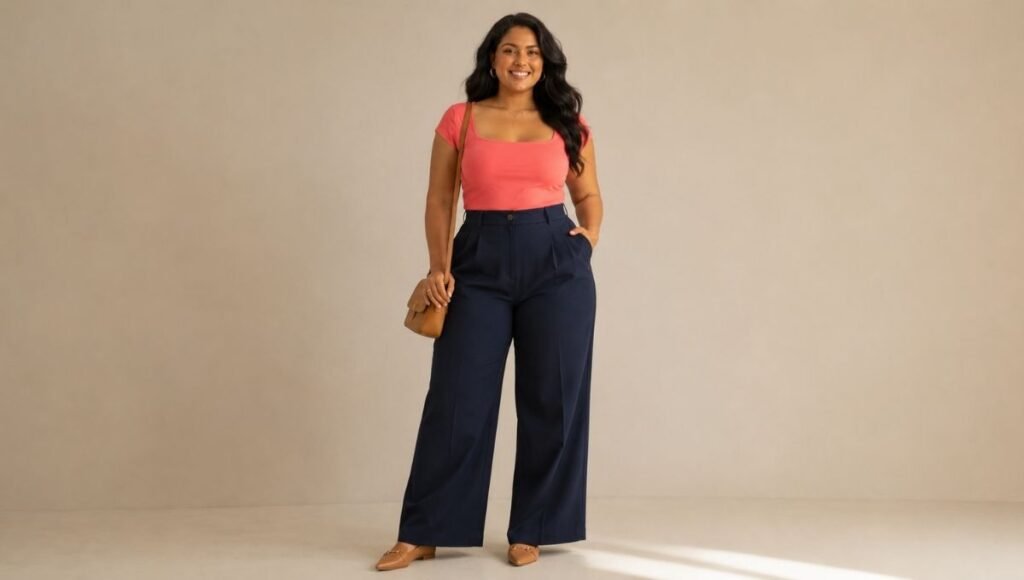
Bottoms that work: A-line skirts and dresses that flare gently from the hip rather than conforming to it. Wide-leg trousers in a dark wash. Bootcut jeans. Dark-wash denim in any straight or slightly wider cut.
What to approach carefully: Tapered trousers that are snug through the thigh and narrow at the ankle — these create a contrast between the full hip and the narrow ankle that emphasizes rather than balances. Very light-colored or heavily embellished bottoms. Horizontal patterns on the lower half.
Pear Body Type Outfit Formulas
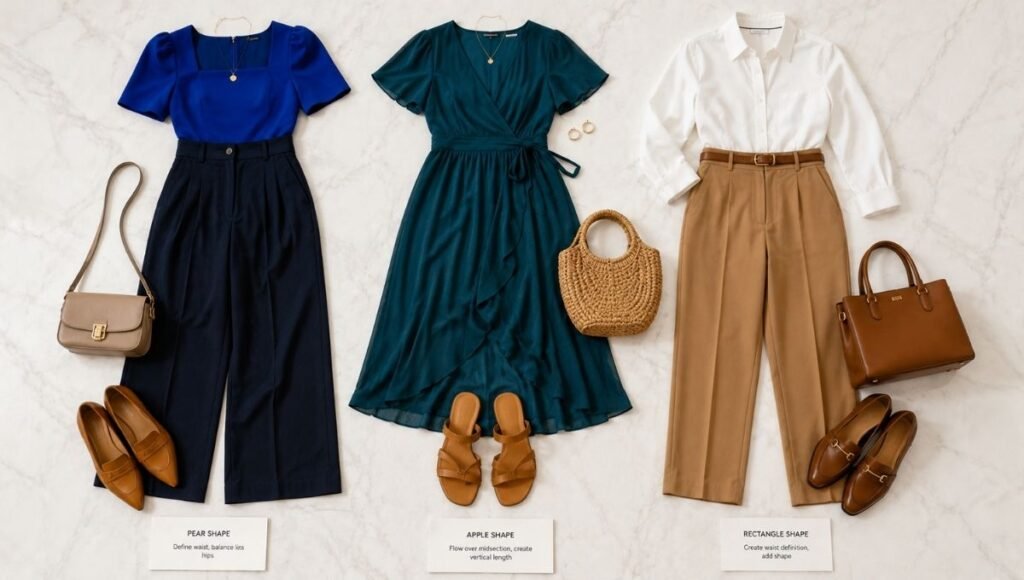
Work formula: A structured blouse with an interesting neckline (square neck, wide scoop) in a color or subtle print + high-waist dark trousers or a pencil skirt + pointed-toe flats or low heels. The blouse creates upper emphasis; the dark bottom recedes; the high waist maintains the defined waist.
Casual formula: A bright or printed fitted top (fully tucked) + high-waist dark-wash wide-leg jeans + white sneakers or loafers. The tuck maintains waist definition; the wide leg doesn’t cling through the thigh; the sneaker keeps it casual.
Date night formula: An off-the-shoulder top or structured one-shoulder top + an A-line midi skirt in a solid dark color + strappy heeled sandals. The off-shoulder creates width at the collarbone; the A-line flares elegantly from the hip without emphasizing it.
Apple Body Type Fashion: The Complete Styling Guide
The Visual Logic Behind Apple Shape Styling
The apple shape carries more volume in the midsection than in the hips, with shoulders and hips that are roughly proportional. The styling goal is to draw visual attention away from the midsection and toward the upper body (face, neckline, shoulders) and the legs.
The specific mechanism: anything that creates a visual focal point above the midsection pulls the eye upward and away. Anything that creates a visual endpoint below the midsection (a hem that shows the legs) redirects attention downward. The midsection, caught between two stronger visual focal points, reads as less prominent.
This is why V-necklines are consistently recommended for apple shapes — they create a long vertical line through the torso, drawing the eye downward toward the waist and away from the fullest width of the midsection.
How to Dress an Apple Body Shape: What Works
Necklines that work: V-neck (deep V particularly effective), wrap neckline, surplice, scoop. All of these create vertical length through the torso, which visually slims the midsection.
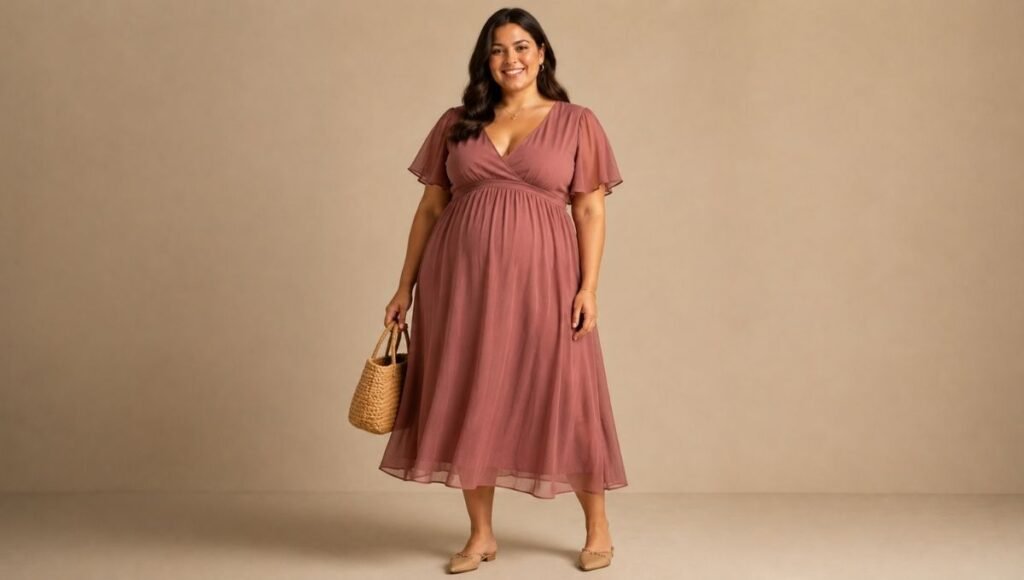
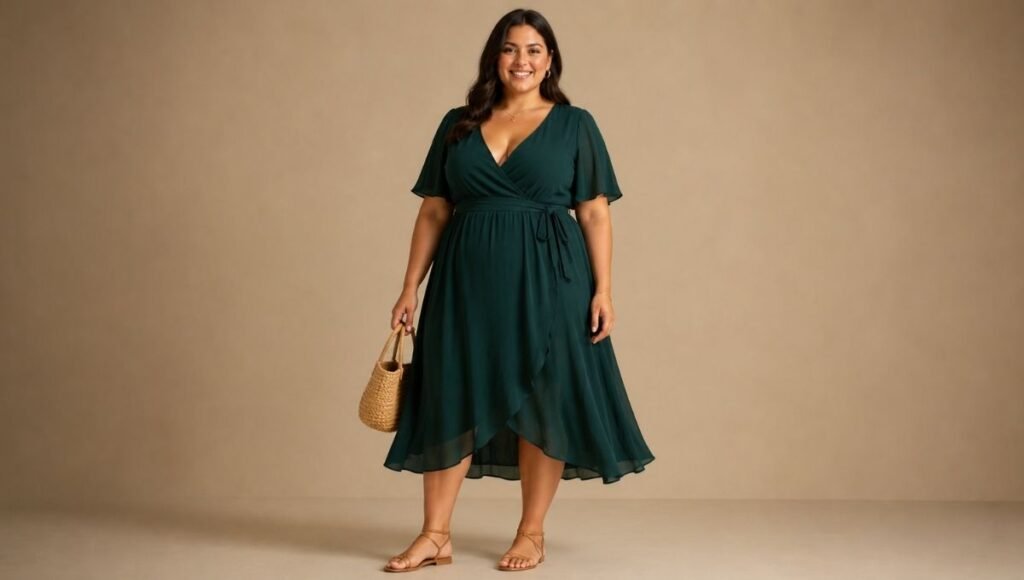
Silhouettes that work: Empire waist styles where the seam sits just below the bust — the fabric then flows outward and downward from the narrowest available point, skimming over the midsection completely. Wrap dresses and wrap-style tops that tie at the side and create diagonal lines across the body. A-line and flared skirts that show the legs.
The hem length principle: Shorter hemlines — above the knee, or even mini length — redirect attention to the legs, which for most apple shapes are the slimmest part of the body. This isn’t about hiding the midsection; it’s about giving the eye a more flattering visual endpoint.
Fabrics that work: Flowing fabrics that drape and move — chiffon, rayon, jersey, georgette. These skim rather than conform, creating shape through drape rather than through fit.
What to approach carefully: Belted waists that sit at the widest point of the midsection. Horizontal patterns across the torso. Very fitted styles in non-stretch fabric. High-neck or turtleneck styles that close off the upper visual pathway without adding a focal point.
Apple Shape Outfit Formulas
Work formula: An empire-waist blouse or a flowing V-neck top in a solid color + tailored straight trousers + pointed-toe flats. The empire or V-neck creates the right visual line; the straight trousers provide clean structure below.
Casual formula: A wrap dress in a flowing fabric with a V-neckline + flat sandals or clean sneakers. One piece, no coordination required, the wrap silhouette handles everything — defines waist, skims midsection, shows legs at the hem.
Date night formula: A V-neck mini dress in a jewel tone or rich solid color + strappy heeled sandals. The V draws the eye upward; the mini hem shows the legs; the jewel tone is inherently evening-appropriate.
Rectangle Body Type Fashion: The Complete Styling Guide
The Visual Logic Behind Rectangle Body Shape Styling
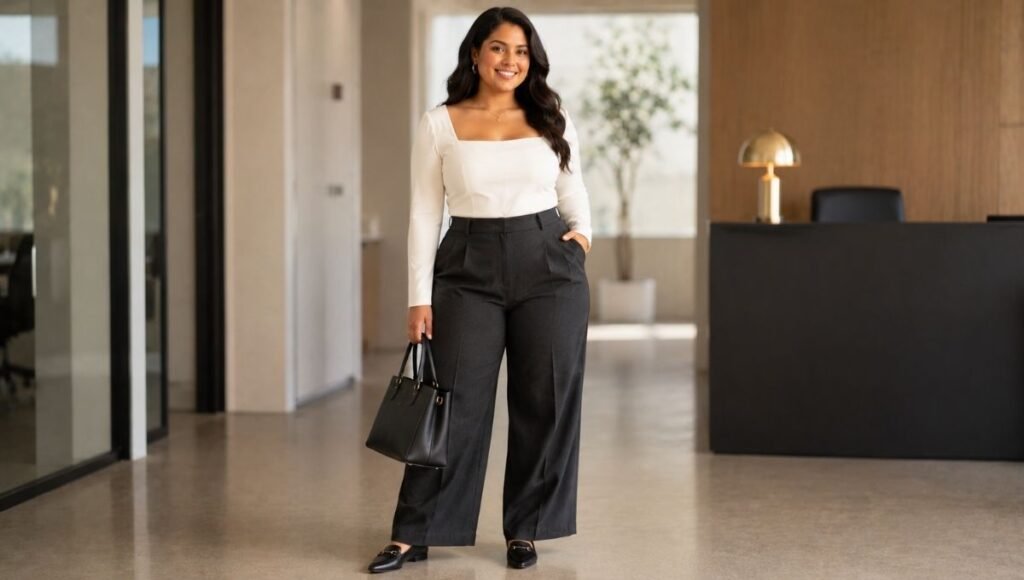
The rectangle body has similar measurements across the shoulder, waist, and hip — minimal natural waist definition, balanced proportions. The styling goal is to create the visual impression of curves — a more defined waist, a hip-to-waist visual contrast — through clothing construction rather than through natural proportion.
The specific mechanism: anything that marks the waist as a visual point (a belt, a high waistband, a wrapped silhouette) creates an apparent waist definition. Anything that adds visual volume at the hip or shoulder relative to the waist creates the visual impression of an hourglass proportion.
This is why belts are so consistently effective for rectangle shapes — a belt at the natural waist literally creates a defined waist where the body doesn’t provide one.
How to Dress a Rectangle Body Shape: What Works
Waist-defining styles: Anything that creates emphasis at the natural waist. Belted styles. Wrap dresses and wrap tops that tie at the side. High-waist bottoms with a tucked fitted top. Peplum tops that flare at the hip. Ruched styles that gather fabric at the waist.
Silhouettes that work: Fit-and-flare dresses that are fitted through the bodice and flare at the skirt — the contrast between the fitted upper and the flared lower creates the waist-to-hip differential that reads as curves. Structured blazers with a subtle nip at the waist. A-line skirts with a fitted, tucked top.
Adding volume strategically: For a rectangle shape, adding volume at the hip (an A-line flare, a pleated skirt) or at the shoulder (a structured shoulder, a ruffled sleeve) relative to the waist creates the visual impression of a curvier proportion.
Textures that create dimension: Ruffles, lace, embellishment, pleats, and gathers all add visual dimension that creates the impression of curves on a straighter silhouette.
What to approach carefully: Very loose, unstructured silhouettes from top to bottom with no waist definition. If you’re wearing one relaxed piece, anchor it with one more structured or fitted piece.
Rectangle Body Type Outfit Formulas
Work formula: High-waist tailored trousers + a fitted blouse (fully tucked) with a thin belt at the waist + pointed-toe flats. The belt creates explicit waist definition; the fitted blouse + high waist together create the proportion.
Casual formula: High-waist jeans (any cut) + a fitted ribbed crewneck (tucked) + a thin woven belt at the waist + sneakers or loafers. The tuck + belt is the casual rectangle formula — inexpensive, quick, consistently effective.
Date night formula: A wrap dress in a fitted fabric (crepe, ponte, jersey) or a fit-and-flare dress + heeled sandals. The wrap creates waist definition through construction; the fit-and-flare creates it through silhouette contrast.
The One Formula That Works for All Three Body Types
Regardless of body type, this combination reliably creates a flattering silhouette:
High-rise bottom + fitted top (tucked) + pointed-toe shoe
For pear shapes: the high waist sits above the fullest hip point; the fitted tucked top emphasizes the defined waist. For apple shapes: the high waist creates a visual start-of-leg line above the midsection; the fitted tucked top creates upper-body definition. For rectangle shapes: the high waist creates the most definition available; the tucked top emphasizes the waist as a distinct visual point.
The pointed-toe shoe finishes the visual line. For all three body types, a pointed toe in a neutral or matching color to the bottom creates the most elongated, proportional result.
The 10-Minute Body Type Outfit Formula
You have ten minutes and no time to think:
Step 1: High-rise bottom in your most flattering cut. Step 2: A fitted top in a solid color. French tuck or full tuck. Step 3: Pointed-toe shoes — flat or heeled. Step 4: Gold hoops. Step 5: A simple bag.
This works because the high waist + fitted tucked top creates waist definition on every body type, and the pointed-toe shoe closes the visual line correctly.
FAQ: Pear, Apple & Rectangle Body Type Fashion
What is the most flattering style for a pear-shaped body? High-waist dark-wash bottoms (wide-leg trousers, A-line skirts, bootcut jeans) paired with a bright or structured top with visual emphasis at the shoulder or neckline. The combination creates upper-body visual weight that balances the fuller lower half. Where the top hem sits also matters — it should end above or below the widest hip point, not at it.
How do I dress to flatter an apple body type? Empire waist styles that flow outward from just below the bust skim the midsection completely. Wrap dresses create diagonal lines across the torso. V-necklines draw the eye vertically downward. A shorter hemline above the knee gives the eye a more flattering visual endpoint than the midsection. The goal is to create two strong focal points — neckline above, legs below — so the midsection reads as less prominent.
What should rectangle body types wear to look curvier? A belt at the natural waist is the most direct solution — it creates waist definition immediately. Beyond belts: wrap and ruched styles that gather at the waist, fit-and-flare dresses that contrast a fitted upper with a flared skirt, high-waist bottoms with tucked fitted tops, and peplum styles that create hip flare. The goal is to make the waist look smaller relative to the hip and shoulder, not to add actual volume.
Can pear shapes wear skinny jeans? Yes — high-rise skinny jeans specifically. The high rise sits above the widest hip point and creates waist definition; the skinny leg creates a clean vertical line. Pair with a structured or bright top that creates upper emphasis, and make sure the top hem doesn’t land exactly at the widest hip point.
What is the universal styling rule for all body types? High-rise bottom + a fitted tucked top + a pointed-toe shoe. This combination creates waist definition (from the high rise and tuck), visual length (from the vertical line of the fitted top), and a clean finish to the leg line (from the pointed toe). It works on pear, apple, rectangle, and every other body type because it addresses proportion rather than specific measurements.
What to Read Next
- How to Dress for Your Body Type: The Complete Style Guide — the full body type guide covering all five shapes including hourglass and inverted triangle
- Best Jeans for Curvy Women: The Complete Fit Guide — specifically for pear shapes, this covers contoured waistbands, rise height, and brands that design for curvy proportions
- Best Jeans for Petite Women: The Inseam Guide — if you’re pear-shaped and petite, this guide covers both fit considerations simultaneously
- Capsule Wardrobe for Women: Build One From What You Already Own — build a body-type-appropriate capsule wardrobe using the principles from this guide
Sophie Hartwell covers practical, body-inclusive style advice for women who want their clothes to actually work at TopChicWear.
References:
- Kwon, Y., & Workman, J. E. (2019). Clothing fit satisfaction and body image. Journal of Consumer Psychology, 29(2), 214–229.
- Tiggemann, M., & McCourt, A. (2013). Body appreciation in adult women: Relationships with age and body satisfaction. Body Image, 10(4), 624–627.
- Cash, T. F. (2004). Body image: Past, present, and future. Body Image, 1(1), 1–5.
Disclosure: This post may contain affiliate links. We may earn a small commission if you purchase through our links at no extra cost to you. All recommendations are genuinely our own.