

You’ve decided on green. Good choice — honestly, it might be the best homecoming color pick of the season. But then you open your browser and suddenly you’re staring at thirty different dresses in thirty different shades of green, and they all look amazing on the model, and you have absolutely no idea which one is going to look good on you.
Sage? Emerald? Olive? Dark forest? Mint? They’re not the same color. Not even close. And the shade you pick matters more than the silhouette, more than the fabric, more than the price point — because the wrong green for your skin tone can wash you out or make you look sallow in every single photo. The right one? It’ll look like it was made for you.
This guide exists because nobody else is actually answering this question properly. Most dress guides just slap a few green dresses on a page and call it a day. We’re going deeper: which specific shade of green flatters which skin tone, which body type benefits from which silhouette, how to accessorize each shade without overthinking it, and where to find a great green homecoming dress without spending more than you need to.
Let’s get into it.
Key Takeaways
- Emerald green is the most universally flattering shade — it works across fair, olive, medium, and deep skin tones, which is why it’s the #1 trending green homecoming color
- Sage green flatters cool and neutral undertones best; it can wash out very fair or very deep skin tones without the right makeup contrast
- Olive and forest green work beautifully on warm, golden, and deeper skin tones — they’re underrated and photograph incredibly well
- Mint green is tricky for darker skin tones but stunning on fair to light skin with cool or neutral undertones
- The A-line silhouette remains the most consistently flattering green homecoming dress shape across all body types — but we’ll break down the exceptions
The Green Shade Guide: Which Color Is Actually Right for You
This is the section that most dress guides skip entirely, and it’s the most important one. Not all greens photograph the same way. Not all greens work on all skin tones. Here’s the honest breakdown.
Emerald Green Homecoming Dress: The Safe But Stunning Choice

Emerald is deep, jewel-toned, and saturated. It’s the green you picture when someone says “green dress” — rich, slightly cool, undeniably polished.
Who it flatters: Almost everyone, which is why it’s so popular. The deep saturation means it creates strong contrast against both fair and dark skin. On medium and olive skin tones, it’s genuinely spectacular — the warm undertones in olive and medium skin play off the cool depth of emerald in a way that looks very intentional and expensive. On darker skin tones, emerald is bold and regal. On fair skin, it creates a classic, striking contrast.
The one caveat: If you have very cool, pink-toned fair skin and you wash out in dark colors generally, test the dress under warm lighting before committing. Some fair-skinned girls find deep emerald makes them look pale rather than striking — in which case, a rich mint or a slightly warmer forest green might serve you better.
Best silhouettes in emerald: Satin slip dresses, fitted A-line, corset bodice. The richness of emerald carries weight — simpler silhouettes let the color do the work without competing with embellishment.
What to pair it with: Gold jewelry (almost always), nude or champagne heels, a bold berry or red lip. Avoid silver jewelry with emerald — it slightly fights the warmth in the color.
Sage Green Homecoming Dress: The Soft, Romantic Pick

Sage is muted, dusty, and soft — it reads as a sophisticated neutral rather than a statement color. It’s having a massive moment right now, partly because of its association with cottagecore and quiet luxury aesthetics, and partly because it photographs beautifully in natural and golden-hour light.
Who it flatters: Sage works best on cool and neutral undertones — think fair skin with pink or neutral undertones, or light to medium skin that doesn’t skew yellow or golden. It’s also genuinely beautiful on very deep skin tones with neutral to cool undertones, where the contrast creates a striking softness.
Who should be careful: If you have warm, golden, or olive undertones, sage can occasionally pull yellow against your skin — not always, but it’s worth testing. The muted quality of sage means it needs skin with some natural warmth contrast to pop. On yellow-toned medium skin, sage can sometimes make you look a bit sallow in photos. Try warm-toned sage (one with a hint of grey or green rather than yellow) or consider olive instead.
Best silhouettes in sage: Flowy A-line, chiffon tiered skirts, slip dresses. Sage in structured fabric can look a bit flat — it benefits from movement and drape.
What to pair it with: Gold or rose gold jewelry, champagne or nude heels, an earthy terracotta or nude lip. Sage pairs unexpectedly well with natural textures — a woven or rattan clutch looks gorgeous rather than mismatched.
Dark Green and Forest Green Homecoming Dress: The Underrated Power Move
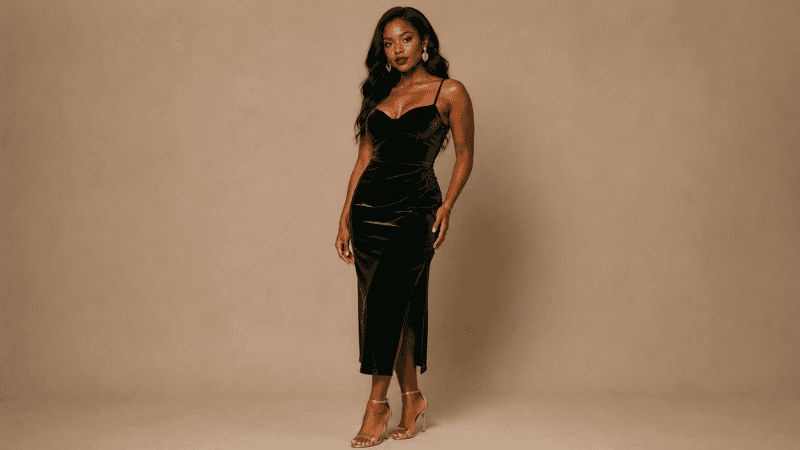
Dark green — which sits between emerald and black — and forest green are the shades most girls scroll past because they feel a bit “serious.” That’s exactly why they’re such a good choice. You won’t be wearing the same dress as anyone else.
Who it flatters: Warm skin tones, golden and olive complexions, and deeper skin tones absolutely glow in dark and forest green. The earthiness of the color complements warm undertones in a way that no other shade does. On deep brown skin, forest green is genuinely stunning — the contrast is dramatic without feeling harsh.
Who should think twice: Very fair, cool-toned skin can find forest green a bit muddy — it doesn’t create enough contrast. If you’re very fair and love deep greens, emerald is a safer option.
Best silhouettes in dark/forest green: Velvet is incredible in this shade — the fabric and color combination looks significantly more expensive than it is. Fitted mermaid or bodycon shapes in dark green photograph beautifully. A-line works too.
What to pair it with: Gold jewelry exclusively — silver will make dark green look cold. A deep berry or plum lip. Nude or gold heels. Dark green is one of the few dress colors where a bold, dark lip actually enhances the look rather than competing with it.
Olive Green Homecoming Dress: For the Girl Who Wants to Look Different
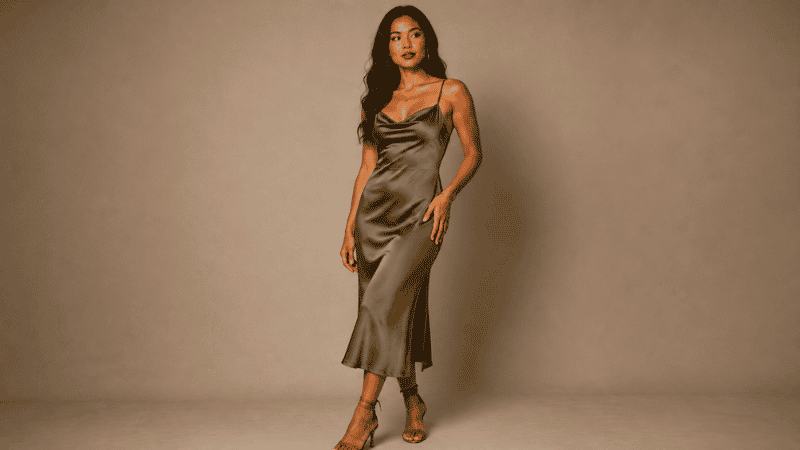
Olive is yellow-toned, earthy, and warm. It’s not a traditional homecoming color, which means wearing it well is an instant style statement. It won’t work for everyone — but for the right skin tone, it’s genuinely striking.
Who it flatters: Warm, golden, medium, and olive skin tones (appropriately enough). If you tan easily, have naturally warm or golden skin, or if brown and camel tones tend to look good on you, olive will likely flatter you too. On deeper skin tones with warm undertones, olive can look incredibly chic.
Who it doesn’t flatter: Cool-toned fair skin, and skin with strong pink undertones. Olive against cool pink skin almost always looks unflattering — the yellow in olive fights the pink in your skin.
Best silhouettes in olive: Because olive is already an unconventional choice, keep the silhouette relatively simple — fitted A-line, slip dress, or clean bodycon. Ruffles and excessive embellishment in olive can read as costume-y.
What to pair it with: Gold or brass jewelry, warm brown or tan heeled sandals, and a warm nude or terracotta lip. Olive is one of the few dress colors that looks great with brown accessories rather than black or nude.
Mint Green Homecoming Dress: The Fresh, Youthful Option
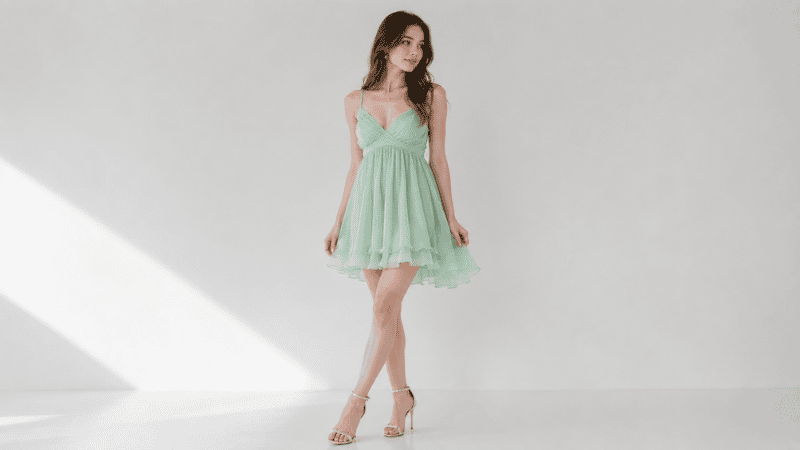
Mint is light, cool-toned, and has a freshness that works really well for daytime or semi-formal homecoming events. It’s a bigger statement than sage because of its brightness.
Who it flatters: Fair to light skin with cool or neutral undertones. If you’re very fair and tend to look washed out in muted colors, mint’s brightness creates contrast that sage and ivory can’t. It’s also lovely on light medium skin with pink undertones.
Who should be careful: Mint can create an unflattering cool contrast against deeper skin tones or warm, golden complexions. The lightness of mint requires skin that can carry a high-brightness color without the dress dominating the person wearing it.
Best silhouettes in mint: Flowy, feminine shapes — chiffon A-line, tiered midi, babydoll. Mint in a bodycon or very structured silhouette can look too casual or even slightly costume-y. Go soft and feminine with this shade.
What to pair it with: Silver jewelry, white or silver heels, a soft pink or coral lip. Keep everything light and fresh — don’t pair mint with gold or dark accessories, it fights the delicacy of the color.
Green Homecoming Dress by Body Type: The Silhouette Breakdown
The shade question is solved. Now let’s talk shape — because a beautifully colored dress in the wrong silhouette is still the wrong dress.
Petite Girls (Under 5’4″)
The challenge with green dresses and petite frames is that very full or floor-length silhouettes can overwhelm you. Green is already a present color — you don’t need extra volume to make a statement.
Best choices:
- Mini or above-the-knee A-line in a lighter green like sage or mint — keeps the look proportionate
- Fitted slip dress in emerald or dark green — the clean line elongates the silhouette
- Empire waist style in any shade — creates the visual illusion of longer legs
What to avoid: Maxi length heavy satin in dark green (you’ll be swamped), very full tiered skirts in sage (they can look more costume than dress on a petite frame)
Shoe note: Always add a heel with green. A nude or champagne heel is particularly effective with any shade of green — it elongates the leg without adding visual noise.
Curvy and Plus-Size Girls
Green is one of the most forgiving colors for curvy bodies because the eye reads the color before it reads the silhouette — meaning a great shade of green creates a strong, beautiful impression before the viewer processes the shape details.
Best choices:
- Ruched A-line or fit-and-flare in emerald or dark green — the ruching creates a defined waist while allowing movement at the hip
- V-neckline in any green shade — draws the eye upward and creates neck-to-torso length
- Stretch crepe or scuba fabric in sage or emerald — holds shape without clinging in ways that feel uncomfortable
What to avoid: Stiff satin in very light mint or sage (these shades with rigid fabric can highlight rather than flatter); very tight bodycon in olive (the yellowish tone of olive in bright light against a fitted silhouette can draw attention to the torso in ways that aren’t always flattering)
The rule: Always size to your largest measurement and alter down if needed. A green dress that’s slightly too small looks nothing like a green dress that fits.
Pear-Shaped Girls (Smaller Top, Fuller Hips)
For pear shapes, the goal is to balance — create visual interest at the neckline and upper body, keep the lower half clean and unembellished.
Best choices:
- Off-the-shoulder or one-shoulder neckline in emerald — broadens the shoulder line visually
- A-line with embellished or structured bodice in sage or dark green
- Wrap-style bodice in any green — creates visual waist definition
What to avoid: Tiered skirts with multiple ruffles (adds hip volume), wrap dresses that tie at the hip (draws attention to the widest point)
Apple-Shaped Girls (Fuller Midsection)
Empire waist is the obvious answer here — and it genuinely works. But there are other options too.
Best choices:
- Empire waist in flowing chiffon, any green shade — skims the midsection completely
- Wrap bodice in emerald or forest green — creates a V-line that draws the eye upward and defines the waist visually
- Mini length in a clean A-line — if you have great legs, show them. It shifts focus beautifully.
What to avoid: Wide belted waists, horizontal seam details across the midsection, very clingy fabric with no structure
Tall Girls (5’8″+)
You have options nobody else does. Floor-length in dark green velvet? Absolutely. Midi satin in emerald? Stunning. Play with length and drama.
Best choices:
- Midi or maxi in dark green or forest green — the length reads as sophisticated on a tall frame
- Bold silhouettes like corset bodice or dramatic off-shoulder — you can carry statement styles that overwhelm shorter frames
- Green sequin or embellished styles — the embellishment has space to land on your frame
What to avoid: Micro-mini in a dark, heavy fabric — it can read as disproportionate on a tall frame rather than intentional
How to Accessorize a Green Homecoming Dress (Without Overthinking It)
Here’s the quick guide by shade:
Emerald green: Gold jewelry, nude or champagne heels, bold berry or red lip. Black heels also work if you want a sleek, monochromatic-adjacent look.
Sage green: Rose gold or delicate gold jewelry, nude or ivory heels, warm nude or terracotta lip. Keep everything soft — no statement earrings, go for delicate layered necklaces or small hoops.
Dark/forest green: Gold jewelry, nude or gold heels, dark berry lip if you want drama. This shade can handle more jewellery than lighter greens.
Olive green: Gold or brass tones, warm tan or brown sandals, terracotta lip. Olive is the one shade where brown accessories genuinely work.
Mint green: Silver jewelry, white or silver heels, soft pink or coral lip. Avoid heavy accessorizing — mint is a fresh, light color and it needs light accessories to match.
Where to Buy a Green Homecoming Dress (Budget Breakdown)
Under $60: ASOS and Amazon both have solid green homecoming options. The key is reading the reviews obsessively — look for reviews that mention the shade specifically (“it photographs more yellow than green in person” vs “exactly the emerald shown”). Also check the fabric description — if it says “polyester satin,” expect a slightly plastic sheen in photos.
$60–$120: Lulus and Windsor are reliable in this range for green specifically — their emerald and sage options tend to photograph well because they invest in decent satin and crepe. This is where most girls get the best value.
$120–$200: Boutique options. If you’re after something in forest green velvet or a more unusual silhouette, this range gives you access to better construction. Revolve has strong green dress options in this tier.
Secondhand: Check Poshmark under “green homecoming dress” and filter by size. Green is a less common homecoming color than black or red, which means competition is lower and prices are better. You can find dresses worn once for $25–$50 that retailed at $150.
The Mistakes Girls Make When Buying a Green Homecoming Dress
Mistake 1: Trusting the product photo color without reading reviews. Screen colors lie. “Emerald” on one retailer’s monitor can look forest green in person, or vice versa. Always read reviews and look for customer photos — not just the official product images.
Mistake 2: Picking a shade because it “looks good on the model” without checking your own skin tone. Models at major retailers are often photographed on neutral or cool-toned skin. If you have warm or golden skin, a shade that looks stunning on the model might look flat on you. Use the skin tone guide above before buying.
Mistake 3: Going too matchy with accessories. Green is already a statement. You don’t need green shoes, a green bag, and green jewelry. Pick one neutral metal (gold or silver) and one neutral for your shoes and bag, and let the dress be the statement.
Mistake 4: Buying without checking the return policy. Green is notoriously hard to photograph accurately. Always buy from a retailer with free returns if you’re ordering online, and always have a backup plan.
FAQ: Green Homecoming Dress Questions Answered
Is green a good color for homecoming? Yes — and it’s having a particularly strong moment in 2025. Emerald and sage are both trending heavily, which means there’s a wide selection available at every price point. Green also photographs better than many other colors under typical venue lighting.
What shade of green looks best for homecoming? It depends on your skin tone. Emerald is the most universally flattering. Sage suits cool and neutral undertones. Olive and forest green work best on warm and deeper skin tones. Mint suits fair, cool-toned skin.
What accessories go with a green homecoming dress? Gold jewelry is the safest pairing for most shades of green. Nude or champagne heels work with every shade. The lip color varies by shade — bold berry for emerald and dark green, warm nude or terracotta for sage and olive, soft pink or coral for mint.
Can curvy girls wear green homecoming dresses? Absolutely. Green is actually a particularly good color for curvy bodies because the color creates a strong visual impression before the viewer processes the silhouette details. Stick to ruched A-line or fit-and-flare silhouettes in emerald or dark green for the most flattering result.
What shoes go with a green homecoming dress? Nude or champagne heels work with every shade of green. Gold or metallic sandals work with emerald, sage, and dark green. Silver or white heels work with mint. Warm tan or brown sandals work surprisingly well with olive.
Is sage green or emerald green better for homecoming? Emerald is bolder and more dramatic — it makes an entrance. Sage is softer and more romantic — it photographs beautifully and looks effortless. If you want to stand out in a classic way, go emerald. If you want to look like you have an effortlessly good sense of style, go sage.
Where can I find an affordable green homecoming dress? ASOS and Amazon for under $60, Lulus and Windsor for $60–$120. Check Poshmark for secondhand options at 30–50% of retail — green homecoming dresses are less competitive than black or red on resale platforms.
What to Read Next
- Black Homecoming Dress: The Style Guide for Every Body Type — if you’re still choosing between black and green, this comparison will settle it
- How to Dress for Your Body Type: The Complete Style Guide — go deeper on the body type principles touched on in this article
- Date Night Outfits: What to Wear When You Actually Want to Impress — because that green dress might have a second life after homecoming
Sophie Hartwell writes about practical, body-inclusive fashion for real women at TopChicWear. She believes the right dress exists for every body and every budget — it just takes knowing where to look.
Disclosure: This post may contain affiliate links. If you purchase through our links, we may earn a small commission at no extra cost to you. All opinions and recommendations are our own.